AI-generated from sources
Disgust with One's Lot, Why Moralists Feared the Fairy Lover
In Brief
- The campaign against romances and fairy tales targeted discontent more than indecency: fiction was accused of making the ordinary allotted life look unbearable, above all to young women choosing a husband.
- Fairy folklore already carried its own warning: unions with fairy lovers are conditional, and breaking the compact brings ruin on the lover and his whole line.
- Defenders such as Grant Allen and Mona Caird turned the charge into praise, presenting romance as the protest of inclination against marriages arranged by others.
- Critics and defenders converged on one premise, that enchantment ends at the wedding, and Floyd Dell went further by suggesting that romance may glorify the very roles it seems to escape.
Main authors

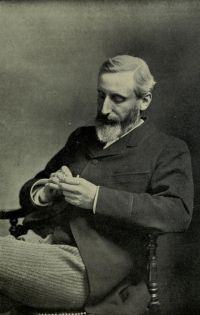
When Helen Zimmern described the nursery of Maria Edgeworth's age, she located the quarrel over fairy tales somewhere unexpected. The disciples of Jean Jacques, as she presents them, did not ban the fairies for coarseness or cruelty; they banned them because the tale was a novel in miniature, and the novel's offence was to make an ordinary existence look intolerable by comparison [1]. The decisive term in her account is not vice but lot: the danger was measured against a life of modest pleasures and pains that was, by definition, unromantic. William Hazlitt, from the opposite camp, described the same scene with the signs reversed. For him the country girl who pictures herself a princess is not a casualty of bad reading but the most ordinary of human beings, and the fairy tale shows what the world would look like if desire and power were for once in proportion [2].
Between these two positions runs a long argument about the legitimacy of wanting another life. Its targets were usually young women, its instruments the romance, the novel and the fairy tale, and its emblem, in folklore as in fiction, the enchanted lover who appears from outside the ordinary order of kin and parish and draws someone away from it [3, 4]. Read through the moralists who condemned such stories and the essayists who defended them, the debate looks less like a quarrel about decency than a quarrel about contentment: about whether the imagination should be allowed to compare the life one has been given with the life one might desire [5]. Yet the sources do not divide neatly into jailers and liberators. Some of romance's sharpest critics were its friends, and some of its defenders accepted almost every premise of its accusers [6, 7, 8].
The Fairy Lover and the Broken Compact
The oldest layer of the material is folkloric, and it already treats the fairy lover as a threat to the settled household. Donald A. Mackenzie records a belief that fairies courted human beings only to abandon them once their love was returned, and that women of unsound mind who wandered alone were taken to be their victims . The explanation is revealing in its social logic: a woman who withdrew from the common life of the community was accounted for by an invisible suitor, as if the only intelligible cause of such withdrawal were a rival form of love. Desire for something beyond the village became, in this idiom, a kind of abduction, and its visible symptom was madness .
The tales of fairy brides reverse the sexes but keep the structure. Elias Owen classes the Welsh stories of men who marry fairy women among taboo narratives, in which the union rests on a condition whose breach sends the bride back to her own country, leaving husband and children behind [9]. Andrew Lang, writing for the 1911 Encyclopædia Britannica, generalises the pattern: the fairy mistress is of unearthly beauty, but possession of her is always hedged by a compact, and its violation brings ruin not only on the lover but on his whole race, as in the legend of Melusine . What is at stake is therefore not merely a private infatuation but lineage itself; the otherworldly match promises an exceptional happiness and threatens the continuity of the family that ordinary marriage exists to secure . Ida Craddock, in a mystical register, preserved the opposite version of the bargain, in which elemental spirits seek human love in order to gain a soul, and the union raises lover and beloved to equality [10]. The cross-order marriage thus carried two charges at once: elevation and catastrophe.
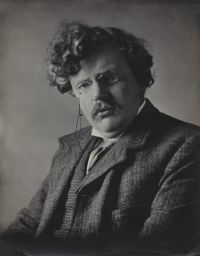
Whether this world of enchanted unions had any morality at all was itself disputed. Maurice Hewlett imagined the fairies as inhabitants of a realm beyond right and wrong, where the only signposts are the possible and the impossible and where no divine sanction either blesses or restrains desire [11]. This is precisely the moralist's nightmare: love without a check. G. K. Chesterton, in Orthodoxy (1909), read the same tales in the opposite sense. For him their characteristic tone is conditional rather than lawless, a happiness suspended on a stipulation that cannot be explained, so that the smallest infraction undoes the whole edifice [12]. In Chesterton's reading the fairy tale is a school of obedience to rules beyond understanding, and only people living under a meaner modern constraint would mistake it for a charter of liberty .
Set side by side, these readings suggest that the folklore itself was less subversive than its later enemies feared. The tales already contain their warning: the fairy lover leaves, the bride returns home, the line is cursed, the wanderer loses her wits . What alarmed educators was not the plot, which punished transgression readily enough, but the residue it left in the reader—the remembered beauty of the enchanted partner rather than the cost of the broken compact . The quarrel would accordingly move from the content of stories to the inner life of the people who read them.
The Female Reader and the Assigned Lot
That move is visible in the way the fairy tale was assimilated to the novel. In Zimmern's account the Rousseauist reformers condemned both on the same grounds: they nourished feeling and imagination beyond what an ordinary destiny could satisfy . The word that carries the charge is one of measure—too much, not wrong—and the yardstick is the allotted life. Hannah Adams, in her memoir of 1832, made the same diagnosis from within, describing a female mind weakened by romances that speak to the fancy and inflame sensation, as opposed to studies that train judgment and give firmness to character [13]. The opposition between stability and exaltation is the grammar of the whole debate: the novel was dangerous because it unsettled.
When the moralists turned to marriage, the logic became explicit. A. B. Muzzey, addressing young women, blamed fiction above all for leading them to give themselves to unworthy men, and urged them to rely on sober judgment rather than novels when choosing a husband; fancy, in his vocabulary, is an agent too fearful to be trusted with a lifetime's happiness [14]. The complaint is not that novels are indecent but that they are bad counsellors, substituting inclination for deliberation in the one decision that fixes a woman's lot. John Harvey Kellogg's inventory of the reading he deplored among young American women—story books, romances, love tales and even religious novels—confirms that suspicion attached to the genre rather than to any particular content: piety inside a novel did not redeem the novel [15].
Behind these warnings stands a figure older than the fairy tale debate: the deluded reader. A commentator on Pamela Censured traces the attack on romances in Northanger Abbey back to a line of 18th-century "female quixotes," heroines who mistake romantic adventure for a model of the roles they must actually play [16]. The archetype itself is masculine; in Cervantes, as an anthology of world classics observes, the knight's madness runs both ways, reading the world through romance and turning the world into romance [17]. Its feminisation is telling. When the deluded reader becomes a young woman, the delusion acquires a precise social object—the role of daughter and wife—and the danger is no longer that she will tilt at windmills but that she will decline the part written for her .
Not every voice in this tradition aimed at the reader. Marietta Holley, in a vernacular satire of 1909, turns the accusation round: the girl who pursues an ideal of romantic wickedness appears as the product of the adults who stocked her mind with such material and who are first to condemn her once she has tried to live it [18]. Some three-quarters of a century after Adams, the mechanism is unchanged—reading forms an ideal, the ideal seeks realisation—but the guilt has migrated from the dreamer to her educators . Mary Wollstonecraft, in A Vindication of the Rights of Woman, had already refused the choice between prohibition and abandon. Any attempt to argue love out of existence would, in her view, be a fresh quixotism; the task was rather to keep passion from usurping the authority of reason, and to let youth love while preparing for the longer years of reflection [19]. Hers is a rationalist settlement: the dream is neither cast out nor enthroned, but subordinated.
The Truth of the Heart Against the Matrimonial Market
The defence of romance began by accepting the accusers' description and changing its value. Hazlitt did not deny that fairy tales feed wishes; he made that their dignity, treating the genre as a record of the heart's real aspirations and the princess fantasy as all but universal among country girls . The tale, on this view, does not misrepresent the world; it represents desire accurately, imagining a state in which merit and longing would at last be matched by power . What the moralists called disgust with one's lot, Hazlitt called human nature, and the shift is decisive: discontent ceases to be a pathology produced by books and becomes a permanent condition that books merely articulate.
Grant Allen gave the argument a sharper social edge. For him the novel, whatever its artistic shortcomings, has one great merit: it sides with inherited instinct—his evolutionary vocabulary—against the self-interested advice of parents and moralists who counsel marriage by calculation rather than by inclination . Romance becomes, in his account, a standing protest against the marriage market. The claim that moralists feared romance for making readers want another life finds here its exact mirror: Allen praises romance for precisely that, because the life on offer had been arranged by others . Mona Caird, writing on the courts of Provence, pushes the point back to its origins: where marriage was an order imposed from outside, love had to found its kingdom elsewhere, and revolt followed as a matter of nature, since the alternative would have been to deny women their humanity [20]. Romance, in her reading, is not a corruption introduced into marriage but the offspring of a marriage system that left no room for love.
Others granted the dream its reality without granting it the status of truth. Johan Huizinga, writing in 1924 about the close of the Middle Ages, saw both the bawdy tale and the elaborate system of courtly love as attempts to replace a painful and tangled reality with the vision of a happier life; erotic thought, in his analysis, becomes literature only by transfiguring the real into illusion [21]. This is a cooler diagnosis than Hazlitt's. If the fairy tale speaks the truth of the heart, it may be the truth of a lack, a compensation rather than a prophecy . Julian Hawthorne, by contrast, defended fairyland as having the same lasting claim to exist as beauty itself, because it answers to a genuine side of human nature that his own period happened to frown upon [22]. Between Huizinga's compensation and Hawthorne's permanent right lies the real question: whether the longing romance expresses is a symptom to be managed or a faculty to be honoured.
A third line of defence stayed inside the moralists' frame and contested only their method. An essayist in Blackwood's Edinburgh Magazine in 1848 observed that the young women who nurse the sick and endure privation without complaint are often novel-readers, whose imagination, trained alongside understanding, has made their feelings quick rather than dangerous [23]. William Anderson judged the blanket condemnation of fiction absurd, since the same principle would sweep away poetry, fable and allegory, and since a total ban teaches readers that every book is equally permissible . A text gathered in the Harvard Classics urged that books be chosen for the good they contain rather than for the evil they avoid, and trusted a noble girl to pass through scattered faults unharmed [24]. These defenders conceded that the reader was a young woman to be guided; what they rejected was the idea that imagination itself was the enemy .
When Fairyland Melts at the Wedding
On one point, however, friends and enemies of romance converged with striking regularity: enchantment does not survive the wedding. Mrs. Oliphant notes that the glamour of a courtship evaporates once the marriage is settled, leaving the couple as unremarkable as any other [25]. Hubert Bland, in his letters to a daughter of 1914, held marriage to be the inevitable destroyer of romance, which lives on the undiscovered and cannot outlast daily intimacy . Constance Fenimore Woolson doubted whether the love that comes later could ever release the fairy-like romance of first attachments, precisely because reality weighs upon it [26]. None of these writers is a moralist in Muzzey's sense, yet all three share his premise: the romantic dream and the settled life are incompatible .
The difference lies in the conclusion each draws. Where the moralist forbids the dream to protect the marriage, these writers record its loss with melancholy, and Hazlitt describes what follows disillusion: those whose fairy dream has been broken shield themselves by distrusting every appearance and mocking those who still believe [27]. The remark suggests that the censor of romance may be a former dreamer rather than its natural enemy. Lafcadio Hearn reverses the usual gender of the danger. His haunted man measures every real woman against a spectral ideal, and when the wish for a home and an ordinary affection visits him he is held back by the phantom he will never meet [28]. Here it is a man who suffers disgust with his lot, and the victim of the fairy lover—as in the old taboo tales—is male .
The early 20th century added two readings that complicate the opposition between dream and duty. Franz Ricklin, writing in a psychoanalytic vein in 1915, treated fairy tales as wish-structures carried over from childhood, egotistical and amoral in the manner of children, in which the removal of a rival relative simply expresses the wish to be rid of someone [29]. The moralists, in this light, were right about the content of the tales but wrong about their effect: the wish is not implanted by the story but expressed in it, and belongs to a stage of development rather than to a corruption . Floyd Dell, from the side of feminism, rejected what he called Romance as a form of woman-worship that reveres a woman as virgin, wife or mother regardless of her capacities as friend or leader . Dell's critique cuts across the whole debate. The country girl's dream of becoming a princess is a dream of changing one's lot through marriage, that is, through the very institution the moralists defended; romance may be less a revolt against the assigned life than its most seductive advertisement .
C. S. Lewis, in Mere Christianity (1952), offered a resolution that neither the censors nor the enthusiasts had quite formulated. Taken literally as a promise of perpetual excitement, the closing formula of fairy tales is false and, he argued, would be unbearable if it were true, since it would leave no room for work, rest or friendship [30]. Yet the passing of the state of being in love does not, for him, entail the passing of love . Lewis thus separates what Bland and Oliphant had fused: the enchantment of courtship, which does fade, and the bond, which may outlast it . The fairy tale's last line is returned to ordinary life rather than set against it.
Across these texts, the hostility to romance appears less as prudery than as a defence of the allotted life. Moralists from Adams to Muzzey and Kellogg feared that fiction would teach young women to judge their station, and their marriages, by a standard no ordinary existence could meet . The defenders—Hazlitt, Allen, Caird—answered that this standard was the voice of nature against calculation, and that romance was the protest of the heart against arrangements made by others . The folklore beneath both positions had long dramatised the bargain: the fairy lover brings beauty from outside the lineage, and the price of breaking the compact falls on the whole line .
What the debate leaves open is not whether the dream corrupts, but which life it makes desirable. Dell's suspicion that romance glorifies the very roles it seems to escape, and Lewis's insistence that love can survive the fading of enchantment, point in different directions but share a refusal of the simple opposition between fairyland and the assigned lot . Between the solitary wanderer whom folklore declared a fairy's victim and the haunted man who cannot love a real woman stands the same unresolved figure: the person in whom longing has outrun the available forms of life . The fear of the fairy lover was, in the end, a fear of that person—and the sources never quite agree whether she should be cured, guided or simply believed.