AI-generated from sources
The Unquiet Bed, The Inviolable Retreat: Navigating Harmony and Strife in Marriage
In Brief
- The traditional ideal of marriage enforced unbroken harmony and romantic bliss, often burdening women with maintaining this peace.
- Marital friction and conflict are inherent to long-term partnerships, with disagreements sometimes serving as a path to deeper connection and growth.
- Individual solitude and personal space are not a sign of marital failure but are essential for individual growth, selfhood, and ultimately, a stronger relationship.
- Modern marriage redefines success not as perpetual tranquility, but as an equitable partnership built on mutual growth, autonomy, and the resilient navigation of both connection and personal space.
Main authors


The institution of marriage has long been portrayed as a sanctuary of perpetual peace, an idealized state where continuous contentment is not merely an aspiration but a moral imperative. This traditional conception championed a vision of unbroken harmony, where any form of discord was viewed as a significant personal and relational failure [2, 3]. Within this framework, marital success was measured by the ability of partners to sustain the romantic bliss of their courtship indefinitely, achieving a lifelong state of tranquil satisfaction [4, 5]. The responsibility for maintaining this domestic paradise often fell disproportionately on one partner, who was expected to diligently smooth over any friction to preserve the sanctity of the union.
Beneath this surface of prescribed tranquility, however, lay the more complex reality of lived experience, where unions are inevitably tested by conflict and misunderstanding. While some cultural and religious narratives demanded swift reconciliation as a safeguard against social or even divine punishment [1], a more pragmatic understanding of marriage gradually emerged. This perspective acknowledged that periods of strife are a natural, if difficult, component of an enduring partnership [14, 15]. This created a persistent tension between the deeply ingrained cultural expectation of unwavering harmony and the practical necessity of navigating disagreement, anger, and the inherent friction of two lives intertwined.
The Moral Mandate for Unbroken Peace
Historically, the call for marital harmony was less a suggestion than a profound moral and spiritual duty. A prevailing 19th-century ethos framed any unresolved disagreement as a serious transgression, with couples urged to promise they would never part in anger or allow a misunderstanding to fester overnight . The home was envisioned as a haven that must be studiously guarded against the "demon" of discord, making any difference of opinion a potential catastrophe . This ideal sought to create an environment of unimpaired confidence and affection, where peace was the foundational and non-negotiable condition of the household.
This imperative for constant harmony was often explicitly gendered, placing the bulk of the emotional labor on women. A wife's opposition to her husband was portrayed not as a legitimate expression of her own will but as a destructive act that would cost her everything: his respect, his love, and any prospect of future happiness . Her role was to facilitate a domestic "paradise on earth" through a continuous and strengthening desire to please her partner, a task that required constant effort and the suppression of her own contrary impulses . Success in this role was equated with the survival of the marriage itself.
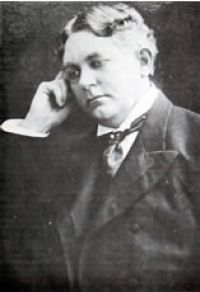
This vision of marriage was deeply intertwined with a romanticized ideal of love as an unchanging state of bliss. Authors like Charles Major envisioned a perfect union as one that perpetually extended the "sweetest season" of courtship through all the years of life, culminating in the "quieted ecstasy of a first love" . This romanticism was buttressed by stern religious doctrines, which presented marital strife and enmity as a path to damnation, in contrast to the love, harmony, and fidelity promised at the altar . Some narratives even elevated this ideal to a cosmic plane, imagining true soul-mates as angels destined for an eternal, inseparable union across the stars [6].
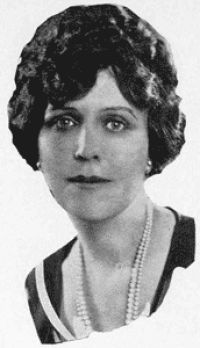
By the early 20th century, this ideal began to evolve, incorporating a new emphasis on informed consent and psychological understanding. A. Maude Royden, for example, argued that the demanding standard of indissoluble monogamous marriage could only be upheld if it was based on more than just prescribed behavior. She advocated for a union founded on knowledge and a deep understanding of one's own nature and that of one's partner, where physical intimacy served as an expression of a resilient spiritual bond designed to outlast mere passion [7]. This shift began to move the ideal of harmony from a state of enforced peace to one of conscious, educated commitment.
The Unquiet Bed and the Nature of Marital Friction
Counterbalancing the ideal of unbroken peace is the pragmatic recognition that conflict is an unavoidable feature of married life. Even those who valued harmony conceded that anger was a temporary season and that tranquility, like spring flowers, is not always in bloom [8]. The acknowledgment that marriage is not a state of "unalloyed bliss" served as a vital corrective to unrealistic expectations, preparing couples for the inevitable presence of clouds over the metaphorical hill of Olympus . This perspective reframes strife not as an aberration, but as a part of the natural landscape of a long-term relationship.
Marital friction manifests in myriad forms, from the mundane to the profound. The daily intimacy of sharing a life can itself be a source of irritation, with something as simple as a shared breakfast table providing fertile ground for fault-finding, even for the most virtuous of partners [11]. These minor annoyances can escalate into more systemic patterns of complaint, such as dissatisfaction with domestic routines or the noise of children, creating a tense home environment [13]. Over time, the comfort of being accepted by a spouse can also lead to a form of relational laziness, where partners cease making small efforts for one another and the home becomes merely a place for mental and physical lounging [16].
The psychological function of quarrels can be complex and sometimes even constructive. As Fyodor Dostoyevsky observed, the conflicts in the early years of a marriage can paradoxically arise from love itself, serving as a means of engagement and reaffirmation [9]. William J. Robinson noted that while nearly all couples experience storms that make coexistence seem impossible, these periods of antagonism are often followed by renewed harmony and even intensified love [10]. This cyclical view suggests that navigating disagreements can be a process of growth, enabling a couple to emerge as a more attached and stable pair .
However, not all conflict is productive. The Roman poet Juvenal offered a much darker depiction of the marital bed as a constant scene of bitter recriminations, where strife is fueled by deceit and counterfeit emotions [12]. The use of a partner for emotional release—through nagging, whining, or grumbling—is identified as a destructive habit that erodes the foundation of the relationship . Such quarrels, rather than resolving issues, can be deeply damaging, settling nothing but destroying the delicate ecosystem of the partnership in the process [17]. This reality has led some to a more cynical view, suggesting that many apparently happy unions are, in fact, false, and that the true nature of marriage is one of inherent uncertainty [18].
The Solitude of the Soul and the Inviolable Retreat
Within the bonds of marriage, solitude can manifest in two starkly different forms. On one hand, it can be a source of profound suffering—the emotional isolation of a loveless union. This is the "solitude of the soul," a withering of the heart experienced by a partner who feels utterly alone despite being physically present in a marriage [21]. This sense of abandonment can become particularly appalling during times of vulnerability, such as illness, where the absence of genuine love creates a silence and void more painful than any physical ailment [23]. Historically, this burden of unheard pangs and silent sighs has often been borne by women in patriarchal unions that prioritized only the husband's happiness [20].
Conversely, a degree of solitude and separation has been recognized as not only tolerable but essential for a healthy relationship. Helen Rowland's quip that happiness with a husband requires being happy without him much of the time points toward a need for individual emotional sufficiency [19]. More seriously, critics of the traditional marriage system argue that its confining nature allows for insufficient individual freedom, and that periodic separation and engagement with new social circles can be beneficial for the mental and physical well-being of both partners [26]. The drive for solitude can be so powerful that it has even been cited as the sole reason for dissolving an otherwise tranquil, long-standing marriage [22].
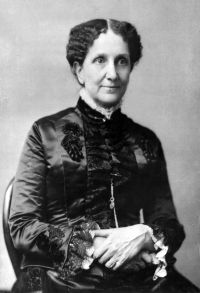
This need for personal space has been articulated as a positive and necessary condition for individual growth. The writer Marie Stopes contended that every soul requires spells of solitude to reach its full potential, arguing that a married woman must possess an "inviolable retreat" to maintain ownership of her body and soul [24]. Writing decades earlier, Mary Baker G. Eddy similarly advocated for moral freedom in marriage, cautioning against the selfish jealousy that seeks to confine a spouse within four walls [25]. For Eddy, a true marriage should expand one's benevolence and worldview, not contract it.
The concept of necessary solitude challenges the romantic ideal of a complete merger of two souls into one angelic whole . Instead, a successful modern marriage must find a delicate balance between intimacy and autonomy. A failure to provide space for individual growth risks fostering the silent suffering of an unheard partner or causing the union to collapse under the pressure of its own constraints . The "inviolable retreat" thus becomes not a rejection of the partnership, but a foundational requirement for the selfhood and growth that ultimately strengthen the marital bond .
Toward a Partnership of Equals
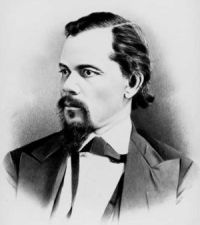
The modern re-evaluation of marital longevity stems from a fundamental shift in its perceived purpose. As early as the 19th century, Paschal Beverly Randolph identified a primary source of marital discontent as the mistaken belief that happiness, rather than mutual growth, is the primary goal of marriage [27]. This perspective posits that a union is a testing ground where radical antagonisms of temperament may be revealed. If such differences make the partnership oppressive, Randolph argued, the rationale for keeping the two individuals bound together should be questioned . This thinking represented a significant departure from earlier ideals that prized the indissolubility of marriage above all else .
This critical reassessment of marriage is inextricably linked to the broader movement for women's emancipation. The increasing prevalence of divorce, for instance, is interpreted not merely as a sign of institutional decay but as a tangible expression of women's growing independence [28]. For many wives, divorce became a necessary escape from what was often a state of subjugation [31]. Thinkers like John Stuart Mill argued forcefully that the subjection of women within marriage produced immense suffering and that their liberation was a crucial step toward a more just society . The legal and social conventions of the time often rendered a married woman's personal liberty nonexistent, subjecting her entirely to her husband's authority [30].
Consequently, the foundation for a durable and successful modern marriage is increasingly seen as a partnership of equals. Richard Roberts argued that the problems within marriage would remain insoluble until it was approached as an equitable venture, rather than as a "career" for women that presupposed dependency [29]. This new model emphasizes the importance of mutual understanding and creating an environment where both individuals are free to develop. It stands in direct contrast to older models that often required one partner, typically the wife, to suppress her ambitions and thoughts for the sake of a prescribed domestic harmony .
This evolving ideal of marriage synthesizes many of the historical tensions between harmony, strife, and individuality. It accepts conflict and the need for personal autonomy not as threats to be eliminated, but as realities to be navigated within a resilient partnership. The goal of longevity is no longer tied to maintaining an outward facade of unbroken peace but is rooted in building a flexible and authentic relationship based on equality, respect for individual growth, and the freedom to negotiate the dual needs for connection and personal space .
The journey through historical perspectives on marriage reveals a clear trajectory from an idealized, static harmony to a more dynamic and realistic understanding of partnership. For centuries, the dominant narrative upheld a standard of "prescribed harmony," in which conflict was seen as a moral failure and its immediate resolution a sacred duty, one often laid upon the woman . This vision, however, was perpetually challenged by the lived reality of the "unquiet bed," where friction, annoyance, and profound disagreement are inevitable components of a shared life . Similarly, the concept of solitude has evolved dramatically, from being viewed as the hallmark of a lonely, failed union to being recognized as a vital condition for individual integrity and, by extension, the health of the relationship itself .
Today, the pursuit of an enduring union is increasingly being redefined around principles of equality, mutual growth, and personal liberty . This modern framework moves away from the rigid suppression of conflict and individuality in favor of a partnership that is resilient enough to accommodate both. The contemporary challenge is not to eliminate strife or deny the need for personal space, but to cultivate a dynamic equilibrium where two individuals can thrive together without ceasing to be themselves. In this view, the ultimate success of a marriage lies not in its perfect tranquility, but in its capacity to be both a profound union and a space that honors and supports two flourishing, autonomous lives .