AI-generated from sources
The Mirror and the Moral Compass, The Enduring Conflict in Youth Literature
In Brief
- Youth literature historically divided between moral instruction to protect innocence and realistic portrayal to prepare for life's complexities.
- Proponents of moral guardianship advocate for curated reading to instill virtue and shield against 'sordid realities,' often through censorship.
- Advocates for an 'unvarnished mirror' argue that psychological realism and candid discussions foster self-understanding, empathy, and critical engagement with societal flaws.
- Youth's inherent drive to question established norms and 'shatter idols' is seen as crucial for societal progress, making intellectual freedom and uncensored ideas vital for their development.
Main authors



Literature intended for young people has long occupied a contested space, caught between its role as an educational tool and its potential as an art form. This tension stems from a fundamental disagreement about the purpose of childhood reading: is it meant to build a moral fortress, protecting the young from the complexities and corruptions of the world, or should it serve as an honest mirror, reflecting life in its unvarnished and often challenging entirety? This debate is not merely academic; it reveals society's deepest anxieties about innocence, knowledge, and the process by which a child becomes an adult. The choice between sheltering youth with idealized narratives and preparing them with realistic portrayals shapes not only what they read but also how they are taught to understand themselves and their place in the world.
On one side of this divide stands the long-standing tradition of literature as a moral compass. This view posits that books should actively cultivate virtue, reinforce societal norms, and shield impressionable minds from what are often termed life's 'sordid realities' [2]. The primary goal is formative—to instill timeless truths and provide clear ethical guidance [6, 7]. Conversely, a powerful counter-argument holds that such protection is a form of intellectual dishonesty that ultimately fails the young. Proponents of literature as an 'unvarnished mirror' insist that authentic growth requires engagement with psychological complexity, societal flaws, and the ambiguous nature of human experience [17, 19]. For them, true preparation for life comes not from shielding but from confronting sublime and difficult truths, fostering critical inquiry rather than moral certainty.
Literature as a Moral Guardian
The conception of youth literature as a vehicle for moral instruction and protection has deep historical roots. In the 19th century, figures like Honoré de Balzac articulated a widely held belief that books for young readers, especially girls, must be meticulously curated to match their supposed purity of mind, deliberately keeping the realities of society at a distance [1]. This protective stance was fueled by a fear that realism in literature—depicting passions, social ambition, and financial concerns—would inevitably introduce 'warm scenes' that could 'inflame the Passions and corrupt the Heart' . Thinkers such as Arthur Schopenhauer extended this critique, arguing that novels gave youth a dangerously false impression of life, creating expectations that reality could never fulfill and thereby causing lasting harm [3].
The proposed remedy to these perceived dangers was a carefully managed literary diet. One common prescription was to steer young readers away from contemporary magazines and novels, turning them loose instead in a library of 'old and classical books' believed to be inherently safe and edifying [4]. Some, like the early 20th-century writer Ellen Key, differentiated between classic literature, which she felt posed little risk as children would naturally overlook adult themes, and modern romances, which she viewed as the true source of a stained imagination and falsified reality [5]. The guiding principle was not merely to avoid vice but to shield the young from error and ambiguity altogether, allowing for a gentle, progressive discovery of the world under careful adult supervision [9].
This protective impulse was inextricably linked to the project of character formation. Literature was not just a shield but a tool for actively shaping the moral fiber of the next generation. The objective was to instill what were considered 'eternal' truths and the importance of self-discipline, which youth, in its natural restiveness and tendency toward revolt, might otherwise scoff at . Orison Swett Marden envisioned a system of discipline and education in which reading played a role in transforming a child into 'hardy mental, moral, physical man-timber,' instilling an unwavering commitment to truth, integrity, and duty . This vision of righteousness was presented not as a restriction but as a path to true freedom and joy, a means for youth to rise above the 'commonplace of sin' and achieve their fullest potential [8].
To enforce this moral vision, institutional mechanisms were often advocated. Writing in 1922, Emory S. Bogardus summarized a Platonic view favoring state censorship over the arts and fiction to prevent children from encountering indecent sights or adopting bad ideas [13]. This prioritizes effect over content; as Bernard Shaw wryly observed, the purpose of a moral instruction book is simply to 'make children good,' regardless of whether its contents are rational or even believable [12]. This educational philosophy even extended to discouraging the study of authors' biographies, fearing that exposing the 'foibles of artists' could provide a negative example, justifying laxity and self-indulgence in students [11]. The overarching goal was to convey the nation's core social and religious values through inspiring stories and life-sketches, rather than through complex or challenging philosophical inquiry [10].
The Case for an Unvarnished Mirror
In direct opposition to the tradition of moral guardianship, a compelling argument emerged for a literature that confronts reality directly. This perspective contends that sheltering the young is not only ineffective but actively detrimental. Social commentators like Emma Goldman fiercely indicted society for its hypocrisy in demanding that children remain ignorant of fundamental life processes, such as sexuality, arguing that this conventional taboo sacrificed their well-being on an 'altar of stupidity' [15]. From this viewpoint, candid and open discussion is the only way to neutralize the potentially harmful impressions left by the 'voluptuous allusions' often found even in state-approved library books [14].
Central to this argument is the value of psychological realism in fostering self-understanding and empathy. A narrative that faithfully depicts the inner life of a child or adolescent, even without a dramatic plot, can serve a vital function . It offers young readers a means to better comprehend their own natures while providing adults with a clearer insight into the 'struggles, problems, and complexities' of the young lives around them . This requires moving beyond simplistic characters to create portraits of individuals whose complex thoughts and actions feel more tangible than those encountered in daily life, as Joseph Blotner described in his mid-20th-century analysis of the political novel [16]. Such literature acknowledges the 'bewildering complication' of life, where youth inevitably discovers that human nature contains malice and that cherished ideals are often stripped away—a reality for which idealized fiction leaves them unprepared [21].
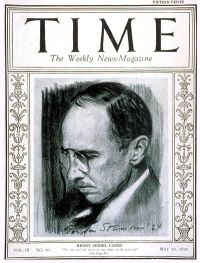
This demand for realism also reflects the artist's struggle for integrity. Oscar Wilde argued that meeting the public's demand for simple, unchallenging plots and psychology would require an artist to 'do violence to his temperament,' suppressing individualism and surrendering everything of value [18]. This tension fueled the rise of a new naturalism, particularly in the early 20th century, where young authors felt, as critic Henry Seidel Canby observed, a 'passionate desire to tell the real truth' about their experiences . This movement became a form of 'propaganda of the experience of youth,' where recording an unflattering but true detail—like an ugly rather than angelic mother's face—was more important than narrative convention . These works often functioned as a 'brief of youth against society,' where the implied argument against a world that fails to fit their experience took precedence over the story itself [20].
Youths Revolt and the Right to Truth
Beyond being passive recipients of either sanitized or realistic narratives, youth is increasingly framed as an active agent in the pursuit of truth. This period of life is defined by its 'elastic vigor,' its 'generous impatience of prudent meanness,' and its powerful rejection of 'instituted falsehood' [23]. This inherent drive to question established norms is seen by some thinkers, such as Romain Rolland, as the 'last hope' for society, demanding that each individual be granted the prerogative to judge good and evil for themselves [22]. This quest for truth, even when it appears 'melodramatic' or 'hysterical' to older generations, is essential for progress; by striving for the impossible, the young ensure that the possible can be attained [24].
The unique vantage point of youth is central to its revolutionary potential. Writing in 1913, Randolph Silliman Bourne asserted that only the young are 'actually contemporaneous,' equipped to interpret the world freshly and without the accumulated prejudices that distort the vision of their elders [25]. Their perspective is not merely a cyclical repetition of past mistakes but the very foundation upon which the future is built . Historically, great social movements have often had a young person at their heart, embodying the dynamic qualities of youthfulness [26]. This stage of life is not a simple state of innocence or experience but a constant 'duel' between the two, a complex inner development often shielded from the gaze of adults [27].
This intellectual freedom is fundamentally at odds with the practice of censorship, which often aims to control and protect the young. Critics of censorship, like Hermann Sudermann, have argued that the 'intellectual suffocation' it causes is a far greater harm to a nation than any single book could ever be [28]. This sentiment was echoed decades later by U.S. Supreme Court Justice William O. Douglas, who identified censorship as the 'hallmark of an immature and insecure society' [29]. The appropriate response to ideas or images deemed dangerous is not to outlaw them but to improve the educational process itself, affirming the primacy of intellectual liberty . It is this freedom that empowers youth to 'shatter idols,' question the world, and build it anew .
The debate over literature for the young ultimately reflects a profound philosophical schism regarding the nature of growth and knowledge. One path prioritizes the construction of a firm moral character through carefully selected stories that reinforce established truths and shield against perceived corruption . This approach values safety, clarity, and the transmission of a stable cultural heritage. The opposing path argues for intellectual and emotional fortitude, which it believes can only be forged through direct engagement with the world's complexities, ambiguities, and even its ugliness . This perspective champions realism, critical thinking, and the belief that authentic preparation for life requires an honest, unvarnished portrayal of it.
This enduring tension between the compass and the mirror is unlikely to find a permanent resolution, for it is embedded in the perennial dialogue between generations . The very process of youth seeking its own understanding, often by challenging the narratives handed down by its elders, serves as a vital engine of societal change . Perhaps the ultimate value of literature for the young lies not in its capacity to provide definitive answers—whether moral or existential—but in its power to provoke essential questions. By presenting a spectrum of worlds, both idealized and painfully real, these stories create a space for young readers to conduct their own analysis, shatter their own idols, and, as Randolph Silliman Bourne suggested, begin laying the foundations for their own future .