AI-generated from sources
The Nature of Youth, Between Innocence and the Call to Arms
In Brief
- Childhood is often idealized as a state of innate peace and sympathy, yet children's play frequently exhibits impulses toward conflict, competition, and hierarchy.
- The romanticization of war, fueled by adventure and patriotic duty, can transform young individuals into ardent soldiers, appealing to their uncooled ardor and desire for distinction.
- Societies systematically condition youth for conflict through military toys, chauvinistic education, propaganda, and even forced recruitment, normalizing violence from an early age.
- The exploitation of children in conflict results in profound individual and collective devastation, emphasizing the moral imperative for protection and a universal education fostering peace.
Main authors


The relationship between childhood and conflict presents a profound and unsettling paradox. A pervasive ideal holds that youth is an inherently pacific state, a time of unspoiled sympathy that recoils from the calculated brutalities of war [1]. This view, famously articulated by poets like William Wordsworth, imagines children arriving in the world imbued with a natural goodness, as if “trailing clouds of glory” from a celestial home [2]. In this conception, innocence is not merely a passive quality but an active, redemptive force, capable of making the hatreds and violence of civil war seem illusory and causing even the most hardened combatants to pause [3]. It is an ideal that casts the child as a moral touchstone, a symbol of the peace that adult society has lost.
This romanticized vision, however, contends with a more complicated reality. While children are undeniably the blameless victims of adult-initiated conflicts, often born into a world of animosities they had no part in creating [4], their own behaviors are not always devoid of conflict’s elementary forms. Some observers argue that the very seeds of war can be found in the “unkind and quarrelsome dispositions” of the young, suggesting that aggression is a natural, if nascent, human trait [6]. Children’s play frequently involves the imitation of military structures and combat, with youngsters forming leagues, choosing leaders, and engaging in mock battles [7, 8]. This tendency raises a critical question: is the martial spirit an alien imposition on a peaceful nature, or does it tap into a pre-existing impulse within the young, waiting to be shaped and directed by the forces of society?
A Contested Innocence, The Pacific Ideal versus the Warring Spirit
The idealization of childhood posits a fundamental disconnect between the nature of the young and the organized slaughter of warfare. In this view, a world populated only by youth would be incapable of war, as a child’s being is defined by an innate sympathy that would stand aghast at mass annihilation . This perspective finds deep cultural resonance in the idea of childhood as a state of grace, a time of purity that commands a universal appeal . So potent is this imagined innocence that it can be portrayed as a force capable of single-handedly vanquishing the specters of barbarism and hatred, its mere presence asserting a divine dawn over the darkness of human strife .
Conversely, another school of thought locates the origins of war not in the political failings of adults but in the elemental passions present from a young age. This perspective suggests that the remedy for conflict must be applied early, directly to the heart of the child where quarrelsome dispositions—the very “germs” of war—first appear . If a love of peace were carefully cultivated in every child, this argument runs, an entire generation could arise that would be predisposed to banish war from the earth . This approach reframes childhood not as a static state of innocence, but as a crucial formative period where the tendencies toward either peace or conflict are decisively shaped.
The behaviors observed in children’s social worlds provide compelling evidence for this more complex view. Even in environments far from actual battlefields, boys can be seen spontaneously organizing themselves for mock warfare, using simple objects as weapons and adopting military roles . According to the analysis of Karl Groos, these activities are more than simple imitation. Youthful leagues and associations for contest function as a “miniature” illustration of societal evolution, teaching participants the value of group cohesion in the face of a common threat and the necessity of submitting to a leader . This suggests an inherent impulse towards hierarchical, competitive, and even conflict-oriented behavior that is a natural part of youthful life.
Reconciling these perspectives requires acknowledging that childhood is a state of potential rather than a fixed essence. While children are often the most tragic and voiceless victims of war, bearing the consequences of an adult world's folly , they simultaneously exhibit instinctual behaviors that mirror the dynamics of conflict . International bodies in the 21st century have emphasized the necessity of protecting children from violence precisely to break these cycles and sow seeds for future peace, recognizing their vulnerability [5]. The crucial question is not whether children are inherently good or aggressive, but how these coexisting capacities for sympathy and for conflict are either nurtured for peace or exploited for war by the societies they inhabit.
The Call of the Blade, Adventure and the Glorification of War
The latent “warring spirit” in youth often requires a catalyst to ignite, and this is frequently found in the romantic appeal of conflict. A “war fever” can become a devouring passion for the young, fueled not only by patriotism but by a powerful cocktail of other motives [9]. As Oliver Wendell Holmes Sr. observed, the love of adventure, the influence of peers, the fear of missing out on historic events, and a deep-seated desire for personal distinction can transform even the most peaceful youth into fervent soldiers . This transformation is often driven by an emotional and spiritual calling, an appeal to the large-hearted ardor of youth that has not yet been cooled by the cynicism or pragmatism of later life [12].
This allure is amplified by the cultural glorification of war, which can cast military life as the pinnacle of excitement and honor. To an ardent young person, the “pride, pomp and circumstance of glorious war” can make other pursuits, like quiet study, seem unbearably dull [10]. In this light, war ceases to be seen as a humanitarian disaster and is instead reframed as a thrilling “game of youth” [11, 13]. Even participants who directly experience the suffering of conflict can, in retrospect, reinterpret their ordeal as a form of “Romance”—a grand adventure that ultimately gave their lives meaning and worth [15].
This romantic narrative often presents life itself as an unavoidable battle, compelling the young to take a side in a cosmic struggle where the stakes are life and death [14]. Such a worldview makes neutrality seem like a moral failing. For young people animated by passion and a sense of duty—however manipulated that sense might be—the call to arms becomes almost irresistible . War is thus presented not as a political choice, but as a fundamental test of one's spirit, an opportunity to prove oneself before acquiring the worldly wisdom or “sordid gain” that might otherwise induce hesitation .
Molding the Martial Mind, Societal Conditioning and Militarism
Beyond innate tendencies and romantic appeals, the martial spirit is often the product of deliberate and systematic societal conditioning. This process can begin in the earliest years of life, in the nursery itself. The introduction of military toys serves to imbue children with a spirit of military prowess, framing destructive power as a form of heroism and virtue [21]. As Paul Bourget noted, this kind of play becomes a “puerile and premature imitation” of the very real passions and conflicts that will cause them to suffer as adults, normalizing war before it is ever truly understood [16].
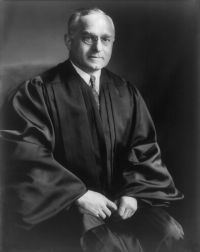
Formal education and state-sponsored messaging are powerful tools in this indoctrination. Governments have long operated on the principle that if you can mold the child’s mind, you can determine the character of the man [18]. Schools can become instruments for perverting youthful minds through curricula that glorify military history and distort facts to cultivate chauvinism and hatred of other nations [19, 20]. This nationalistic teaching has been identified by thinkers like Felix Frankfurter as a potential “seed-bed of war” . Historically, entire national education systems, such as those in Napoleonic France or early 20th-century Germany, were explicitly designed to prepare youth for military life, turning them into a disciplined and patriotic class ready to answer the call of conscription [22, 23].
The broader culture reinforces these lessons, often desensitizing children to violence to the point where they become numb [24]. Emma Goldman scathingly described how governments act as hucksters, using glamorous posters to lure “innocent boys” into military service with promises of adventure, effectively “shanghaiing” them into patriotism . According to Scott Nearing, writing during World War I, this creation of a “thorough-going war spirit” is a slow, methodical process of “steeping and simmering” a child in animosity through games, biased textbooks, and patriotic appeals .
The most brutal manifestation of this societal exploitation is the forced recruitment of child soldiers. In numerous conflicts, children are coerced into becoming instruments of war—not just as fighters, but as spies, human shields, and servants, with young girls often forced into sexual slavery [17]. This represents the ultimate corruption of youth, a complete inversion of the protective duties of adulthood. In his critique, Bertrand Russell placed the blame for this tragedy squarely on the older generation, whose own “spiritual death” and “evil passions” lead them to sacrifice the brightness and potential of the young in conflicts of their own making [25].
War's Bitter Harvest and the Promise of a New Generation
The ultimate consequence of drawing youth into conflict is the devastation of both individual lives and collective futures. War systematically dismantles the protective barriers of a happy childhood, immersing the young in an environment of bloodshed, bereavement, and anxiety [26]. For children born into conflict, joy can be an utterly meaningless concept, their entire existence defined by hunger and fear . This tragic reality represents a profound loss of human potential; countless children who might have grown up to enlighten the world are instead mowed down like grass for causes they cannot comprehend [27]. For parents, this means watching their most cherished hopes get extinguished as their sons—the “flower, strength, and beauty of the country”—are taken from useful lives and sent to the field of slaughter [28].
Yet, amid this devastation, the figure of the child endures as a powerful symbol of hope and a catalyst for change. The sheer injustice of their suffering often fuels a desperate cry to “get back to sanity” and save the next generation from the same fate [29]. This sentiment was powerfully articulated by the American Youth Congress in the 1930s, which issued a declaration asserting the right of their generation to a peaceful life, rejecting the wars from which they could reap nothing but “misery, mutilation and death” [30]. This plea underscores a recurring belief that the young possess the potential to break the cycles of violence perpetuated by their elders.
Realizing this hope, however, requires a conscious and active commitment from the adult world. This commitment is centered on the ideas of protection and a radically different form of education . The path forward, as envisioned by thinkers like W. E. B. Du Bois, involves a universal education aimed at the “Immortal Child” of all races and backgrounds, fostering shared humanity over divisive nationalism [31]. This approach, echoed in the call to begin international peace in the nursery, prioritizes ideals of constructive and helpful heroism over destructive prowess . Ultimately, the promise of a peaceful future depends on shielding children from the failures of the past and cultivating their innate capacity for sympathy and creation.
The inquiry into childhood’s relationship with war reveals a deep and persistent tension. One powerful tradition idealizes youth as a state of innate sympathy, horrified by and fundamentally opposed to organized violence . Yet this vision coexists with the observation that children’s own social worlds often contain the nascent impulses of conflict, competition, and hierarchy . This ambiguity in the nature of youth provides fertile ground for external forces. The romantic allure of adventure, glory, and patriotic duty can capture the imagination of the young, making war seem like a noble calling . This predisposition is then systematically cultivated by societal structures—from military toys and chauvinistic school curricula to overt propaganda—that mold the young into instruments of national ambition .
The cost of this transformation is measured in the crushing of individual potential and the perpetuation of violent cycles that leave children as the primary victims . The recognition of this tragic reality, however, also provides a moral imperative for change. The vulnerability of the child becomes the ultimate argument for peace and protection . In the end, the debate over whether children are naturally pacific or aggressive may be less critical than the choices societies make about which of their potentials to nurture. The hope for a more peaceful world rests on a fundamental shift in values, one that embraces the education of an “Immortal Child” for global service rather than national conflict, thereby allowing future generations to realize their potential free from the shadow of war .