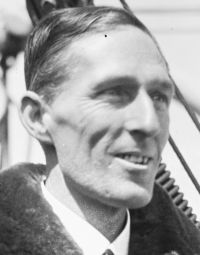
Philip Gibbs

Philip Gibbs

Summary

Portrait of Philip Gibbs Philip Gibbs Now It Can Be Told

Lord God, did they know what a German barrage was like? Did they guess how men walked day after day through harassing fire to the trenches? Did they have any faint idea of life in a sector where men stood, slept, ate, worked, under the fire of eight-inch shells, five-point—nines, trench-mortars, rifle-grenades, machine-gun bullets, snipers, to say nothing of poison-gas, long-range fire on the billets in small farmsteads, and on every moonlight night air raids above wooden hutments so closely crowded into a small space that hardly a bomb could fall without killing a group of men.
Source: Gutenberg

Portrait of Philip Gibbs Philip Gibbs Now It Can Be Told

Yes, they were wonderful, the French, and their hatred of the Germans, their desire for vengeance, complete and terrible, at all cost of life, even though France should bleed to death and die after victory, is to be understood in the heights and depths of its hatred and in the passion of its love for France and liberty. When I think of France I am tempted to see no greater thing than such patriotism as that to justify the gospel of hate against such an enemy, to uphold vengeance as a sweet virtue.
Source: Gutenberg

Portrait of Philip Gibbs Philip Gibbs Now It Can Be Told

It is only by that hope that one may look back upon the war with anything but despair. All the lives of those boys whom I saw go marching up the roads of France and Flanders to the fields of death, so splendid, so lovely in their youth, will have been laid down in vain if by their sacrifice the world is not uplifted to some plane a little higher than the barbarity which was let loose in Europe. They will have been betrayed if the agony they suffered is forgotten and “the war to end war” leads to preparations for new, more monstrous conflict.
Source: Gutenberg

Get perspective with Kwize: daily news enlightened by great literature