AI-generated from sources
The Contested Kingdom, Art and Ideology in Childrens Literature
In Brief
- Children's literature is a battleground between its purpose as a vehicle for moral instruction and as a sanctuary for unfettered imagination.
- The role of illustrations in children's books is fiercely debated, with some arguing they are integral art forms while others believe they can stifle a child's internal imaginative development.
- Commercial pressures consistently undermine artistic standards in the children's book market, compelling public institutions like libraries to adopt a curatorial role.
- Attempts to formalize art education for children, even with the goal of cultivating taste, risk destroying innate creativity by reducing art to technical skills or generating 'counterfeit art'.
Main authors

The world of children's literature, often perceived as a tranquil realm of wonder and innocence, is in reality a landscape shaped by persistent ideological and aesthetic conflicts. A central tension animates its history: the struggle between literature as a vehicle for moral instruction and as a sanctuary for the unfettered imagination [3, 6]. For generations, a prevailing view held that books for the young should serve a clear didactic purpose, molding character and preparing children for the rigors of adult life. However, this perspective has long been challenged by an alternative vision, one that champions childhood as a unique period for dreams, fables, and joy, where stories should serve not as lessons, but as gateways to the marvelous [4, 10]. This fundamental disagreement over the purpose of children's stories informs every aspect of their creation, reception, and institutional validation.
This debate extends beyond the pages of books into the halls of public institutions tasked with shaping young minds. Libraries and schools have become central arenas in the battle to define what constitutes quality children's literature [1]. Curators and educators grapple with the question of whether to steer children towards what is deemed "real literature" or to embrace a distinct, age-appropriate canon [7]. Their efforts are perpetually complicated by the powerful influence of the commercial market, which often promotes mediocrity and undermines the push for higher artistic standards [2, 21]. The very concept of a separate "juvenile literature" is itself a point of contention, seen by some as a vital space for childhood development and by others as a distraction that delays the cultivation of a mature literary palate [5].
Instruction Versus Imagination
A foundational debate in the field of children's literature revolves around its relationship to the broader literary canon. One school of thought, articulated by commentators like Alice Isabel Hazeltine, expresses concern that an overabundance of juvenile books, however well-made, can inhibit a child's development by postponing a taste for the "strong meat of real literature" . This view posits that the ultimate goal of reading is cultural and ethical enrichment, a purpose best served by the established classics . From this perspective, championed forcefully by Arlo Bates, there is no distinct juvenile literature, only literature itself, with the limitations of youth affecting comprehension but not the inherent value of the work . The objective, therefore, is to guide children toward this unified canon as swiftly as possible.
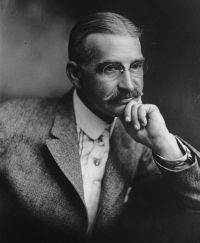
In direct opposition stands the belief that children's literature must be understood as a unique and independent art form. Writing in 1907, Montrose Jonas Moses argued that a true children's book is not merely a simplified adult novel but a creation with its own distinct appeal and internal logic . This perspective validates the child's worldview, embracing what L. Frank Baum calls the natural childhood tendency to "scorn realities" in favor of fables and impossible adventures . According to this philosophy, the purpose of literature for the young is not primarily to educate them for adulthood but to honor the imaginative experience of being a child. The notion that an author must transition to adult novels to be considered a serious artist is dismissed as a profound misconception of the genre's value .
This emphasis on imagination finds its philosophical grounding in the concept of play. Children's books, in this framework, belong to the realm of leisure and delight, distinct from the structured work of schoolbooks . Their success is measured by their ability to captivate through their own intrinsic charms, rather than by any external pedagogical goal . This view elevates even the simplest folk and fairy tales, which Porter Lander MacClintock urges should be seen not as mere nursery diversions but as forms of "great but simple art" worthy of adult appreciation [8]. By recognizing the artistic laws at work in these foundational stories, one can better appreciate the unique spirit of childlike literature .
Navigating these opposing viewpoints requires a delicate balance. While some purists argue against any literature written specifically for children, others, like Hazeltine, acknowledge that the quality of modern juvenile publications can be exceptionally high, cultivating both taste and knowledge in young readers [9]. The challenge for educators and librarians is to find a middle path, avoiding the uncritical acceptance of popular fads while also recognizing the legitimacy of a literature created for children's specific needs and interests . The historical evolution from the sternly moralizing books of the past toward more imaginative narratives itself marks a significant shift, representing the child's escape into a more expansive literary world .
The Contested Canvas of Illustration
The artistic status of illustrations in children's books is a subject of intense debate, exposing deep divisions over aesthetics and the nature of childhood imagination. Proponents argue that high-quality illustrations are not merely decorative but are integral to the literary experience. Orton Lowe suggests that the artist's pencil is almost a necessity, adding a complementary layer of artistry to the text [12]. This sentiment, echoed decades later by Marion Harland, reflects a broader cultural shift away from the belief that any crude image would suffice for children toward a demand for the very best in juvenile art [18]. The aim is to create a cohesive work where text and image enhance each other as parts of a single aesthetic object .
The call for high artistic standards in children's illustrations has a long history. As early as 1843, Felix Summerly lamented the prevalence of the "lowest kind of art" in children's books and pioneered the idea of using works by old masters to cultivate a taste for beauty from infancy [19]. This educational philosophy is central to the work of thinkers like Charlotte Marie Mason, who believed that art training should begin in early childhood to teach the eye to consciously register and retain images of beauty [14]. For Mason, it was a mistake to limit a child's visual diet to simple picture-book lithographs, as children possess a capacity to appreciate true art that often exceeds adult expectations [17]. The goal is not just to present pictures, but to awaken the innate artistic sensibility that lies within every child [16].
Conversely, a significant counter-argument posits that illustrations can be detrimental to a child's imaginative development. Porter Lander MacClintock mounted a forceful critique, asserting that children should never see comical or simplistic drawings of their stories, as these "trashy" images substitute a distorted, externally imposed vision for the potentially more beautiful one the child could create independently [11]. He went so far as to argue that after a certain age, children do not need pictures at all, and would benefit from the mental discipline of relying solely on text to visualize scenes . This view places ultimate value on the child's internal imaginative faculty, seeing illustration as a potential threat to its growth.
These conflicting views often converge on the concept of the child's innate artistic nature. Ellen Key observed that children approach stories with an artistic desire for pure, unmediated experience, resisting authorial asides or moralizing [13]. Floyd Dell made the connection explicit, declaring that the child is an artist and that great art itself is often an attempt to recover this direct, unspoiled vision . This idea is further supported by a psychological interest in children's own drawings, which, as analyzed in a 1896 article in Popular Science Monthly, are seen as a rich medium for understanding the child's mind, comparable in significance to early speech or the art of ancient cultures [20]. Ultimately, the merit of an illustration is judged by its ability to engage with this inherent artistic core, with the greatest works being those that capture a universal quality of childhood that resonates with all [15].
Commerce, Curation, and the Corruption of Taste
The aspiration for high-quality children's literature and illustration is consistently challenged by the realities of the commercial market. Critics like James Duff Brown noted in 1907 that a great deal of literature for youth was expensive, poorly made "gilded rubbish," manufactured by publishers with a cynical eye toward profit rather than the child's enrichment . This commercial impulse, as Henry Blackburn observed, often sidelines genuine artistic judgment, as publishers—preoccupied with business—are ill-suited to make aesthetic decisions and may resort to cheapening production [22]. The result is a market saturated with what one educator termed "trash," creating a pressing need for external guidance in the selection of books [23].
In response to this market failure, public institutions have assumed the role of cultural gatekeepers. Libraries and schools see it as their duty to curate collections and guide reading habits, acting as a bulwark against commercial mediocrity . Librarians like Alice Isabel Hazeltine argued for a selective purchasing policy, focusing on acquiring the "best" books and resisting pressure to stock inferior but popular titles [25]. This mission extends beyond the library walls, with the ultimate goal of influencing the entire book market to the point where commercial bookstores offer works of the same caliber [26]. This effort is framed as a continuous "warfare" against sensationalism and low-quality material, essential for the responsible shaping of future citizens [24].
However, this institutional approach to cultivating taste is not without its own critics, particularly concerning formal art education. Thinkers such as Leo Tolstoy and Clive Bell expressed profound skepticism toward art schools, viewing them as systems that actively destroy creativity [27, 28]. Tolstoy contended that it is impossible to teach someone to be an artist, and that such institutions corrupt innate talent while flooding the world with "counterfeit art" that debases public taste . Bell similarly warned against sending children to art schools, which he dismissed as purveyors of "high-toned commercialism," and even cautioned against crafts guilds that prize technical skill over true artistic feeling .
This critique reveals a fundamental paradox at the heart of art education. The core problem, as identified by John Ruskin, is the separation of artistic training from general education, reducing art to a set of technical skills rather than an integrated way of seeing and thinking [30]. While progressive educational ideals, inspired by thinkers like Emerson, call for the reintegration of beauty into the useful arts, the institutional realization of this vision has been painfully slow [29]. This creates an enduring dilemma: how can society elevate taste and provide artistic guidance without formalizing it to the point where it quashes the very spontaneous creativity it aims to nurture? The institutions meant to be the solution risk becoming part of the problem, perpetuating a different kind of mediocrity .
The landscape of children's literature and illustration is far from a simple domain of storytelling; it is a complex field shaped by enduring philosophical conflicts. At its core lies the foundational tension between its purpose as a tool for moral instruction and as a space for pure, imaginative play . This primary debate informs secondary, yet equally fierce, controversies, such as the role of illustrations—variously seen as essential artistic complements, aids to developing taste, or damaging crutches that stifle a child's own creative vision . Hovering over all these ideological struggles is the pervasive influence of a commercial marketplace that often prioritizes profit over aesthetic merit, compelling institutions like public libraries to assume a defensive, curatorial role to protect and elevate quality .
Yet, the proposed solutions for elevating children's aesthetic experiences reveal their own deep contradictions. While the guidance of educators and librarians provides a crucial counterweight to commercial pressures, the very act of institutionalizing art education is viewed with suspicion . Critics argue that formal art schools risk destroying the innate, artist-like nature of the child they profess to serve, replacing spontaneous expression with technical proficiency and counterfeit sentiment . This leaves a central, unresolved question: how can a society foster genuine artistic sensibility in the young without subjecting it to systems that may ultimately deaden it? The challenge remains to balance the need for guidance and quality control with the preservation of the authentic, untutored vision that defines the artistic spirit of childhood.