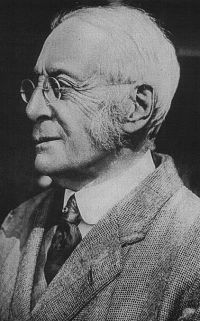
Charles William Eliot

Charles William Eliot

Summary

Portrait of Charles William Eliot Charles William Eliot Four American Leaders

Emerson was never deceived by a specious philanthropy, or by claims of equality which find no support in the nature of things. He was a true democrat, but still could say: "I think I see place and duties for a nobleman in every society; but it is not to drink wine and ride in a fine coach, but to guide and adorn life for the multitude by forethought, by elegant studies, by perseverance, self-devotion, and the remembrance of the humble old friend,—by making his life secretly beautiful."
Source: Gutenberg

Portrait of Charles William Eliot Charles William Eliot Four American Leaders

In spite of these resemblances between Washington's time and our own, the profound contrasts make the resemblances seem unimportant. In the first years of the Government of the United States there was widespread and genuine apprehension lest the executive should develop too much power, and lest the centralization of the Government should become overwhelming. Nothing can be farther from our political thoughts to-day than this dread of the power of the national executive.
Source: Gutenberg

Portrait of Charles William Eliot Charles William Eliot Four American Leaders

Emerson taught that it is the office of art to educate the perception of beauty; and he precisely describes one of the most recent of the new tendencies in American education and social life, when he says: "Beauty must come back to the useful arts, and the distinction between the fine and the useful arts be forgotten." That sentence is the inspiration of one of the most recent of the efforts to improve the arts and crafts, and to restore to society the artistic craftsman. But how slow is the institutional realization of this ideal of art education!
Source: Gutenberg

Get perspective with Kwize: daily news enlightened by great literature