AI-generated from sources
George Eliot, The Burden of a Scientific Art
In Brief
- George Eliot consciously transformed the novel into an analytical instrument for scientific and philosophical inquiry, departing from traditional entertainment.
- Her fiction, deeply influenced by 19th-century scientific thought, aimed to meticulously delineate human character and the growth of souls.
- Critics often argued that Eliot's profound intellect and didactic purpose sometimes overshadowed her artistic spontaneity, leading to a perceived lack of narrative vitality.
- Eliot's unique ability to blend philosophical depth with artistic charm, particularly in works like Middlemarch, positioned her as a singular figure capable of synthesizing mind and imagination.
Main authors
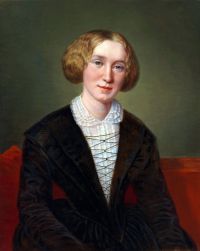
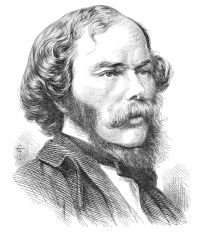
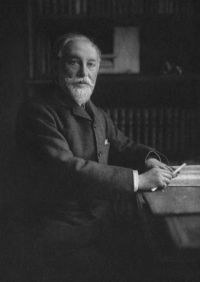
George Eliot’s fiction stands as a monumental attempt to realign the novel with the intellectual currents of the 19th century. In an era animated by new scientific and philosophical inquiry, she consciously forged a literary path that diverged from mere entertainment or straightforward storytelling [4, 5]. Her novels became instruments of analysis, vehicles for exploring the intricate machinery of human psychology and the complex dynamics of social systems. This approach was not the product of an unguarded, spontaneous talent, but rather the deliberate output of a methodical and abstract mind, deeply engaged with the leading scientific thinkers of her day, including her partner George Henry Lewes [1, 7]. Her work aimed to translate the new understanding of life as an evolving organism into a narrative form, transforming the novel into a laboratory for moral and psychological investigation.
This pioneering ambition, however, ignited a persistent critical debate that continues to define her legacy. While her intellectual rigor elevated the novel to new analytical depths, it also raised fundamental questions about artistic integrity. Critics both in her own time and since have wrestled with a central tension in her work: whether the philosopher and the scientist within her ultimately overshadowed the artist [13, 16]. The exhaustive analysis, the didactic purpose, and the stylistic weight of her prose led many to conclude that her intellectual commitments came at the expense of creative spontaneity and narrative vitality [11, 15]. Her career thus presents a fascinating case study in the complex, often fraught, relationship between systematic thought and the imaginative impulses of fiction.
The Novel as an Analytical Instrument
George Eliot’s entry into fiction was a calculated intellectual maneuver rather than an act of unpremeditated inspiration . Her natural disposition was that of an essayist, drawn to abstract thought, and her turn to the novel was a strategic decision to find the most effective medium for her philosophy of life . In this, she was deeply influenced by the scientific vanguard in England, aiming to accomplish in literature what figures like George Henry Lewes were achieving in physiological psychology . This resolve positioned her as a leader in a new school of fiction—one that treated the novel not as an end in itself, but as a powerful means to a specific intellectual and moral end . Her primary goal was not simply to tell a story, but to use narrative as an indispensable tool for the deep delineation of human character.
Central to this project was the integration of what was then known as the
The Perils of Intellectual Overreach
The very qualities that made George Eliot a pioneer—her profound intellect and serious purpose—were frequently identified by critics as the source of her artistic limitations [10]. For many, a central problem in her work was that she was more of a thinker than an artist, and her fiction was often most compromised when her intellectual aspirations were at their most ambitious . This tension became increasingly apparent in her later novels, where the pursuit of scientific accuracy and philosophical depth seemed to extinguish the joy of pure storytelling . A perceived loss of spontaneity became a recurring critique, with observers noting that her later prose grew ponderous, laden with scientific similes, and stylistically less lucid than her earlier, fresher works like Adam Bede [9, 17, 23]. The conscious effort and painful labor behind the writing felt palpable, detracting from the sense of easy invention essential to romance .
This intellectual weight manifested as a structural and stylistic departure from conventional fiction. Critics like Henry James argued that Eliot’s method was fundamentally analytical rather than creative; she proceeded from the abstract to the concrete, using her characters as types to illustrate a moral consciousness rather than presenting them as individuals born of direct observation [14, 18]. This resulted in a hybrid form, an
A Synthesis of Mind and Imagination
Despite the persistent criticism of artistic compromise, George Eliot’s unique intellectual position also enabled an achievement of singular power. While she may have been more of a thinker than some other artists, she was simultaneously a far greater artist than any contemporary philosopher [19]. This dual strength allowed her, at her best, to create a masterful and rare blend of fiction and philosophy, merging the two into a single, cohesive substance [21]. The historical precedent of figures like Dante and Goethe demonstrates that learning and poetic imagination can indeed coexist in the same mind, and Eliot’s work can be seen in this tradition . In novels like Middlemarch, for instance, she succeeded in presenting the complex philosophy of a powerful mind with all the immersive charm of art, turning its detailed social tapestry into a profound exploration of human thought and motivation [22].
Her fiction thus occupies a unique and essential place in literary history as an emblem of its era’s central intellectual and spiritual struggles [24]. The novels capture a generation caught between an intense need for belief and the emerging scientific worldview that made traditional faith difficult . While her characterizations may have lacked the spontaneity praised by some critics, her psychological expositions were regarded as masterpieces of scientific insight, laying bare the minds of her time with unparalleled precision [20]. The deliberate and painstaking method she employed, which involved touching the most secret springs of human action, allowed her to achieve a deeper form of truth and empathetic realism than might be possible through less analytical means [6].
Ultimately, Eliot's success rested on her ability to balance these competing impulses. Works like Adam Bede are often celebrated as the height of her achievement precisely because they feel inevitable and spontaneous, written from an abundance of experience where the art conceals the artist’s labor . Even when the balance was less perfect, her capacity to infuse difficult ethical and social ideas with imaginative power remained unmatched by her contemporaries . In surrendering her personal expression to the objective work to be done, she achieved a kind of impersonal, significant emotion that resides within the art itself, a quality that resonates with later modernist conceptions of artistic creation [25]. Her legacy is thus defined not by a simple failure or success, but by the profound results of her ambitious synthesis.
George Eliot’s literary career represents one of the 19th century’s most earnest and sustained efforts to harmonize the art of the novel with the disciplines of science and philosophy. She reconceived the form as a tool for inquiry, prioritizing the analytical demonstration of psychological and moral growth over the simple pleasures of narrative [3, 8]. This intellectual project produced a new kind of realism, one deeply invested in causality, development, and the intricate relationship between the individual and the social organism [2]. Yet this very ambition created the central conflict of her critical reception. The weight of her scientific apparatus and didactic intent often led to charges that her art was labored, that her characters were over-analyzed, and that the spontaneity essential to fiction had been sacrificed for the sake of abstract exposition [12].
The enduring importance of her work, however, lies precisely in this tension. While her novels may sometimes lack the effortless grace of pure romance, they offer a profound and deeply considered vision of human experience that is both intellectually rigorous and empathetically rendered. Her fiction stands as a unique and powerful emblem of a transitional age, embodying its intellectual anxieties and its search for a new moral foundation . By pushing the boundaries of what the novel could contain, George Eliot secured a legacy not merely as a storyteller, but as a thinker who successfully, if sometimes laboriously, transformed fiction into a vital mode of philosophical exploration. Her work remains a benchmark for any artist who seeks to represent not just the spectacle of life, but the very ideas that give it shape and meaning.