T. S. Eliot

Biographical details

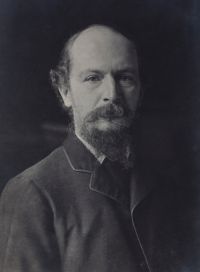
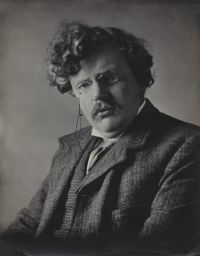
Portrait of T. S. Eliot T. S. Eliot The Sacred Wood: Essays on Poetry and Criticism

We have no difficulty in seeing what brought him to this pass; how, in contrast, not with Shakespeare, but with Marlowe, Webster, Donne, Beaumont, and Fletcher, he has been paid out with reputation instead of enjoyment. He is no less a poet than these men, but his poetry is of the surface. Poetry of the surface cannot be understood without study; for to deal with the surface of life, as Jonson dealt with it, is to deal so deliberately that we too must be deliberate, in order to understand.
Source: Gutenberg

Portrait of T. S. Eliot T. S. Eliot The Sacred Wood — Hamlet and His Problems (1920)

For Shakespeare it is less than madness and more than feigned. The levity of Hamlet, his repetition of phrase, his puns, are not part of a deliberate plan of dissimulation, but a form of emotional relief. In the character Hamlet it is the buffoonery of an emotion which can find no outlet in action; in the dramatist it is the buffoonery of an emotion which he cannot express in art. The intense feeling, ecstatic or terrible, without an object or exceeding its object, is something which every person of sensibility has known; it is doubtless a study to pathologists.
Source: Wikisource

Portrait of T. S. Eliot T. S. Eliot The Sacred Wood (1920)

It is merely a peculiar honesty, which, in a world too frightened to be honest, is peculiarly terrifying. It is an honesty against which the whole world conspires, because it is unpleasant. Blake's poetry has the unpleasantness of great poetry. Nothing that can be called morbid or abnormal or perverse, none of the things which exemplify the sickness of an epoch or a fashion, have this quality; only those things which, by some extraordinary labour of simplification, exhibit the essential sickness or strength of the human soul.
Source: Wikisource

Get perspective with Kwize: daily news enlightened by great literature