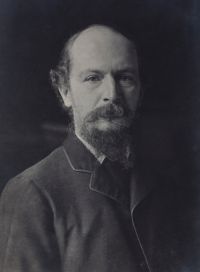
Algernon Charles Swinburne and Margaret Bryant

Biographical details

Algernon Charles Swinburne and Margaret Bryant 1911 Encyclopædia Britannica (1910)

Only as Pollux was on one side a demigod of diviner blood than Castor can it be said that on any side Beaumont was a poet of higher and purer genius than Fletcher; but so much must be allowed by all who have eyes and ears to discern in the fabric of their common work a distinction without a difference. Few things are stranger than the avowal of so great and exquisite a critic as Coleridge, that he could trace no faintest line of demarcation between the plays which we owe mainly to Beaumont and the plays which we owe solely to Fletcher.
Source: Wikisource

Algernon Charles Swinburne and Margaret Bryant 1911 Encyclopædia Britannica (1910)

Nor even in Fletcher’s Ordella, worthy as the part is throughout even of the precious and exquisite praise of Lamb, is there any such cunning touch of tenderness or delicate perfume of pathos as in the parts of Bellario and Aspatia. These have in them a bitter sweetness, a subtle pungency of mortal sorrow and tears of divine delight, beyond the reach of Fletcher. His highest studies of female character have dignity, energy, devotion of the heroic type; but they never touch us to the quick, never waken in us any finer and more profound sense than that of applause and admiration.
Source: Wikisource

Algernon Charles Swinburne and Margaret Bryant 1911 Encyclopædia Britannica, Volume 5… (1911)

He had a singular force and solidity of thought, an admirable ardour of ambitious devotion to the service of poetry, a deep and burning sense at once of the duty implied and of the dignity inherent in his office; a vigour, opulence, and loftiness of phrase, remarkable even in that age of spiritual strength, wealth and exaltation of thought and style; a robust eloquence, touched not unfrequently with flashes of fancy, and kindled at times into heat of imagination.
Source: Wikisource

Get perspective with Kwize: daily news enlightened by great literature