AI-generated from sources
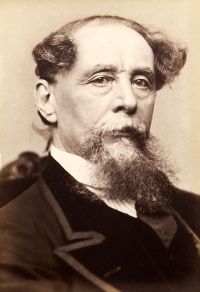
Charles Dickens, The Novelist on Stage
In Brief
- Charles Dickens’s lifelong identity was inextricably linked to public performance, from childhood entertainment to his professional literary career.
- His creative process and literary output were profoundly shaped by theatricality, manifesting in melodramatic narratives, exaggerated characters, and a constant drive to engage a mass audience.
- Public reading tours in later life were fueled by a complex mix of financial necessity and a deep psychological need for direct audience affirmation.
- Dickens’s dramatic approach, while ensuring immense popularity, also drew criticism for excessive emotionality and a reluctance to explore deep psychological complexity, particularly in his portrayal of women.
Main authors

From his earliest days, Charles Dickens’s life was a form of public performance. The initial glimpses into his childhood reveal a boy delighting in the applause that followed his comic songs, positioning him in the glare of the footlights from which he would never depart [1]. This theatrical instinct was far from a mere diversion; it became a central pillar of his artistic and personal identity, shaping his professional choices, his intense need for audience connection, and even his financial strategies later in life [2]. His fascination with the world of theater was comprehensive, extending from a deep interest in the lives of its humblest players to active participation as both manager and star actor in amateur productions [3, 4]. The stage was not just a place he visited, but a lens through which he viewed the world.
This pervasive theatricality was the engine of his creative process, fundamentally shaping his literary output. He conceptualized himself as an "artist" who meticulously crafted his works before "letting them out" to the public, a model that mirrors the relationship between a playwright and a production company [5]. His famous walks through London were a form of research conducted in what he saw as the greatest theater of all, a vast stage where countless human dramas unfolded daily [7]. This deep-seated dramatic impulse would come to define the very structure of his novels, the nature of his characterizations, and his enduring relationship with readers. It was a source of immense power, recognized and praised by contemporaries, yet it also imposed certain limitations on his artistic vision [6].
The Man Behind the Curtain, Dickensian Showmanship
Charles Dickens’s public identity was inextricably linked to the persona of a performer. From a young age, he cultivated an atmosphere of celebrity, stepping into a spotlight that he would command for the rest of his life . This inclination was not confined to his youth but was a core component of his adult professional life, most vividly expressed through his enthusiastic management of and acting in amateur theatricals, a context in which he was described as being most completely himself . His intimate knowledge of life behind the scenes, born from observing the mechanics of stage production and the lives of its performers, granted him a unique and enduring perspective on the presentation of human drama .
The decision to undertake exhaustive public reading tours in his later years powerfully illustrates the depth of this performative drive. These were not simple recitations but full-bodied dramatic interpretations that demanded immense physical and emotional commitment . The motivations driving this grueling endeavor were complex, combining a practical desire to provide for his large family with a profound psychological need for the immediate, tangible sympathy of a live audience . This direct and visceral connection with the public served as a constant affirmation of his extraordinary popularity, reinforcing the identity of a beloved idol that he had cultivated since his literary debut .
This constant state of performance raises complex questions about the relationship between the private man and the public artist. Dickens’s own fiction offers a metaphor for this dynamic, portraying the true artist as a creator whose works are "let out" to be presented by others who ultimately receive the public credit and financial reward . Some observers, such as the American publisher James Thomas Fields, perceived this as a kind of bondage, suggesting Dickens was harnessed to the "fearful locomotive" of his own immense talent, a consummate artist whose performance might have obscured any unadorned, natural self beneath [11]. His inspiration, drawn not only from the formal stage but also from the raw, unfiltered theater of London's streets, was perpetually channeled through this lens of public showmanship .
Narrative Melodrama and Grotesque Humor
The formal influence of the stage is deeply inscribed in the architecture of Dickens's novels. His narratives are consistently constructed with a sharp eye for dramatic impact, demonstrating a clear preference for the theatrical modes of melodrama and farce [13]. This method results in a literary style that prioritizes emotionally charged scenes, stark moral contrasts, and characters often depicted in definitive shades of good and evil rather than ambiguous psychological grays [9, 15]. According to William J. Long, this approach was deliberately calibrated to the tastes of his public, leveraging a powerful sensibility to play directly upon the audience's capacity for smiles and tears, making him a master artist in the craft of pleasing the crowd [8].
This overt theatricality, however, became a central point of criticism. Some 19th-century commentators lamented his intimacy with the theater world, arguing that his genius was compromised by a tendency to conceive every scene with a view to its potential effect on a stage [10]. This reliance on dramatic conventions could lead to what critics like Robert Huntington Fletcher identified as an excess of emotion unbalanced by intellectual rigor, resulting in an art form that occasionally bordered on the artificial or even vulgar [12]. The relentless demands of serial publication, which necessitated immediate and forceful impact, likely amplified this tendency toward what H. G. Wells would later term "obtrusive pathos and violent caricature," techniques essential for captivating a broad and diverse readership [18, 19].
Conversely, this same quality of exaggeration is often hailed as the very essence of his unique genius . Figures such as G. K. Chesterton and Robert Lynd re-frame Dickens not as a realist but as a "Gothic writer," a creator of fantastical worlds populated by archetypal figures of pity, humor, and horror [14, 17]. From this perspective, his penchant for farcical humor and exuberant levity is not a flaw but the source of his lasting power—his talent lay in wisdom, but his genius was in his foolishness . Even the perceived constraints of a conventional "stage-plot," which could sometimes feel cumbersome, served a larger artistic purpose, creating a framework for a grand affirmation of Christian love through larger-than-life characters and morally resonant situations [16].
Heroines and Caricatures, The Performance of Femininity
Dickens's theatrical worldview profoundly shaped his portrayal of women, whom he often viewed through the lens of social performance and prescribed roles. The very mannerisms of women in his era, as noted in The Yellow Book, were themselves a sophisticated form of artifice, a curated performance of femininity characterized by behaviors like gushing, blushing, and fainting [20]. This perception aligns with the idea of women as "unconscious queens of tragedy," beings who instinctively elevate their daily existence into a dramatic narrative for an unseen audience [21]. It was perhaps Dickens’s own empathetic, almost "feminine" sensitivity, as G.K. Chesterton characterized it, that enabled him to tap into this performed emotionality to create such vivid female portraits [24].
This approach, however, carried significant limitations, frequently resulting in female characters who oscillated between idealized paragons of virtue and cruel caricatures. Prominent critics, including Bernard Shaw and Jerome K. Jerome, observed that Dickens's "good women" are often too perfect to be believable, lacking the essential flaws that make a character relatable and human [22, 25]. Heroines like Florence Dombey or Esther Summerson can function more as moral emblems than as complex individuals . His powerful tool of derision was often turned upon women who failed to conform to the narrow social roles defined by men, a dynamic Alice Meynell highlighted as a man mocking women for failing to achieve what men had declared to be their "whole existence" [23].
The shortcomings in his depiction of women point to a broader reluctance to engage with deep psychological complexity, particularly regarding sexuality and inner turmoil [26, 27]. The novelist George Gissing argued that Dickens, constrained by the need for his serialized novels to be acceptable on the "family tea-table," lacked the courage to explore the unvarnished truth of his subjects . This avoidance, as Elbert Hubbard noted, led to a failure to depict the nuanced "evolution of a soul" or the awakening of profound passion, focusing instead on externally manifested emotions and actions . Although he was capable of drawing realistic women, such as Bella Wilfer and Estella, Gissing contended that his most convincing female characters were often the unamiable or contemptible ones, revealing a persistent tension between idealized womanhood and authentic human nature .
Charles Dickens’s artistic identity was forged in the glare of the footlights, a theatrical space he inhabited both literally and metaphorically throughout his career . His innate dramatic sensibility was not an accessory to his literary work but its foundational principle, shaping his public persona, the melodramatic construction of his novels, and his fundamental perception of the human condition . From the grand gestures of his narratives, which captivated a mass audience with grotesque humor and heightened pathos, to the intimate connection he cultivated through his powerful public readings, performance was the essential medium through which he translated the world for his public . The result is a body of work that pulses with an unmatched dramatic energy, creating unforgettable scenes and characters that operate on a plane of heightened, stage-lit reality .
Yet this profound reliance on the conventions of the stage also defined his artistic boundaries. The relentless demand for immediate emotional resonance and clear moral dichotomies often came at the expense of deep psychological exploration, leading to characterizations that could feel artificial or sentimental, a criticism leveled particularly at his portrayal of women . The author who famously saw all of London as a vast and vital theater sometimes struggled to see beyond the pre-written roles society had assigned to its actors, especially its female ones . Dickens thus remains a figure of compelling contradiction: a masterful artist whose singular genius was harnessed to a lifelong performance, and a visionary storyteller whose expansive world was both magnified and constrained by the proscenium arch he built around his fiction .