AI-generated from sources
The Primacy of the Indeterminate, Horror in Absence and Imagination
In Brief
- The most profound and lasting horror arises from the indeterminate and unknown, rather than from explicit monstrosity.
- Darkness amplifies dread by removing our assuring foresight, allowing the imagination to populate the unseen with feared possibilities.
- When sight is absent, ambiguous sounds become powerful catalysts for psychological terror, leading the mind to project malevolent interpretations.
- The most inescapable horrors are ultimately generated internally by consciousness itself, manifesting as nightmares, illusions, and delusions, particularly under conditions of sensory deprivation.
Main authors



The most resonant and enduring forms of terror are not products of explicit monstrosity, but rather emerge from the ambiguous voids of human perception. It is the unseen, the unknown, and the indeterminate that command the most profound dread, leveraging the mind’s own creative faculties as an engine of fear [1]. This principle suggests a fundamental distinction between immediate, physical danger and the more potent horror of anticipation; as Daniel Defoe noted, the fear of a threat is vastly more terrifying than the threat made manifest [2]. When details are scarce and outcomes uncertain, a mystery is created that stimulates the imagination, for it is in these cognitive gaps that horror finds fertile ground to grow [3]. The fear is not of a tangible object or entity, but of a possibility space that the mind is compelled to fill with its own worst-case scenarios.
This dynamic is powerfully illustrated by the elemental fear of darkness. The dread it inspires is not inherent to the absence of light itself, but rather to the concealment of what might lie within it . Darkness extinguishes the comfort of foresight, removing the rational checks that normally temper anxiety and leaving the individual vulnerable to a host of imagined menaces, from culturally ingrained specters to deeply personal phobias [4]. True horror, therefore, transcends the merely dreadful spectacle of death or violence. It requires what Guy de Maupassant termed a “shuddering sense of mystery” or an encounter with an abnormal terror that seems to operate beyond the established laws of nature [6]. This confrontation with the unknown transforms fear from a simple reaction into a complex emotional and intellectual experience, where the greatest threat is the limitless power of one's own imagination.
Horror Beyond the Veil of Perception
The intimate connection between horror and the unknown is a foundational element of weird fiction and psychological terror. Thinkers like H. P. Lovecraft argued that the strange and the unknown are so intertwined with horror that it is nearly impossible to evoke a convincing sense of cosmic dread or alienage without emphasizing the attendant emotion of fear [7]. This fear, however, is not derived from common sanguinary gruesomeness, which provides only a fleeting shock. Instead, the most profound and lasting horror arises from suggestions of vast, cryptic, and inscrutable forces that lurk just behind the veil of perceived reality, threatening to manifest at any moment [8]. It is the faceless assailant, the undefined entity, that is most terrifying precisely because its lack of specificity allows it to become a vessel for any and all fears the mind can conjure .
The imagination, in this context, is not a passive recipient of frightening stimuli but an active author of it. Arthur Conan Doyle observed that where there is no imagination, there can be no horror, because it is the element of mystery that provides the necessary fuel . This impending horror, born of the mind, is often described as a more suffocating and pervasive presence than any tangible threat, an impalpable cloud of silent dread that eclipses any possible reality of failure or harm [9]. This insight, articulated across different eras, echoes Daniel Defoe's much earlier observation that the mere idea of danger is exponentially more terrifying than its visible presence . This form of fear—intangible, shadowy, and inexplicable—resists rational definition and logical dismantling, holding the psyche in its grip [5].
Darkness is the archetypal theater for this kind of horror, serving as a powerful catalyst by stripping away what James Mill called our “assuring fore-sight” . This sensory deficit exposes the mind to its own internal demons and anxieties. This concept of a “tyranny of the dark” posits that the absence of light creates a space where unseen, malevolent forces are not only imagined but believed to operate [12]. The resulting terror can manifest as a palpable presence in the atmosphere of a room, a menacing feeling that imbues the furniture and the air itself, even when nothing concrete is visible [11]. For some, the only experience that could surpass this form of imaginative horror is the sudden, shocking realization of an embodied but irrational threat—such as a madman—which replaces the dread of the unknown with the immediate terror of inexplicable human violence [10].
A Symphony of Terror, The Aural Imagination
When sight is negated, the sense of hearing becomes the primary conduit for terror, transforming ambiguous sounds into potent catalysts for psychological dread. In a space of thick darkness, the smallest sound, like the splintering of glass, can become an ominous harbinger of an unseen horror, creating a sense of doom that paralyzes those who listen in the silence [13]. Strange, inarticulate moans or cries can provoke a primal fear, even in children who cannot intellectually process the source but react instinctively to the raw, terrifying emotion being conveyed [20]. Writing in the mid-19th century, Sheridan Le Fanu provided a powerful account of this phenomenon, describing a state of “palsied terror” induced not by a visual apparition but by a demonic voice whispering directly into the ear in the dark, highlighting the uniquely invasive and inescapable nature of auditory threats [19].
The mind’s response to ambiguous auditory stimuli is often one of negative projection, where ordinary or natural sounds are interpreted as signs of malevolent or supernatural agency [15]. Rudyard Kipling depicted a state of disorientation where unintelligible, delirious sounds evoked a “nameless horror” of eschatological proportions [14]. This cognitive tendency is easily demonstrated; an unearthly cry from a ruin might initially suggest a ghostly presence before being revealed as the call of a harmless owl, showing how readily the mind defaults to terrifying conclusions when visual data is absent [18]. The imagination can become so adept at inventing such sounds that an individual might frighten themselves into a state of paralysis even in broad daylight, tormented by the possibility of hearing something unintelligible [16].
This process generates a unique psychological state where the terror is both overwhelming and profoundly vague. Undefined sounds, such as those lost within the roar of ocean waves, can produce a cascade of disordered thoughts and an indistinct but powerful sensation of imminent death [17]. The inability to locate or identify the source of a noise is key to its horrifying potential. The sound itself becomes a blank slate upon which the listener projects their deepest anxieties, constructing frightening scenarios that far exceed the reality of the situation. In this way, the external world of ambiguous noise is seamlessly converted into an internal landscape of overwhelming and personalized dread .
The Mind as the Source of Monstrosity
Ultimately, the most inescapable horrors are not those that originate in the external world, but those generated from within the internal landscape of the mind. This “terror of the mind” is distinct from ordinary physical fear, often manifesting in nightmares where an ambient feeling of dread precedes and actively creates the monstrous imagery, rather than being a reaction to it [21, 22]. This suggests a reversal of cause and effect: the psychological or physiological discomfort is the source, and the ghost or frightening vision is its subsequent projection . This internal process is at the heart of illusions and hallucinations, where a state of terror can cause a person to subjectively misinterpret reality, perceiving a moonlit tree stump as a spectral figure [24].
Consciousness, under certain conditions, can become a factory for its own torment. As George Sand proposed in the 19th century, a casual word or a forgotten thought from the day can incubate in the mind, blossoming into fantastic and terrifying forms during sleep—a process she saw as identical to the mechanism of waking hallucinations [26]. Her contemporary Victor Hugo extended this idea, arguing that environmental triggers like inexplicable shadows and optical illusions can induce a state of fear that fuels superstition and, in times of social upheaval, even brutality, with hallucinations lighting the path to violence [25]. These phantoms are not visitations from another world but, as one analysis puts it, “ghastly monstrous renewals” of past experiences, twisted into malevolent forms by a disturbed mind [23].
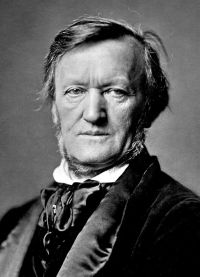
The horror born of the mind is uniquely persistent because its source is internal. Unlike an external threat, a metaphysical phantom or illusion cannot be escaped by changing location, as it follows the subject's own perception, existing as a confirmed impression within consciousness itself [28]. This can give rise to a profound existential fear, articulated by figures like Charles Baudelaire, that the entire visible world is merely a fragile veil that could dissolve at any moment, revealing the unseen world of evil shapes familiar from dreams [27]. Richard Wagner recounted childhood experiences of inducing terror simply by staring at furniture until it seemed alive, a powerful testament to the mind's ability to animate the mundane with dread [29]. Modern experiments in sensory deprivation scientifically corroborate this principle, showing that when external stimuli are removed, the mind often turns inward to produce delusions, hallucinations, and unbearable stress, proving that consciousness, left to its own devices, is fully capable of constructing its own terrifying reality [30].
The architecture of horror, in its most sophisticated and potent form, is built not upon foundations of explicit violence or visible monstrosity, but upon the suggestive power of absence and ambiguity. The fear of the unseen demonstrates how the human imagination, when confronted with a void, will invariably populate it with terrors more potent than any empirical threat . In a similar fashion, when the reassuring sense of sight is obscured, indistinct sounds become powerful conduits for dread, allowing the mind to transform the auditory landscape into a stage for its deepest anxieties . Ultimately, this exploration traces the genesis of fear to its most intimate source: consciousness itself. Subjective distortions, waking dreams, and the mind's reaction to sensory deprivation all reveal that the most persistent and inescapable horrors are those we generate from within .
This understanding of fear reveals a fundamental characteristic of the human condition—our profound capacity for self-torment through imagination. The most refined experience of horror is an act of co-creation, an unsettling partnership between an external unknown and an internal library of anxieties. The enduring power of frightening narratives and experiences, therefore, lies not in what they show us, but in what they compel us to show ourselves. The true and perennial monster is the uncharted territory of the mind, a vast internal wilderness where, as Arthur Conan Doyle suggested, imagination reigns, and where every shadow can become a threat and every silence can fill with a scream .