AI-generated from sources
The Redefinition of Madness, From Afflicted Soul to Overtaxed Mind
In Brief
- The concept of 'madness' has transformed from a moral failing or disease of the soul to a recognized physical pathology of the brain.
- A purely medical model for mental illness remains incomplete, as the organic causes for most common emotional and psychological problems are still unproven.
- Insanity can be interpreted as a subjective retreat from an unbearable reality, a profound internal disunity, or even the logical breaking point of an overstressed mind.
- Modern therapeutic interventions integrate biological treatments with psychological and existential frameworks, aiming to help individuals reconstruct meaning and function in a shared reality.
Main authors



The concept of 'madness' has long been a shifting terrain, its boundaries continuously redrawn by cultural, scientific, and philosophical currents. What was once considered a clear-cut affliction of the soul, a moral failing demanding condemnation, has gradually been reimagined as a complex interplay of biology, psychology, and environment [1, 2, 3]. This conceptual evolution reflects a profound change in humanity's understanding of the mind itself, moving away from a model that separated mental phenomena from bodily conditions toward an integrated view of the human organism [4, 7]. The journey from seeing the insane as possessed or sinful to viewing them as patients suffering from a disease has been a long one, marked by a progressive medicalization of mental distress [6].
This historical trajectory, however, is not a simple linear progression toward enlightenment. It is complicated by a persistent counter-narrative that questions the very stability of 'sanity.' This perspective frames madness not merely as a deficit or disease within the individual, but as a potentially meaningful, albeit harrowing, response to an overwhelming or fundamentally irrational world [11, 17]. The experience of insanity is depicted as a profound internal disunity, a state where the individual's perception of reality becomes fragmented and isolated [12, 13, 15]. Ultimately, modern approaches to therapy attempt to bridge these perspectives, acknowledging the internal origins of distress—whether biological or psychological—while emphasizing the crucial role of intervention in helping individuals reconstruct a coherent sense of self and re-engage with a shared reality [23, 27, 30].
The Path to Pathology, A Medical History of Insanity
Historically, the prevailing understanding of mental derangement was deeply rooted in metaphysical and moral frameworks. So long as the mind was conceived as an entity distinct from the body, insanity was logically classified as a 'disease of the soul' . This belief system, which often held the body in contempt, attributed physical and mental ailments to sin, divine retribution, or possession by malevolent spirits . According to this view, which held sway well into the 19th century, particularly in German thought, mental illness was seen as a consequence of some moral transgression . Such a perspective naturally led to the widespread abuse and neglect of the insane, who were often subjected to punishment rather than offered care or compassion .
A significant paradigm shift occurred as scientific thought began to challenge the soul-body dualism. The then-emerging idea, advanced by thinkers like Alexander Bain, was that every thought and feeling corresponds to a set of bodily processes . This conceptual linkage paved the way for a radical reinterpretation of madness. Insanity began to be understood not as a spiritual failing but as a disease of the brain, a fundamentally material organ [5]. This reclassification allowed mental illness to exit the labyrinth of metaphysical speculation and take its place within the field of pathology as a physical disease . The practical consequence of this medicalization was a marked improvement in the treatment of the insane, who were now viewed as patients rather than sinners .
This medical model culminated in the 20th century with the rise of modern psychiatry, which advocates for a holistic and integrative approach . The contemporary psychiatrist is concerned with the synthesis of findings across all biological and psychological domains, aiming for a 'global view of the patient as a person' . This comprehensive method involves a complete somatic, psychic, and social diagnosis in order to devise a regimen that best adjusts the individual's internal state to their external relationships . It represents the maturation of the effort to understand mental illness as a condition of the whole organism, not just a disembodied mind.
Despite this progress, the purely medical model retains significant ambiguities. While certain conditions like epilepsy or Alzheimer's disease have been clearly identified as having physical causes, the organic origins of most common emotional and psychological problems remain elusive [8]. As Steven J. Bartlett notes, currently competing hypotheses surround the possible biochemical bases for major disorders such as schizophrenia, depression, and anxiety, but none have been conclusively proven . This gap in knowledge suggests that while the medicalization of madness has been a crucial and humane development, a purely physiological explanation for the full spectrum of mental distress remains incomplete.
The Subjective Abyss, Sanity and the Insane World
Beyond the clinical diagnosis lies the subjective experience of insanity, a state characterized by a fragile and permeable boundary with normalcy. Wilhelm Stekel proposed that we all inhabit a 'second world' of dreams and imagination, and that insanity is simply the failure to find one's way back to the primary world of shared duties [9]. This suggests the transition is a matter of degree, a loss of the thread that connects our inner labyrinth to external reality . The dividing line between a sane and insane mind is often considered slighter than commonly believed, a realization that can itself produce extreme mental tension [10].
This internal state is often described as a retreat from an unbearable external reality, an escape into the mind when the world outside becomes too threatening or ceases to be detectable . It can manifest as a withdrawal into a private universe populated by figures of fear, causing a complete disconnect from the love and connection offered by others . From a perspective articulated by Ralph Waldo Emerson in the 19th century, the world appears broken and chaotic because the individual is 'disunited with himself' . The ruin we perceive in nature is a reflection of a flaw in our own vision, an internal disharmony projected outward [14]. This sense of profound isolation is a recurring theme, with Joseph Conrad encapsulating it in the idea that we ultimately live as we dream—alone .
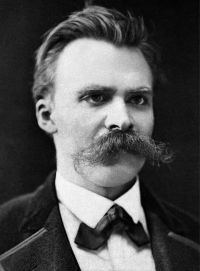
The concept of insanity extends beyond the individual to encompass collective behavior. What society deems sane is often a matter of consensus, and radical disagreement with prevailing norms can easily be labeled as a form of madness [16]. This idea was famously explored by Friedrich Nietzsche, who contended that while insanity is rare in individuals, it is the rule in groups, parties, and entire epochs . For Nietzsche, the true opposite of the world of the insane is not objective truth, but the universal and non-voluntary acceptance of a shared belief system [19]. The pressure to conform to this collective consciousness, particularly through forced education, can be a blight on life itself, stunting natural development in favor of producing 'pallid sickly ideas' [20].
In this context, madness can even be interpreted as a paradoxical feature of a highly functional mind. As Oliver Wendell Holmes suggested, insanity can be the logical outcome of an 'accurate mind overtasked' [18]. A powerful mental engine, when confronted with an obstruction that threatens to stop or reverse its motion, is more likely to break its own gears than a weaker one . Stupidity, from this viewpoint, acts as a safeguard against madness, as a less powerful mind does not accumulate enough force to do itself harm . Insanity thus becomes not a sign of defect, but of a sophisticated mechanism pushed beyond its breaking point.
Therapeutic Horizons, Reconstructing a Coherent Self
In response to the profound suffering of mental distress, various therapeutic models have emerged to offer not just treatment, but meaning. One early psychological interpretation, voiced by Arthur Schopenhauer, saw madness as a desperate survival mechanism—a last resort for a mind so tortured by unbearable sorrow that it shatters its own memory and fills the void with fictions to escape the pain [21]. More modern psychological views, such as those of Julia Seton, define insanity as a state of mental disassociation arising from a fundamental lack of self-knowledge and psychological balance [22]. It was Sigmund Freud who decisively moved the insane from the category of the absurd and pitiable to that of individuals victimized by unconscious forces, thereby making them candidates for therapeutic intervention aimed at understanding and redirecting these internal drives .
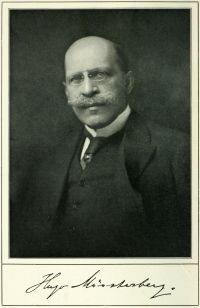
The pathways to healing are diverse, reflecting different philosophies of the mind. Some propose that a cure for insanity will only be found through a holistic approach that integrates physical science, metaphysics, and psychical investigation to understand all levels of consciousness [24]. Conversely, the psychotherapist Hugo Münsterberg cautioned against treating mental symptoms as if they belong to a soul separate from the body, arguing that the mind merely reflects the symptoms of a disease that always belongs to the total organism [25]. A different perspective comes from existential therapy, which, as Steven J. Bartlett explains, reframes feelings like anxiety not as pathologies to be cured, but as powerful motivators that can signal the need for profound life changes [26].
The practical application of these ideas involves a structured process of rebuilding the self. Rational-emotive therapy, for instance, operates like a form of cognitive apprenticeship, where a therapist helps a client methodically identify, critique, and replace irrational beliefs with more realistic ones, a process that requires patience and practice . Other approaches seek healing on a more abstract, spiritual plane, proposing that change occurs when the mind brings its illusions to the light of truth, recognizing their lack of reality [28]. Across these modalities, a common goal is the re-establishment of a coherent self capable of navigating the world. In a striking paradox, some clinicians maintain that the very awareness of one's own insanity is the most reliable sign that sanity is returning [29].
Contemporary psychiatric practice often synthesizes these different understandings into an integrated treatment model. For severe conditions like schizophrenia, the standard of care typically involves a combination of antipsychotic medications, which address the biological dimension, and supportive therapy, which addresses the psychological and social aspects . Hospitalization may be employed in acute phases to ensure safety. This dual approach acknowledges the multifaceted nature of madness and aims not for a perfect 'cure' in all cases, but to help individuals manage their condition sufficiently to lead satisfying lives, even if this requires ongoing support .
The intellectual journey to comprehend 'madness' mirrors a broader evolution in our understanding of human consciousness. The concept has transformed from a sign of moral corruption or a disease of an immaterial soul to a recognized physical pathology of the brain . Yet this medicalization has been consistently challenged and enriched by perspectives that view insanity as a deeply subjective state—a retreat from an unbearable reality or the logical breaking point of an overstressed mind . Therapeutic interventions have followed this complex trajectory, moving from mere containment to sophisticated psychoanalytic, cognitive, and existential frameworks designed to help individuals reconstruct meaning and function . The history of madness is thus a history of the shifting relationship between the individual's inner world and the external demands of a shared reality.
Today, the conversation continues, balancing the search for organic causes and biochemical markers with an appreciation for the profound existential crises that can manifest as mental illness . The most effective modern treatments reflect this complexity, integrating pharmacological intervention with supportive, meaning-making therapies . The persistent ambiguities and competing theories demonstrate that the line between sanity and insanity is not a fixed diagnostic boundary but a dynamic and deeply personal frontier. As such, the effort to understand and heal the fractured mind remains one of the most critical and revealing challenges in the ongoing project of understanding ourselves.