AI-generated from sources
The Burden of Proof, Diagnostic Legitimacy and the Doubting of Subjective Pain
In Brief
- The medical establishment has historically prioritized objective, verifiable signs over subjective patient testimony, leading to diagnostic invalidation for "invisible illnesses."
- Skepticism towards subjective pain has disproportionately targeted women, whose experiences were often dismissed as "nervousness" or emotional fragility.
- The inability to provide objective proof for symptoms has often resulted in patients being labeled as hypochondriacs, reframing medical complaints as psychological failings.
- Society, particularly within legal and carceral systems, has a long history of conflating illness—especially mental health conditions—with moral culpability or criminality, leading to punitive rather than compassionate responses.
The experience of illness has long been defined by a fundamental tension between a patient’s subjective suffering and the medical establishment's demand for objective, verifiable proof. For those afflicted with so-called invisible illnesses, where the primary evidence is personal testimony of pain, fatigue, or distress, this tension can escalate into a battle for legitimacy. The diagnostic process, rooted in the observation of measurable signs, often struggles to accommodate symptoms that cannot be seen or quantified [6]. This gap can lead to a profound invalidation of the patient's reality, where their lived experience is subordinated to the limitations of external verification. The struggle is not merely for a diagnosis, but for the basic acknowledgment that their suffering is real.
This deep-seated skepticism toward subjective complaints is not a purely clinical phenomenon but is profoundly shaped by broader societal and historical forces. It often carries a moral undertone, where the inability to provide objective evidence is interpreted as a personal failing—a lack of fortitude, an exaggeration, or a psychological weakness. This burden of proof has been disproportionately placed upon women, whose testimonies of pain have historically been filtered through a lens of presumed emotional fragility and inherent untrustworthiness. The journey from symptom to diagnosis thus becomes a fraught negotiation, in which the patient must prove they are neither fabricating their illness nor morally or psychologically deficient for experiencing it.
The Unseen Ailment, Subjectivity versus Objective Signs
The diagnostic hierarchy in medicine has historically privileged objective signs—lesions, swellings, or erratic heartbeats—over subjective symptoms like aches, pains, or nausea . This distinction creates an epistemological challenge for conditions where the patient's internal experience is the primary, or only, evidence of disease. When a patient reports symptoms that lack corresponding, externally verifiable markers, they risk being classified as a hypochondriac, a label that transforms a medical complaint into a psychological failing [7]. This framework systemically devalues the patient's testimony, casting them as an unreliable narrator of their own bodily experience.
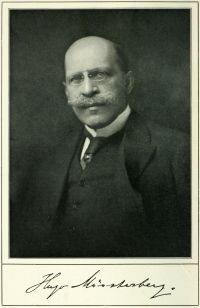
Fatigue, one of the most common and debilitating symptoms, exemplifies this conflict. Thinkers in the early 20th century, such as Hugo Münsterberg, made a sharp distinction between the subjective feeling of being tired and an actual, measurable decline in work capacity [1]. This separation allowed for the interpretation of fatigue not as a sign of physical exhaustion, but as an emotional or chemical state produced by worry or anxiety [3]. Some, like Josephine A. Jackson, went so far as to suggest that true exhaustion was a state rarely, if ever, experienced by the average person, and that the feeling of fatigue could be overcome by simply ignoring it [4]. Within this paradigm, the feeling of tiredness was reframed as a misinterpretation of a harmless phenomenon rather than a legitimate symptom of illness [2].
This tendency to psychologize unexplained symptoms found its ultimate expression in the diagnosis of hypochondria. Historically, the condition was understood not just as an anxiety about health but as a form of mild insanity characterized by an exaggerated focus on bodily sensations, sometimes to the point of delusion . The term itself, as John Hill noted in the 18th century, was rooted in the anatomy of the abdomen, believed to be the source of melancholy [5]. A patient diagnosed with hypochondria was seen as presenting a
A Nervous Disposition, Gender and the Skeptical Gaze
The skepticism directed toward subjective suffering has historically been applied with particular force to women, who were widely considered to be constitutionally prone to nervousness. Throughout the 19th and early 20th centuries, medical and social commentators asserted that women possessed less nervous vigor and a diminished capacity for emotional control, making them inherently more susceptible to conditions labeled as nervous or hysterical [8, 10]. This perceived susceptibility was sometimes attributed by writers like John Caius to the excitability of the female imagination, especially in environments of seclusion where thoughts turned inward [9]. This gendered biological determinism created a framework where a woman's report of illness was pre-judged as a manifestation of her supposedly unstable nature.
This presumption of female instability fostered a pervasive mistrust of women's testimony, extending from the clinic to the courtroom. A woman expressing strong emotions while describing her condition could be dismissed as dangerously excited, her words disregarded as the
From Clinic to Courtroom, When Illness is Treated as Crime
The societal doubt surrounding invisible illnesses can escalate to a point where the patient is treated not as a sufferer but as a suspect. Within institutional contexts like prisons, medical personnel have historically operated from a position of profound skepticism, conditioned to view inmates as untrustworthy individuals likely to feign illness for personal gain [17]. This dynamic inverts the therapeutic relationship, forcing the sick to prove the authenticity of their suffering against a presumption of imposture. This punitive approach to illness is famously satirized in Samuel Butler's Erewhon, a fictional society where falling ill is prosecuted as a criminal offense, with sentences varying based on the severity of the ailment [18].
This conflation of illness and culpability is particularly stark in the legal system's handling of mental health. The law's rigid demand for a clear distinction between sanity and insanity fails to accommodate the nuanced, spectrum-based understanding of mental disease held by psychiatry [20]. As a result, an individual whose criminal act is a direct symptom of a diagnosed psychosis, such as paranoia or dementia praecox, can still be held legally responsible [12]. This legal framework prioritizes punishment over treatment, viewing the individual as a moral agent choosing defiance rather than a patient exhibiting symptoms of a disease.
The consequences of treating mental illness as a behavioral or moral failing are severe. Law enforcement personnel, lacking adequate training, may misinterpret the actions of a person in a mental health crisis—such as their inability to comply with commands—as willful resistance, leading to the use of excessive force [15]. This transforms a medical emergency into a criminal confrontation. The historical record reveals that even within asylums, patients were subjected to brutal, criminal-like punishments, including being beaten or choked by attendants [13]. The persistent call for psychiatric professionals rather than guards to oversee the mentally ill underscores the fundamental error of treating these individuals like criminals [16].
Ultimately, this punitive stance is fueled by deep-seated societal stigma. The fear of being judged, disbelieved, or facing professional repercussions prevents many from seeking help for mental illness, perpetuating a destructive cycle of silence and ignorance [21]. This stigma has ancient roots, echoing a time when illness was attributed to supernatural causes like witchcraft, for which women were judicially condemned [19]. Whether manifested in the charging of women with attempted suicide for acts born of desperation [14] or the confinement of those whose mental state leads to violence [11], society has repeatedly chosen legal judgment over compassionate care, treating the symptoms of suffering as evidence of a crime.
The historical struggle for diagnostic legitimacy reveals a persistent societal impulse to doubt and discipline subjective experience. From the early medical distinction between objective sign and subjective symptom to the gendered dismissal of female nervousness, the burden of proof has consistently been placed on the sufferer. This dynamic transforms the quest for healing into an adversarial process, where patients must defend the very reality of their pain against a backdrop of medical skepticism, social prejudice, and legal frameworks that often conflate illness with moral failing. The experience of invisible suffering has been systematically invalidated, treated not as a clinical reality but as a psychological flaw, a feigned complaint, or even a criminal act.
While modern medicine has developed more sophisticated tools for understanding the body and mind, the cultural legacy of this skepticism endures. The stigma surrounding mental health and other invisible conditions continues to foster silence and prevent individuals from seeking care . Acknowledging this history is essential for cultivating a healthcare ethos grounded in trust and compassion—one that recognizes the limits of objective measurement and respects the patient's testimony as a valid and crucial form of evidence. The ultimate challenge lies in moving beyond a paradigm of suspicion toward one that accepts the fundamental truth that not all pain is visible, and that believing the patient is the first, indispensable step toward healing.