AI-generated from sources
The Exhausted Worker, A Portrait of Individual Failing or Systemic Fatigue
In Brief
- Historically, worker exhaustion has been framed either as an individual failing, attributed to psychological weaknesses or moral deficiencies, or as a systemic consequence of industrial capitalism.
- Proponents of individual blame argued fatigue stemmed from internal states like worry or poor habits, advocating for mental attitude adjustments rather than changes to work conditions.
- Critics of the system, including Karl Marx, asserted that capitalist production inherently exploits labor, leading to worker exhaustion and viewing workers as disposable.
- The contemporary understanding recognizes that systemic pressures often manifest as individual anxieties, pushing for collective action and policy changes to address overwork, rather than solely individual resilience.
Main authors


The experience of profound exhaustion from work is a persistent theme in the history of industrial society. It represents a critical friction point between the human body's limits and the relentless demands of economic production. Debates over its origins have long occupied physicians, social reformers, and economists, revealing deep-seated assumptions about human nature, responsibility, and the structure of society itself. The weariness that settles into the bones of a laborer or clouds the mind of a professional is more than a simple physiological state; it is a contested space where narratives of personal character collide with critiques of economic systems. Understanding this historical tension is crucial to deciphering contemporary conversations about burnout, overwork, and the elusive pursuit of a sustainable relationship with labor.
Historically, interpretations of worker fatigue have diverged into two primary, often conflicting, streams of thought. One tradition locates the source of exhaustion within the individual, attributing it to psychological frailties, poor habits, or a deficient moral constitution [1, 2, 4]. In this view, burnout is a symptom of personal mismanagement rather than a consequence of external pressures. In stark opposition, another line of reasoning frames exhaustion as an inevitable outcome of the labor system itself, particularly under industrial capitalism [10, 18]. Here, the focus shifts to punishing work hours, hazardous conditions, and the economic imperatives that prioritize profit over human well-being, portraying the worn-out worker not as a failure, but as a victim of an inherently exploitative structure [11, 15].
Exhaustion as a Defect of the Self
A significant historical perspective has consistently framed worker exhaustion not as a product of labor, but as a failure of the mind. Proponents of this view, such as George Lincoln Walton and James J. Walsh, argued that fatigue was more often caused by internal states like worry, impatience, and fear than by the work itself . From this vantage point, the breakdown of a busy professional was due less to the quantity of work and more to the "irritable state of mind" they adopted while performing it . The proposed remedy was not to change the work, but to change one's mental attitude toward it, a sentiment echoed by Annie Payson Call, who suggested that playing a game or taking a brief mental "vacation" could restore one's capacity to work [3]. This school of thought effectively privatized the problem of overwork, placing the burden of endurance squarely on the individual's psychological resilience.
This psychological framing often bled into a moral one, where exhaustion was seen as a consequence of character flaws like idleness or a lack of self-discipline. Victor Hugo, in the 19th century, depicted indolence as an insatiable machine that, once it ensnares a person, forces them into a state of punishing fatigue from which there is no escape [5]. Others asserted bluntly that more people succumbed to selfishness and idleness than to overwork, and that when individuals did break down, it was typically because they failed to properly manage their lives and adhere to the laws of health . Even the seemingly diligent professional who neglected rest and recreation was not seen as a victim of their job's demands, but as the architect of their own eventual collapse in a sanitarium [6].
At the turn of the 20th century, emerging psychoanalytic thought provided a new vocabulary for this individualistic diagnosis. Wilhelm Stekel proposed that illness and nervousness could function as an unconscious "refuge in idleness," a defense mechanism against an overwhelming impulse to work [7]. From this perspective, the worker who complained of exhaustion might secretly harbor a deep-seated fear of labor, with their symptoms acting as a barrier to a cure . This concept found a sociological parallel in Nels Anderson's 1923 study of the homeless, which noted that some laborers invented a "physical inability to work steadily" as a technique to escape the monotony of their jobs [8]. The common thread in these interpretations is the positioning of the worker's own psyche, conscious or unconscious, as the primary source of their inability to sustain labor.
At its most extreme, this perspective cast organized resistance to labor conditions as a moral outrage. Martin Farquhar Tupper, for instance, condemned strikes and worker demands for better pay as the work of "paid demagogues" who forced honest men to refuse work [9]. He depicted organized labor's protests as the actions of "idle roughs" engaged in a form of brigandage, thereby stripping worker exhaustion and discontent of any systemic legitimacy and reframing it as a form of criminal laziness . This view represents the culmination of the individual-blame narrative, where the exhausted worker is not only responsible for their own condition but is morally suspect for attempting to challenge it.
The Inevitable Toll of the System
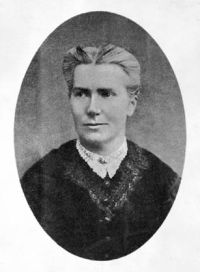
In direct opposition to individual-centric explanations, a powerful counter-narrative emerged that identified the structure of modern labor as the primary cause of worker exhaustion. From this viewpoint, the accelerated pace of industrial production inherently leads to a "shortened working life" and decreased efficiency, causing workers to break down physically and nervously by middle age . The problem was not the worker's attitude, but the relentless speed and strain of a system designed for maximum output. Emily Blackwell, writing in 1883, observed that this predicament applied to all forms of work, presenting a grim choice between immediate poverty and a "gradual and protracted death from overwork" under unhealthy conditions [14].
This critique of the labor process is fundamentally a critique of the economic system that drives it. Karl Marx, in his mid-19th-century analysis, characterized capitalist production's "inherent tendency" as a vampire-like thirst for labor, seeking to appropriate human energy over all twenty-four hours of the day . In such a system, the individual worker's health is of little concern to the employer, as Alexander Berkman later argued in 1929. A vast reserve of unemployed individuals stands ready to replace anyone who is crippled by proletarian diseases, broken by the nervous strain, or sent to an early grave . The worker is thus rendered disposable, and their exhaustion is a predictable, and even necessary, byproduct of profit generation.
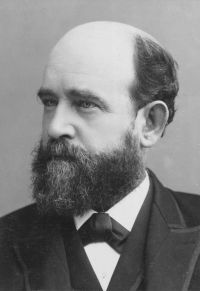
The specific conditions of labor, not just its duration, were also identified as a crucial factor. The experience of working outdoors, even in extreme heat, was seen as less taxing than toiling in the "dust and filth" of a factory shed, where fatigue is magnified by an unhealthy environment [13]. Beyond the physical toll, the nature of the work itself was often described as monotonous and soul-crushing. Henry George argued that it is not labor itself that is repugnant, but labor that produces nothing meaningful for the worker—a treadmill-like exertion that only provides the bare necessities of life [16]. Bertrand Russell similarly contended in 1918 that if work were not such "dreary drudgery in horrible conditions," the threat of starvation would not be necessary to induce people to perform it [17].
Within this framework, behaviors often pathologized as individual failings were reinterpreted as rational responses to an irrational system. The laborer who sought refuge in a "long draught" of alcohol was not seen as morally weak, but as a tired individual attempting to escape the lassitude and hopelessness of a life consumed by unremitting toil [12]. Similarly, as Alexander Berkman suggested, attributes like laziness would become unknown if work itself were a source of pleasure and creativity rather than deadening drudgery [19]. Exhaustion, in this light, is not a personal problem to be solved through better habits, but a systemic condition that poisons the very experience of work.
From Private Worry to Collective Struggle
The division between individual and systemic causes of exhaustion is not always clear-cut, as external pressures often manifest as internal struggles. The day laborer and the business professional both face a relentless routine, one driven by the need to feed a family and the other by the pressures of a competitive marketplace [20]. The resulting mental strain is not simply a personal foible. One late 19th-century analysis noted that the "deadly worry" experienced by professionals was an "inevitable" consequence of the fierce competition inherent in the economic system [24]. Mental anxiety, whether stemming from fear of poverty or domestic grief, produces a physical exhaustion far greater than muscular effort alone, illustrating how systemic insecurities become deeply embodied personal afflictions [22].
The psychological consequences of modern labor extend beyond mere fatigue. Sociological observers began to recognize that monotonous and grueling work conditions could produce a "morbid psychological condition" in the worker [23]. This mental state, characterized by a dulled mind and nerves depressed by fatigue-poisons, could lead individuals to seek pleasure through dissipation and overstimulation in their few hours of leisure [21]. This behavior, rather than being a sign of poor character, was increasingly understood as a predictable outcome of a system that deprived individuals of rest and control, thereby impairing their long-term efficiency and well-being .
In response to these systemic pressures, the focus began to shift from individual endurance to collective action. Anarchist thinkers like Peter Kropotkin drew a sharp distinction between work—a physiological necessity and a source of health—and overwork, which he defined as labor performed to supply luxuries for a few [26]. This reframing laid the groundwork for a political struggle. As the socialist theorist Karl Kautsky argued in 1910, the proletariat's fight to shorten the workday was not primarily about wages or unemployment; it was a fundamental "struggle for life"—an effort to reclaim time to live outside the confines of exhaustive labor [25].
This collective struggle found practical expression in the formation of labor unions. By organizing, skilled workers were sometimes able to create a form of "labor monopoly" that gave them the leverage to demand shorter hours, higher wages, and better working conditions from their employers [27]. This strategy represented a decisive move away from individual coping mechanisms toward systemic reform. It demonstrated that while the experience of exhaustion is personal, its roots are often collective, and its most effective remedies may lie not in adjusting one's attitude, but in restructuring the power dynamics that govern the world of work.
The historical discourse on worker exhaustion has been shaped by a persistent dichotomy. One perspective casts the tired worker as the author of their own suffering, a victim of poor mental habits, a lack of discipline, or even a deep-seated laziness . This narrative internalizes the problem, suggesting that resilience is a matter of individual will and psychological fortitude. In direct opposition stands the view of exhaustion as a systemic wound inflicted by the relentless demands of industrial capitalism, where long hours, deplorable conditions, and the constant threat of destitution grind down the worker's body and spirit . The analysis has revealed, however, that this is not a simple binary; systemic pressures like economic competition invariably manifest as personal anxieties and psychological burdens, blurring the line between external cause and internal effect .
This long-standing debate is far from a historical artifact. The tension between productivity and human sustainability remains a central organizing principle of modern economic life. The historical calls to shorten the workday, improve labor conditions, and recognize work as a vital part of a fulfilling life rather than mere drudgery continue to echo in contemporary discussions about the four-day work week, the right to disconnect, and the mental health crises plaguing many industries . The legacy of these earlier struggles serves as a crucial reminder that while exhaustion is felt by the individual, its origins and solutions are often profoundly collective, demanding not just personal adaptation but a continual re-imagining of our relationship to labor itself.