AI-generated from sources
The Moving Last Hour, How the Forecast of Ruin Followed Every Shorter Working Day
In Brief
- The warning that shorter hours would ruin industry kept the same logic for more than six decades, from Martineau's attack on the Factory Acts to Ingalls's case against the eight-hour day.
- Shorter hours lasted when custom among workers and willing employers came first and the law then imposed the limit on the remaining firms.
- Studies of coal and machine industries found that cuts to eight hours were often offset by new output, greater effort or better management.
- Once a threshold was secured, the forecast of ruin shifted from the number of hours to the speed and method of reduction, and in slumps it became a programme for reclaiming lost hours.
Main authors


Few economic arguments have lasted as long as the claim that a shorter working day will ruin the industry that grants it. In the mid-19th-century quarrel over the British Factory Acts, Harriet Martineau framed the choice in absolute terms: either manufacturing would stop or the law would have to give way [1]. More than six decades later, Walter Renton Ingalls, writing on current economic affairs in 1918, accepted that shorter hours were desirable in principle but warned that the eight-hour day and the end of the 12-hour shift in American steel would lower the living standards of the whole population [2]. Between the two, the threshold under attack had moved by several hours, yet the form of the warning had barely changed. The reformer Stephen Leacock drew the lesson that hours celebrated as short by one generation would be denounced as long by the next [3].
What this suggests is less a prophecy refuted than a prophecy displaced. Each reduction was secured not by a single victory but by an alignment of workers, employers willing to follow and a state prepared to enforce what custom had already spread [4]. Once established, the new limit was absorbed into the ordinary arrangement of production so thoroughly that a manufacturer's spokesman could later admit that an earlier eight-hour day would indeed have meant poverty, and that only the organization of work had made it affordable [5]. The absorption was never guaranteed: in lean years employers set out to reclaim the hours they had conceded [6]. The forecast of ruin behaved like a boundary marker, carried forward with each advance and sometimes dragged back.
The first forecast, factory machinery and the threat of exit
Martineau's pamphlet, subtitled as a warning against what she called meddling legislation, rests on a premise of adult responsibility. If the law relieves men and women of the care of their own safety and places it on employers, she argues, the law itself slides backward, and employers so burdened will simply leave the trades concerned . The forecast here is not yet a calculation of costs but a threat of exit, framed as a dilemma with no middle ground. Its force lies in that binary form: either industry survives in its present shape or it disappears. The possibility that it might survive in a different shape is not considered, and that blind spot would recur at every later threshold.
Marx, recounting the same controversy from the side of the inspectors, treats the manufacturers' warnings as a tactic rather than a diagnosis. Unable to make their workers speak against the law, he writes, the employers spoke all the louder in their name, in the press and in Parliament, and cast the factory inspectors as zealots sacrificing workers to a humanitarian fad [7]. More revealing is his account of how the law actually worked. Experience led the English legislature to conclude that a plain compulsory statute could sweep away the so-called technical obstacles to regulating the day, and industries brought under the Factory Act were given six to 18 months to remove them [8]. What had been presented as an impossibility in principle was handled in practice as an adjustment with a deadline.
The resistance was not purely rhetorical, and the sources explain why. For Marx, capitalist production tends by its nature to claim labour across the full 24 hours, because every pause leaves capital idle and imposes the cost of starting again; he describes this pull in deliberately lurid terms, as the vampire thirst of capital for living labour [9]. J. A. Hobson, analysing machine production, reaches a related conclusion with less heat: taken as a whole, the factory system lengthened the average working day, partly because running machinery longer was itself an economy [10]. On this reading the long day was not a remnant of older custom that progress would wear away by itself, but a product of mechanization. A limit on hours struck directly at the return on fixed capital, which is why its opponents could sincerely believe it fatal.
Competition gave the forecast its second foundation. A warning addressed to working men and preserved in Beatrice Webb's history of trade unionism observes that every measure in their interest—limiting excessive hours, protecting women and children, regulating unhealthy trades—met opposition from a single quarter, that of unrestricted competition [11]. This explains why ruin was predicted so insistently. No single employer could shorten hours alone without fearing for his position against rivals, so the forecast was, for each of them, accurate on a local scale. It became false only when the constraint fell on all at once, and that required more than goodwill.
Custom first and law second, the coalition behind each threshold
A German treatise on the theory and policy of labour protection describes the mechanism with unusual precision. Where a day of ten or 11 hours has not yet become customary, the author notes, workers and those managers who are willing are least able to impose it on competing employers by their own efforts; where custom has already made it general, enforcing it on the remaining firms seems entirely legitimate . In this account the state does not invent the threshold. It ratifies an arrangement that workers and sympathetic employers have already made common, and it removes the competitive penalty paid by those who moved first. The forecast of ruin loses its local accuracy at precisely that moment.
Beyond this mechanism, the eight-hour figure took on symbolic weight. According to Marx, the Geneva congress of the International Working Men's Association declared the limitation of the working day a precondition for any further improvement or emancipation and proposed eight hours as the legal limit [12]. The labour organizer William Z. Foster later recalled the campaign for a universal eight-hour day as the first successful use of the general strike across all trades and localities, and as the origin of the May Day holiday [13]. Once a figure becomes a banner, it outlives the conditions under which it was won. Its very success makes it the starting point for the next demand.
Yet a threshold fixed by law was porous. The German treatise raises a question most campaigns preferred to avoid: should the maximum day bind only the employer, or also the worker who wants to work longer elsewhere? The shorter the general day, the author argues, the more necessary it becomes to bind both, since outside work would otherwise sharpen competition among workers themselves [14]. John Rae, examining the eight-hour day in Victoria in 1891, found exactly this leak. A democratic government could not penalize citizens for choosing between an hour's pay and an hour's leisure, and some clothing factories that had adopted eight hours on their own were handing out work to be done at home after closing time [15]. The limit held on the factory floor and gave way at the kitchen table.
The courts drew another boundary. In a 1923 opinion, Justice George Sutherland held that a law limiting hours leaves the parties free to adjust wages to the new burden, and that the power to fix hours extends only to occupations in which prolonged work harms health [16]. The legal case for a shorter day was thus confined to protecting bodies. Other sources show that case widening. Charles R. Walker, recording his life as a furnace worker, argues that the 12-hour day reshapes not only the worker's existence but the organization and temper of the industry and of the community around it [17]. Winston Churchill presented the aspiration of working people as a claim not to minimal rest but to sufficient leisure, a life no longer confined to the round of bed and factory [18]. As the argument shifted from health to the shape of a whole life, the next reduction became thinkable.
Counting the cost, what the eight-hour inquiries found
As the eight-hour day moved from slogan to bill, the forecast of ruin had to submit to measurement. J. E. C. Munro, studying the likely effects of eight hours on coal production in 1891, argued that, with demand unchanged, the extra output of new coalfields would tend to cancel out any fall caused by shorter hours, while conceding that without the reduction consumers would enjoy cheaper coal [19]. The question was no longer whether the industry would survive but who would bear a modest cost. John Wilson, chronicling the Durham miners, weighed two arrangements: double shifts of eight hours that would lengthen the hewers' day and raise output and wages, or a uniform eight-hour shift that would throw thousands of men onto the labour market [20]. Even within the miners' own organization, the reduction was understood as a disruption to be managed, not a free gain.
The more consequential findings concerned output per hour. A contributor to Popular Science Monthly in 1896 allowed that where output depended on manual dexterity rather than on tending automatic machinery, shorter hours might be partly offset by greater effort [21]. Frank A. Fetter went further, citing a substantial body of evidence that, in many industries using a great deal of machinery, reductions to eight hours had been followed by higher output per worker, better quality or better management, and lower production costs [22]. Lillian Moller Gilbreth credited Taylor's time study with proving that many customary days were too long and that the same output could be reached in fewer hours [23]. The engineers of management, rather than the reformers, thus supplied some of the strongest evidence that the old warning had overstated its case—though the 1896 caveat about machine-paced work shows that the offset was never assumed to be universal.
None of this retired the forecast. In 1918, more than six decades after Martineau's pamphlet, Ingalls described the statutory eight-hour day in Europe and the end of the 12-hour shift in American steel as an economic restriction that would ease the worker's lot while lowering the living standards of the population at large . The tone had softened—he granted the theoretical desirability of shorter hours, where Martineau had foreseen the end of manufacturing—but the logic was the same. Each reduction was judged against the output of the existing organization, as if that organization could not change. The prophecy had not been refuted at ten hours; it had simply been carried down to eight.
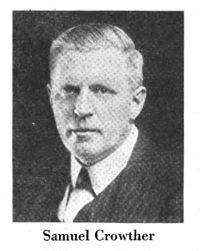
A striking corrective came from within industry. In Samuel Crowther's 1926 account of Henry Ford's reasoning, introducing the eight-hour day generally 20 years earlier would have produced poverty rather than wealth, and the five-day week introduced five years earlier would have done the same; hours, the argument concludes, are governed by the organization of work alone . This both vindicates and dissolves the forecast of ruin. It concedes that the warnings were not absurd when they were issued, while showing that they were wrong about the permanence of the conditions they assumed. Ford's argument also keeps its distance from the humanitarian case, insisting that leisure must come after work rather than before it . The shorter week was justified as a dividend of efficiency, not as a right.
The next frontier, from eight hours to six and the fear of four
Leacock, in The Unsolved Riddle of Social Justice, turned this displacement into a doctrine. Reduction, he argued, should strain the productive machine to breaking point without ever breaking it, through a mix of legislation and collective action; it could not be done at once but could be continuous, because shorter hours become part of the framework of production, which adapts to them . He was confident that output would never fall short of human needs, which a fraction of existing production could meet even if human desires would absorb ten times as much [24]. That confidence is an assertion rather than a demonstration, and he himself placed the real difficulty elsewhere . But he named the pattern the earlier sources had enacted without seeing it: every limit achieved becomes the baseline for the next.
The next frontier was six hours, and it appeared almost as soon as eight had been won. David Christie Murray, recalling a place where the success of the eight-hour movement was marked by an annual procession, noted that a campaign for six hours as the limit of the future had already been announced [25]. A song circulated by the Industrial Workers of the World reduced the argument to arithmetic: six hours a day would put thousands to work [26]. Set beside Wilson's Durham calculation, the line is instructive. The same mechanism—fewer hours per worker requiring more workers—looked like a threat of displacement to a miners' leader and like a cure for unemployment to the IWW . Once the shorter day was framed as a way to share work rather than to protect bodies, its natural limit receded further.
The forecast of ruin followed. John Bates Clark warned that IWW leaders meant to force hours down from ten to eight, six and finally four while raising pay in proportion, and to cripple the productive power of capital in order to seize it; a four-hour day with high wages, he concluded, could never come from a war that destroyed most of the income to be shared [27]. The warning has changed its target. Clark does not dispute that hours can fall; he disputes that they can fall through conflict. Eugen Richter's satire of a socialist future makes the same move: a chancellor blames shorter hours for economic decline, but the narrator insists that the day, already under ten hours before the revolution, would have shortened gradually and naturally without any sudden blow to supply [28]. Thames Williamson's textbook records that many economists saw the eight-hour day as a social gain only if introduced gradually [29]. By then the prophecy of ruin had moved from the threshold to the pace.
The frontier also moved backward. In December 1878, according to a circular quoted by Beatrice Webb, the Iron Trade Employers' Association announced that the time had come to cut what it called superfluous wages and to reclaim idle hours for industry and profit . Foster described a similar offensive in the crisis years he dated from 1918 to 1921: employers stung by defeats that included the eight-hour day saw in a slackening market and rising unemployment a chance to strike at the unions [30]. In such moments the forecast of ruin stopped being a warning and became a programme, as the slump and unemployment it had predicted were invoked to recover lost ground. The coalition that secured a threshold rose and fell with the business cycle, and so did the threshold's security.
Across sources roughly seven decades apart, from Martineau's pamphlet to Crowther's account of Ford, the forecast of ruin was never decisively refuted . It was outpaced. Each limit, once spread by custom among willing employers and generalized by law, entered the framework of production and stopped looking like a restriction . Measurement in coal and in machine industries showed costs smaller than feared and sometimes gains . The prophecy then reappeared at the next figure, from ten to eight and from eight to six, and once the threshold itself became hard to contest, it shifted to the speed and method of reduction .
What the sources leave open is less economic than moral. Leacock suspected that the real obstacle to shorter hours did not lie in production ; Churchill spoke of time to live, while Ford's reasoning put leisure firmly after work . The disagreement concerns what freed hours are for, and whether a society counts them as lost output or as gained life. The history of the moving last hour suggests that the economy has repeatedly adapted once that answer was given collectively. Whether there is a threshold at which this stops being true is a question that the forecast of ruin, for all its persistence, has never been able to settle in advance.