AI-generated from sources
The eternal schism: Reform or revolution in the modern labour movement
In Brief
- The labour movement is defined by a fundamental tension between pragmatic trade unionism, focused on incremental gains within the wage system, and revolutionary socialism, which aims for its complete overthrow.
- Trade unionism, seeking collective bargaining and organizational integrity, often functions as a conservative force, providing workers a stake in the established industrial framework.
- Revolutionary critics, notably Lenin, argue that spontaneous trade unionism inevitably leads to 'working-class bourgeois politics,' subordinating the working class ideologically to the bourgeoisie.
- The ongoing tension results in cyclical disillusionment, where failures of parliamentary action or conventional union leadership can drive movements toward radical anti-systemic action, such as syndicalism and 'direct action'.
Main authors
The history of the modern labour movement is defined by a persistent and fundamental schism concerning its ultimate purpose. This division centers on two divergent paths: one rooted in pragmatic engagement with the existing capitalist system, and the other committed to its revolutionary overthrow [1]. The first path, commonly known as trade unionism, focuses on achieving incremental improvements in wages and working conditions through collective bargaining and political reform [2, 3]. The second, driven by socialist and syndicalist ideologies, views such pragmatism as a diversion, arguing that the only true emancipation for the working class lies in dismantling the entire structure of capitalist property and political economy [4, 5]. This creates a permanent tension between reform and revolution, a debate over whether organized labour should function as a moderating force within the system or as an engine for its complete transformation.
This enduring conflict is not merely theoretical but is rooted in the very origins and nature of labour organization. Trade unionism arose spontaneously from the separation of workers from the means of production, creating a class of lifelong wage-earners who needed to combine to protect their interests [6, 7]. Its primary aim has consistently been to substitute collective bargaining for individual negotiation, thereby securing a stronger position for workers in their dealings with employers [8, 9]. Yet, from its inception, this practical activity has been scrutinized by revolutionary thinkers who contend that such a focus on immediate economic gains inherently subordinates the labour movement to bourgeois ideology, turning a potentially revolutionary force into an instrument for stabilizing the very system it should seek to destroy [10, 11, 12]. The core question, therefore, is whether the path of gradual reform is a necessary stage toward a more just society or a strategic dead end that perpetuates wage-slavery under a more palatable guise [13, 14].
The Pragmatic Foundation of Trade Unionism
The emergence of trade unionism is historically tied to the structural transformation of industry that divorced labour from capital . As journeymen and artisans lost their status as independent producers and became permanent wage-earners, they formed combinations to defend their standard of life [15]. These organizations often grew from informal social gatherings into more structured bodies designed to counter the power of employers [16]. The fundamental logic was simple: to replace the weakness of the individual worker with the strength of collective action . The primary theater of operations for these unions became the negotiation of the wage contract, centering on immediate, tangible issues such as wage rates, working hours, shop discipline, and the right of discharge [17].
This focus on concrete, achievable goals has defined the character of traditional trade unionism, particularly in the Anglo-Saxon world . The ideal social order for many unionists is not the abolition of capitalism, but a state of equilibrium where organized labour and organized capital possess equal bargaining power . This approach prioritizes securing a strong position within the existing industrial framework, enabling unions to protect jobs, health, and organizational integrity through binding collective agreements with employers [18]. This inherent pragmatism means that the movement often shuns grand, utopian theories in favor of evolutionary progress, seeking to secure for workers the best possible terms within the established system [19].
Consequently, trade unionism often functions as a socially conservative force [20]. By achieving tangible gains—better wages, improved conditions, and a degree of security—unions provide workers with a stake in the system, which can be seen as analogous to the moderating effect of private property ownership . The aim shifts from revolution to the effective administration of industrial relations, with union officials evolving from agitators into professional negotiators whose role is to mediate disputes and arrange compromises, often recognizing that there is a case to be made on the employers' side [21, 22]. This approach, while delivering real benefits, inherently accepts the legitimacy of the capitalist framework, seeking to purge it of socialist or syndicalist influences that are seen as alien to its practical mission [23].
The Revolutionary Critique: A Tool of Bourgeois Democracy?
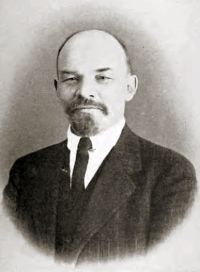
From a revolutionary socialist perspective, the limited, pragmatic scope of trade unionism is not its strength but its fatal flaw. Vladimir Lenin argued that the labour movement, left to its own spontaneous development, will inevitably produce nothing more than trade unionism . This focus on immediate economic struggles, he contended, fails to develop a revolutionary consciousness and instead leads to the ideological subordination of the working class to the bourgeoisie . By operating within the logic of capitalism—bargaining over the price of labour power rather than challenging its existence—unions become vehicles for what Lenin termed "working-class bourgeois politics" . The task of revolutionaries, therefore, is to actively combat this spontaneity and divert the labour movement from under the wing of the bourgeoisie and toward the goal of social revolution [24].
This critique is echoed by other socialist thinkers who argue that trade unionism, by its very nature, can only ever assuage the evils of wage-slavery, not abolish it . Its greatest weapon, the strike, is a costly and painful tool that, at best, secures a comfortable subsistence wage, never the full value of the workers' labour . The true struggle, from this viewpoint, is not merely economic but fundamentally political . It is the political party, not the trade union, that can fight the employer class as a whole and work to transform the entire social and political economy . The division of labour where unions handle "economics" and parties handle "politics" is seen as an artificial separation that weakens the movement, as the two are inextricably linked [25, 26].
Furthermore, the structure of traditional trade unionism, often organized along narrow craft lines, is seen as a barrier to the development of broader class solidarity [27]. This can lead to a form of corporate selfishness, where unions in one trade may align with their employers against the interests of other workers or the community as a whole [28, 29]. Revolutionary industrial unionism proposes an alternative: organizing all workers in a given industry into a single unit to act in concert against their employer [30]. This class-based approach is seen as essential for moving beyond sectional interests and building the collective power necessary for a fundamental societal transformation, as opposed to the fragmented and often self-defeating efforts of isolated craft unions [31].
The Contested Space: Unions as Vehicles for Change
Despite the sharp ideological divide, the relationship between trade unions and revolutionary movements has often been one of complex interaction rather than simple opposition. Some socialist traditions, like that of the Fabian Society, have viewed the gradual gains won by unions as a practical and congenial line of social advance, representing a form of democratic self-control that aligns with socialist principles [32]. From this perspective, the steady, empirical push for better conditions and a national minimum standard of living constitutes a necessary revolution in the worker's standing, moving them from being a dependent "hand" to a more secure member of the community [33]. The empirical socialism of the trade unionist, with its cautious adaptation of existing structures, is seen as a potentially more practicable path than a sudden, universal communist upheaval [34].
Many socialists have therefore seen unions not as an ideological opponent but as a crucial recruiting ground and a practical instrument. The strategy often involves permeating the ranks of trade unionism with socialist thought, encouraging workers to join unions while simultaneously pushing them towards a broader political and revolutionary consciousness [35]. The goal is to strengthen the connection between the trade union movement and socialism, using successful strikes and the sharing of information about better conditions to encourage wider struggles, all while ensuring that this practical work contributes to the larger social-democratic project [36]. The formation of political labour parties, drawing strength from the organized might of the unions, represents a key attempt to bridge this gap, aiming to translate industrial power into a coherent political program for systemic change [37, 38].
However, this attempted synthesis remains fraught with tension. The very success of trade unionism in securing immediate benefits can dampen revolutionary fervor and create an "aristocracy of labour" more interested in protecting its privileged position than in advancing the cause of the entire working class . Disillusionment can set in when both parliamentary action and conventional union leadership fail to deliver, leading workers to lose faith in established methods [39]. In such moments of crisis, the appeal of more radical, anti-systemic action grows. This can manifest as a turn toward syndicalism, which envisions the unions themselves not just as tools for revolution, but as the foundational bodies that will organize production and govern the economy in a new society [40]. The embrace of "direct action" and the general strike becomes a weapon to wreck the existing order when reformist channels appear exhausted or compromised [41, 42].
The schism between pragmatic trade unionism and social revolution is not a historical debate that has been resolved, but an intrinsic and recurring dynamic within the labour movement. Trade unionism, born of the necessity to defend workers against the immediate consequences of capitalism, has proven remarkably successful in establishing common rules, improving conditions, and providing a measure of security and dignity [43, 44]. These achievements give it a conservative function, anchoring its members to the existing system through the tangible benefits it secures . By seeking an equal footing with employers, it implicitly validates the wage system itself .
Yet, the foundation of all trade unionism remains the recognition of a fundamental class antagonism between the buyers and sellers of labour [45]. This underlying conflict ensures that the revolutionary impulse never entirely vanishes. When the incremental gains of reformism stall, or when the state and employers deploy their power to crush labour organizations, the limitations of a purely pragmatic approach are starkly revealed [46]. In these moments, the more radical vision—of a society not merely reformed but fundamentally reconstructed on different economic principles—reasserts its power. The labour movement thus remains perpetually at a crossroads, navigating the tension between improving the workers' lot within capitalism and the ambition of building a world beyond it.