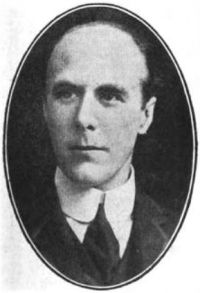
Lynden Livingston Macassey

Biographical details

Portrait of Lynden Livingston Macassey Lynden Livingston Macassey Labour policy—false and true (1922)

The workers are no longer prepared to acquiesce in a system in which their labour is bought and sold as a commodity in the labour market. They are beginning to assert that they have a human right to an equal and democratic partnership in industry; that they must be treated in future not as ‘hands’ or part of the factory equipment, but as human beings with a right to use their abilities by hand and brain in the service not of the few but of the whole community.
Source: Gutenberg

Portrait of Lynden Livingston Macassey Lynden Livingston Macassey Labour policy—false and true (1922)

The Right to Strike—that is to say, to refuse collectively to continue to serve—cannot be denied to any man or woman consistently with freedom. When it is no longer a question of resisting the profit-making capitalist, but merely of obtaining from the community as a whole equitable conditions of employment and a proper standard of life, it may be expected that the public opinion of the community as a whole will be accepted as decisive.
Source: Gutenberg

Portrait of Lynden Livingston Macassey Lynden Livingston Macassey Labour policy—false and true (1922)

The glamour of its doctrines as set forth by Mill in his essay ‘On Liberty,’ the phenomenal growth of British trade and commerce, the unrivalled position of Great Britain as the workshop of the world, made British Liberalism the lodestar of all nations striving for freedom and wealth. Competition as the regulator of economic relations, free trade as the international bond of peace and goodwill, individual liberty as the sacred ideal of national politics, reigned supreme, and under their weight the entire formation of social revolutionary ideas of the past disappeared from view.
Source: Gutenberg

Get perspective with Kwize: daily news enlightened by great literature