AI-generated from sources
The enduring tension: Flexible work arrangements as efficiency tools or autonomy rights
In Brief
- The debate over workplace flexibility reflects a historical schism: one side views concessions as strategic tools for efficiency (Scientific Management), while the other views them as rights based on dignity and autonomy.
- The managerial case for flexibility is often instrumental, aiming for 'high wages and low labor cost' by using worker satisfaction as an ingredient for cooperation and maximum output.
- The counter-narrative, secured by collective bargaining and self-organization, champions autonomy not as a managerial gift but as a fundamental right necessary for creating a just and equitable society.
- Achieving true 'cooperation' requires transforming the employment relationship from one of 'mastership' to one of 'leadership,' where workers participate in shaping the enterprise's governance.
Main authors
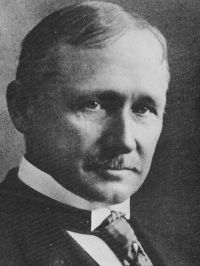

The modern discourse surrounding flexible work arrangements and employee well-being is built upon a fundamental, long-standing tension: are these policies a recognition of workers' inherent need for autonomy and a better quality of life, or are they sophisticated managerial tools designed to maximize productivity and economic efficiency? [1, 2]. This question interrogates the very nature of cooperation in the workplace, weighing the value of human dignity against the metrics of output and profit. While contemporary arguments often present worker flexibility as a win-win scenario, benefiting both employees and the bottom line, this optimistic framing masks a deeper historical conflict over control and the ultimate purpose of labor itself [3].
At one end of this historical spectrum lies the paradigm of scientific management, which posits that efficiency is best achieved by centralizing control and transferring responsibility for work standards from the laborer to the manager [4]. From this perspective, high wages and good conditions are not ends in themselves, but rather instruments to ensure stability and secure the worker's cooperation in a system designed to lower labor costs [5, 6]. On the other end are philosophies advocating for worker well-being as a primary goal, suggesting that autonomy, health, and a balanced life are preconditions for a just and innovative society [7, 8].
Navigating this divide requires an examination of what 'cooperation' truly means. Is it a carefully managed process orchestrated by employers to enlist workers in predetermined goals, or does it necessitate a fundamental rebalancing of power that gives employees a genuine voice in their working conditions and the direction of the enterprise? [9, 10, 11]. The evolution from autocratic control to collaborative partnership hinges on whether concessions to workers are viewed as a strategic cost of doing business or as an essential step toward a more equitable and effective organization of industry [12, 13].
The Managerial Case for Worker Concessions
The intellectual framework for justifying worker benefits through the lens of efficiency finds its roots in scientific management. This school of thought proposed a systematic approach to labor where management assumes the core responsibility for designing and enforcing standards of work . The primary objective was to achieve an ideal state of high wages and low labor costs, which was believed to be the only condition for permanent stability and competitive advantage . Within this model, worker satisfaction is a means to an end; it is a required ingredient for the 'hearty cooperation' necessary to eliminate inefficiency and nearly double the output of each worker and machine [14]. The system, however, is predicated on managerial authority, with workers expected to cooperate with standards they did not create .
This efficiency-first logic has evolved but remains prominent in contemporary arguments for workplace flexibility. Policies that allow for flexible schedules or telecommuting are often promoted not as inherent rights, but as strategic business decisions that make workers happier, more productive, and less likely to leave their jobs . This perspective frames worker well-being as a direct input for economic output. For instance, initiatives related to employee health, such as clinics and rest rooms, are endorsed by efficiency managers because they have a clear, positive impact on productivity [15]. Similarly, flexibility is championed for its ability to reduce the gender wage gap, which in turn is presented as a benefit to the entire national economy . The government itself is encouraged to adopt these policies to serve as a model for the private sector, reinforcing the link between flexibility and economic performance .
However, a purely instrumental approach to worker well-being carries significant limitations. When efficiency schemes are perceived by workers as arbitrary or dictatorial, they engender suspicion and antagonism rather than genuine cooperation [16, 17]. This can lead to a phenomenon where employees psychologically resist management's efforts, deliberately slowing down work in a practice known as 'soldiering' . Moreover, an excessive focus on functional roles and predetermined processes, as advocated by some efficiency systems, risks destroying worker individuality and devaluing their creative impulse [18]. This raises a crucial question: if the goal is the 'full coöperation' of the workforce, can it truly be achieved when employees are treated as components to be optimized rather than as partners with a stake in the enterprise's success? [19].
Beyond Productivity: Autonomy and Dignity in the Workplace
In direct contrast to the efficiency paradigm, a significant counter-narrative argues that improved working conditions are a social and moral good, with benefits that extend far beyond the factory gates. This perspective contends that policies like shorter work hours are not merely tools for enhancing output but are foundational to creating a better society . By allowing for higher standards of comfort, family life, and personal development, such conditions promise to elevate the entire wage-working class, making them more content, intelligent, and inventive [20]. The value, therefore, is not just in what a worker produces, but in the quality of life they are able to lead .
This human-centric view often requires a proactive role for the state and regulatory bodies in embedding worker rights into law. The principle of adapting work to the worker, rather than forcing the worker to adapt to the work, is a key tenet, aimed at alleviating monotony and protecting physical and mental health [21]. Such principles stand in opposition to a purely market-driven logic, suggesting a collective responsibility for worker welfare. The idea of portable benefits, such as healthcare and pensions that are not tied to a single employer, further advances this vision by granting workers the flexibility and security to pursue better opportunities or start their own businesses without fear of losing essential protections .
Ultimately, this perspective champions worker autonomy not as a gift from management but as a fundamental right that must be secured through collective power. The ability for workers to self-organize and bargain collectively is presented as the essential mechanism for achieving this autonomy [22, 23]. In a world of increasing corporate consolidation, the individual employee is often helpless against the power of a large employer [24, 25]. Collective action is the basis of worker power, enabling them to resist downward pressure on wages and conditions by making it far more difficult for an employer to replace an entire united workforce than a single individual [26]. This right to self-organization is seen as a foundational privilege that does not interfere with managerial freedom but rather furthers the wholesome conduct of business by ensuring a more balanced and just relationship [27].
Redefining 'Cooperation': From Mandated Forums to Worker Ownership
The concept of 'cooperation' itself lies at the heart of the debate, with its meaning shifting dramatically depending on the underlying power dynamics. In one common interpretation, cooperation is a structured, top-down process initiated by management to improve industrial relations and efficiency. This often takes the form of labor-management forums where employees are invited to collaborate on solving workplace challenges . However, this collaboration is frequently constrained, with management developing solutions and then bargaining over their implementation, rather than jointly defining the problems and goals from the outset . The objective is to enlist the 'active and continuous co-operation' of workers in promoting industry, but this partnership is explicitly limited and does not extend to the 'higher realms of business management,' such as finance or corporate strategy [28].
A more progressive vision seeks to transform the employment relationship from one of mastership to one of leadership and genuine partnership . This requires not only abandoning the theory that labor is a mere commodity but also deliberately organizing human relations within an enterprise . Achieving this requires managers who possess sympathy, understanding, and a willingness to invest significant time and patience in addressing worker concerns—qualities often deemed secondary to technical and commercial activities by unprogressive employers . In this model, workers might become partners in the production process, cooperating with managers on output, quality, and wages, thereby giving a greater sense of solidarity and shared purpose to the work [29].
The most radical redefinition of cooperation involves the complete restructuring of ownership and control through the co-operative movement. Proponents view this not as a partnership within the existing capitalist system, but as a 'transforming force' capable of superseding it entirely [30]. The ultimate goal is to create a 'harmonious system of free co-operative labour' by transferring the organized forces of society, including state power, from capitalists to the producers themselves . For this transformation to be authentic, co-operative societies must be the 'independent creations of the workers' and not dependent on the government or the bourgeoisie [31]. This vision represents the final stage of worker autonomy, where labor is no longer subordinate to capital but is organized as an association of free and equal producers .
Navigating the Tensions: Collective Bargaining and the Future of Work
The inherent conflict between managerial directives and worker aspirations often crystallizes in the practice of collective bargaining. This process is positioned as a cornerstone of industrial democracy, providing a necessary channel for workers to express themselves and counter the arbitrary, dictatorial methods that breed antagonism [32]. The right to organize and bargain collectively is not merely a mechanism for negotiating wages; it is a fundamental check on corporate power, ensuring that the human relations within an interdependent economy are deliberately and justly organized . Even when management promotes loyal cooperation through welfare programs and profit-sharing, the ultimate success of these initiatives often depends on how supervisors handle day-to-day interactions, an area where collective agreements can enforce standards of fairness [33].
However, the path to effective self-organization is fraught with obstacles. Employers may actively work to obstruct unionization by establishing dominated 'company unions' or by discriminating against employees leading organizing efforts [34, 35]. The very structure of modern work, with employees dispersed over wide geographical areas and leaving premises in vehicles, can make it virtually impossible for union organizers to communicate with them, thus seriously impeding their right to learn about the advantages of self-organization [36]. These challenges underscore that the legal protection of organizing rights, while essential, is not always sufficient to guarantee worker autonomy in practice .
Ultimately, the tension between efficiency and autonomy points toward a need for a system that recognizes both the imperatives of production and the dignity of the producer. A purely autocratic approach, where employers refuse to acknowledge the right of workers to have a say in their conditions, is often as inefficient and loss-prone as any system that prioritizes dialogue [37]. Conversely, systems that successfully integrate workers' voices can increase productivity and quality . The future of productive and equitable work may therefore lie in moving beyond the binary choice between being driven and being led, toward a model of industrial government where self-imposed law, negotiated between labor and management, supplants force and fosters a shared commitment to both prosperity and fairness [38, 39].
The ongoing debate over the purpose of worker-centric policies reveals a fundamental schism in industrial philosophy. One path views worker flexibility, well-being, and even 'cooperation' as strategic variables in an equation aimed at maximizing efficiency, reducing costs, and securing a competitive edge for the employer [40]. This perspective, rooted in the principles of scientific management, subordinates human needs to the logic of production. The alternative path conceives of worker autonomy as an intrinsic good, a right to be secured through collective action and self-organization, which enables laborers to claim a more equitable share of power and profits within the enterprise .
A synthesis of the evidence suggests that these two paths are not entirely separate but are locked in a dynamic interplay. Managerial interest in flexible and cooperative arrangements often arises in response to organized pressure from the workforce, while the success of worker-led initiatives frequently depends on a corresponding evolution in managerial attitudes away from autocracy . The most enduring and productive solutions appear to emerge when the relationship between employer and employee evolves from one of 'mastership' to one of 'leadership' . This entails a deliberate effort to structure collaboration that acknowledges both the economic needs of the business and the fundamental human right of workers to participate in shaping their own labor and its conditions.