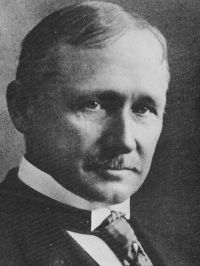
“ The true spirit of America believes in the dignity of labor. Our nation was built in the actual sweat of our forebears, who hewed the forests and tilled the soil with their own hands and did not attempt to enslave the labor of the natives as did the pioneers who colonized the countries further south. That spirit survives and makes it natural for us to respect those who do their parts well in whatever activity fortune has placed them. So the leader and his men, the employer and the laborer, are all companions in labor, and each shows respect for the ability and accomplishment of the other. ”
Lincoln C. Andrews
Biographical details
Lincoln C. Andrews, an influential writer on labor and leadership, is best known for his seminal work Manpower, which explores the dignity of labor, the dynamics of group effort, and the ethical responsibilities of leadership. His writings highlight the intrinsic value of hard work, the necessity of mutual respect between employers and employees, and the transformative power of acknowledging individual achievement.
Through incisive analysis of organizational behavior, Andrews argues that effective leadership depends on building trust, harnessing collective spirit, and aligning personal drive with shared objectives. His work remains a key reference in discussions on industrial efficiency and human potential.
Quotes by Lincoln C. Andrews
“ Whatever a man is doing in an agreeable frame of mind, he finds himself naturally striving for perfection—the farmer looks back with pleasurable reward to see that he has turned a clean, straight furrow, the carpenter and mechanic get an inward glow from the perfect fitting of a joint, and it was not poetic fancy which made David Grey take such delight in digging that drainage ditch under a hot summer sun. These joys from fine execution of work are the result of a natural instinct, and form one of the best means for getting results if the leader knows how to use them. ”
“ The war has enriched our democracy in the awakened individuality of millions of citizens and in the hundreds of thousands of young men whom it has returned to civil life experienced in the responsibilities and possibilities of group leadership. Both these are to be potent influences in the future, and may be made a great national asset if properly directed. The measure of a nation, in peace as now in war, is found in the soul and purpose of all its people. The world has been taught that machines and the cold products of science cannot win in war. ”