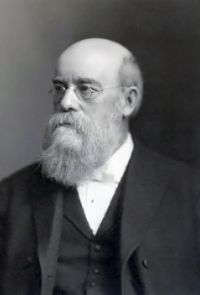
Washington Gladden

Washington Gladden

Summary

Portrait of Washington Gladden Washington Gladden Industry and Democracy (1911)

Neither in the State nor in the factory will our democracy be fulfilled without patient, heroic, self-denying work. But the work will be rewarding. Can any compensation be higher or finer than that of the man who wins, as Baldwin won, the loyal affection of scores or hundreds or thousands of men; who helps them to stand on their own feet and work out their own fortunes; who makes them see that the industry by which they gain their livelihood is one in which they have a real stake, so that they are not merely dependents on it, but, in a true sense, partners in it
Source: Wikisource

Portrait of Washington Gladden Washington Gladden Industry and Democracy (1911)

The danger of the hour, as it appears to me, is that our captains of industry will array against themselves the gathering might of resistless democracy and be trampled in the dust. It would be far better for them, and for the common man, and for all the rest of us, if they would keep the leadership of industry. Leadership they can have, if they have sense to claim it and wit to exercise it—leadership, but not lordship. Industrial democracy wants leaders, but not autocrats
Source: Wikisource

Portrait of Washington Gladden Washington Gladden Industry and Democracy (1911)

Under this system the capitalist manager assumes the exclusive right to fix the rate of wages, the hours of labor, the conditions under which the work is done. He cannot, of course, discuss these matters with each of his one thousand or ten thousand workmen; there can, therefore, be no semblance of a bargain in the case; it is an ultimatum; the employer presents it, the workingman can take it or leave it. It would be absurd for a single laborer to propose to chaffer about wages or hours of labor with the American Steel Corporation or the Pennsylvania Railroad Company.
Source: Wikisource

Get perspective with Kwize: daily news enlightened by great literature