Summary

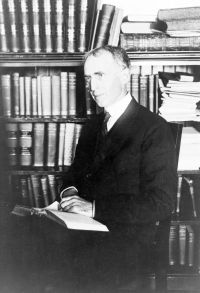
Portrait of Charles A. Beard Charles A. Beard History of the United States — XXIV (1921)

While industries were small and conflicts were local in character, a strike seldom affected anybody but the employer and the employees immediately involved in it. When, however, industries and trade unions became organized on a national scale and a strike could paralyze a basic enterprise like coal mining or railways, the vital interests of all citizens were put in jeopardy. Moreover, as increases in wages and reductions in hours often added directly to the cost of living, the action of the unions affected the well-being of all—the food, clothing, and shelter of the whole people.
Source: Wikisource

Portrait of Charles A. Beard Charles A. Beard History of the United States — XXIV (1921)

They asserted that the "working class and the employing class have nothing in common" and that trade unions only pitted one set of workers against another set. They repudiated all government ownership and the government itself, boldly proclaiming their intention to unite all employees into one big union and seize the railways, mines, and mills of the country. This doctrine, so revolutionary in tone, called down upon the extremists the condemnation of the American Federation of Labor as well as of the general public.
Source: Wikisource

Portrait of Charles A. Beard Charles A. Beard History of the United States — XXIV (1921)

Immigration and Americanization The Problems of Immigration.—From its very inception, the American Federation of Labor, like the Knights of Labor before it, was confronted by numerous questions raised by the ever swelling tide of aliens coming to our shores. In its effort to make each trade union all-inclusive, it had to wrestle with a score or more languages. When it succeeded in thoroughly organizing a craft, it often found its purposes defeated by an influx of foreigners ready to work for lower wages and thus undermine the foundations of the union.
Source: Wikisource

Get perspective with Kwize: daily news enlightened by great literature