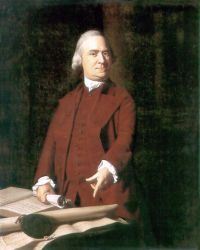
Common law, a legal system based on judicial precedent and case law, derives its authority from court decisions rather than statutes alone. It operates under the principle of stare decisis, where courts follow previous rulings to ensure consistency. Authors like Thomas Jefferson emphasized its role in federal jurisprudence, while Charles Sumner contrasted its spirit of liberty with the systematic nature of civil law.
Joseph Story underscored its function as a foundational guide for interpreting legislation. This flexible system balances tradition with adaptability, evolving through judicial reasoning to address societal changes, as noted by scholars like John E. Young. Its lasting impact lies in its ability to harmonize continuity with progress.
 Thomas Jefferson,
Memoir, Correspondence, and Miscellanies…
Thomas Jefferson,
Memoir, Correspondence, and Miscellanies…