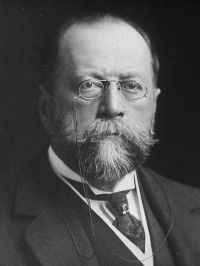
R. H. Tawney

Biographical details

R. H. Tawney Religion and the rise of capitalism (1926)

If the inward and spiritual grace of Puritanism eludes the historian, its outward and visible signs meet him at every turn, and not less in market-place and counting-house and camp than in the student’s chamber and the gathering of the elect for prayer. For to the Puritan, a contemner of the vain shows of sacramentalism, mundane toil becomes itself a kind of sacrament. Like a man who strives by unresting activity to exorcise a haunting demon, the Puritan, in the effort to save his own soul, sets in motion every force in heaven above or in the earth beneath.
Source: Gutenberg

R. H. Tawney Religion and the rise of capitalism (1926)

Where Catholic and Anglican had caught a glimpse of the invisible, hovering like a consecration over the gross world of sense, and touching its muddy vesture with the unearthly gleam of a divine, yet familiar, beauty, the Puritan mourned for a lost Paradise and a creation sunk in sin. Where they had seen society as a mystical body, compact of members varying in order and degree, but dignified by participation in the common life of Christendom, he saw a bleak antithesis between the spirit which quickeneth and an alien, indifferent or hostile world.
Source: Gutenberg

R. H. Tawney The Agrarian Problem in the Sixteenth Century

By the end of the fifteenth century we are walking through fields that are being cut up with the hedges which give the dullest English landscape the trim beauty of a garden. For a century and a half, while in the great world the new state rises on the ruins of the Middle Ages, while Tudors give way to Stuarts, and Stuarts browbeat and are browbeaten by ever more impatient Parliaments, in courts customary and sometimes in noisier assemblies not without arms, we shall be discussing whether those hedges are to stand or fall. The great enclosing movement has begun.
Source: Gutenberg

Get perspective with Kwize: daily news enlightened by great literature