AI-generated from sources
The paradoxical atmosphere: Air as chaos, control, and transcendence
In Brief
- Humanity's relationship with air is paradoxical, viewing it simultaneously as a life-sustaining medium and an uncontrollable force of elemental chaos and destruction, as depicted in artistic and literary descriptions of storms.
- Scientific inquiry transformed air from a terrorizing mystery into a manageable substance, exemplified by the precise control required for medical anesthesia (using chloroform/vapors) and the physical laws leveraged for aviation.
- The imagination transcends both chaos and control, conceiving of air as a domain of absolute freedom where fundamental laws, such as gravity, are entirely nullified.
Main authors

The air is a substance of profound paradox. It is the invisible medium of existence, so ubiquitous as to be taken for granted, yet it can manifest as a force of devastating power. It is both the chaotic breath of a storm and the carefully measured vehicle for medical anesthesia. Within scientific and literary discourse, the atmosphere is interpreted not as a single entity, but as a multifaceted domain upon which human anxieties, ambitions, and fantasies are projected. It can be a canvas for raw, untamable nature, where excitement and fear generate on the very air, or a resource to be understood, quantified, and ultimately controlled [1]. This persistent tension between the air as an external, often hostile, force and an internal, manageable system defines a significant arc in human thought.
The journey to comprehend this elusive medium unfolds across several distinct intellectual arenas. The first involves a direct confrontation with its elemental chaos, where artists and thinkers depict an atmosphere capable of overwhelming darkness and destruction [2]. In stark contrast, a second arena emerges with the scientific impulse to deconstruct, measure, and harness the air's properties, transforming it into a tool of precise control for medicine and technology [3]. Finally, transcending the limits of physical law, the imagination posits air as a realm of absolute freedom, a weightless domain where the fundamental force of gravity can be wished away [4]. Exploring these divergent interpretations reveals how a single, invisible substance can become a powerful symbol for humanity's evolving relationship with the natural world, from subjugation and fear to mastery and imaginative transcendence.
The Turbulent Canvas: Air as an Uncontrollable Force
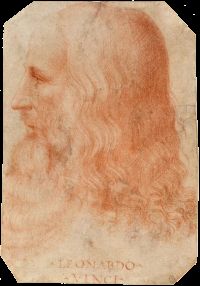
In its most primal and terrifying form, air manifests as an agent of chaos and destruction. This is not merely weather, but an active, hostile force capable of dismantling the certainties of the built world. Literary descriptions capture an atmosphere charged with malevolence, a dark breeze that whisks away debris and evokes a sense of cosmic desolation [5]. This vision is reinforced by artistic and scientific observations that focus on the violent dynamics of the atmosphere. Leonardo da Vinci, for instance, urged painters to render the air as an “awfully dark” medium, a turbulent mass of wind, dust, and clouds capable of enveloping mountains and shattering like waves against a shore [6]. In these depictions, air loses its transparency and becomes a thick, suffocating presence, a substance synonymous with nature’s untamable power.
This perception of atmospheric chaos is not limited to artistic rendering but is also present in early attempts to explain meteorological phenomena. The formation of a waterspout, for instance, is described as an act of violent transformation where whirling air creates a vacuum that forces water upward, eventually breaking it into particles that form black clouds [7]. The mechanism is one of pure, energetic force. Similarly, ancient philosophical traditions viewed the air as a conduit for unseen threats, a medium through which pestilence and other baneful influences could descend upon the world like clouds or mists, rising from a rotting earth to infect the very atmosphere [8]. Here, the air is not a neutral space but a carrier of corruption, an active participant in cycles of decay and death.
Ultimately, this vision of a turbulent atmosphere positions air as a fundamental component of a primordial, unresolved chaos [9]. It is an element in constant, agitated motion, subject to a multitude of forces from the sun, moon, and sea, which produce ceaseless currents and agitations [10]. This perspective frames the human relationship with the atmosphere as one of profound vulnerability. Before the development of sophisticated control mechanisms, humanity was largely at the mercy of an environment where the air itself could become a terrible and unpredictable enemy, a reminder of the fragility of civilization in the face of elemental power .
The Measured Breath: Air as a Medium of Scientific Control
Contrasting with the vision of elemental chaos is the methodical endeavor of science to render the air knowable, predictable, and controllable. This intellectual shift began with the reconceptualization of the atmosphere not as a singular, moody entity, but as a complex physical substance. Early modern science posited the air as a “Chaos” of distinct elastic and unelastic particles [11], or as a system of hard, round, mutually repelling particles [12]. This atomistic view demystified the air, transforming it from a source of terror into an object of inquiry—a system whose properties could be analyzed and, with sufficient knowledge, manipulated.
Perhaps the most profound demonstration of this newfound control occurred in the medical field. The discovery that inhaling specific vapors mixed with air could induce a state of complete insensibility was a landmark achievement, allowing surgeons to bypass the body’s chaotic and agonizing response to pain . This was not alchemy but a precise scientific process. Success depended entirely on supplying a carefully regulated mixture of air and vapor, as the boundary between therapeutic effect and lethal overdose was dangerously thin [13, 14]. An excess of chloroform vapor in the inhaled air, for example, could cause sudden death [15]. The development of specialized inhalers to manage this delicate balance represents the epitome of this control: the very act of breathing, and the air that sustains it, was transformed into a precision instrument of medical intervention.
This impulse for control extended beyond the operating theater to encompass broader concerns of public health and physiology. The quality of the air itself became a subject of scientific interest, with the recognition that atmospheric conditions could have direct therapeutic benefits. The rarefied air found at high altitudes, for instance, was observed to promote deeper respiration and pulmonary expansion, aiding in the treatment of certain ailments [16]. This suggests a shift toward seeing the atmosphere as a manageable environment whose properties could be leveraged for human well-being. The air was no longer just something to be breathed, but something to be prescribed.
The ultimate expression of this mastery is found in the technological conquest of the air. Human flight required a deep, practical understanding of atmospheric physics—a way to counteract the forces of gravity and air resistance that tether objects to the ground [17]. Early aviation, through balloons and airships, was predicated on a direct manipulation of these laws, primarily by using a gas lighter than the surrounding air to generate lift [18, 19]. This technology effectively negated terrestrial obstacles, allowing for travel in a direct “bee-line” [20]. This control reached its zenith in the space age, where vehicles are guided through an ever-thinning atmosphere into the vacuum beyond [21]. Even there, the residual air, though incredibly thin, exerts enough friction to alter the orbit of a satellite, requiring constant, precise control to maintain its path [22].
Beyond Gravity's Reach: The Imaginative Leap into Weightless Realms
Where science seeks to counteract the laws of nature, the human imagination often prefers to abolish them entirely. The third major interpretation of air moves beyond the realm of technological control into that of fantasy, where the atmosphere becomes a domain of absolute freedom from physical constraints. While an aeronaut scientifically counteracts gravity by displacing air with a lighter gas , fantastical narratives envision technologies and places where gravity simply ceases to exist. This represents a profound imaginative leap, recasting the air from a substance to be navigated into a fundamentally different state of being.
This fantasy is embodied in magical contraptions and otherworldly locales. The “Airmobile,” for instance, operates not by principles of aerodynamics but through “gravity resistor plates,” a technology that implies gravity is a force that can be switched on and off at will [23]. This idea reaches its logical conclusion in the conception of “Hightown,” a place where the earth exerts no gravity whatsoever. In such a realm, inhabitants are natural air-walkers, and flying machines become paradoxically absurd and unnecessary [24]. This complete negation of a universal law stands in stark opposition to the scientific worldview, which holds that gravity is an innate property of all matter, from the densest rock to the most invisible air [25].
Beyond technological fantasy, the air can also be reimagined as a supernatural or mystical medium. In this conception, the “pure air” of common perception is merely a veil hiding other realities teeming with unseen creatures and phenomena. To break through this barrier is to witness worlds previously invisible to humankind [26]. This perspective imbues the atmosphere with a sense of hidden depth and mystery, transforming it from empty space into a populated, interdimensional medium. It taps into a desire to believe that there is more to the world than what can be perceived by the senses or measured by instruments.
A bridge between the scientific and the fantastical can be found in the poetic appreciation of natural flight. The effortless movement of a bird, for example, can be viewed as a marvel that transcends simple mechanics, a creature that seems to almost “subsist upon air” as it carves out a “higher geometry of curves and spirals” in the sky [27]. This sense of wonder captures the core human yearning for liberation from earthly constraints, a desire to be an “unclaimed self, dispersed upon earth, air, sky” [28]. This poetic sensibility values the air not for what it is chemically or physically, but for what it represents: a space of boundless possibility and freedom from the weight of the world.
The human conception of air traverses a vast spectrum of meaning. At one end lies the raw, elemental terror of an atmosphere that can manifest as a chaotic and destructive force, a reminder of nature's untamable power . From this position of subjugation, a paradigm of control emerges, driven by scientific inquiry that deconstructs the air into a manageable substance, enabling unprecedented medical procedures and world-altering technologies of flight . At the furthest end of this spectrum, the imagination takes flight, transforming the air into a domain of pure fantasy where the most fundamental laws of the universe, like gravity, are suspended, and hidden worlds are revealed .
This journey from chaos to control to transcendence is more than an intellectual history of a single substance; it is a mirror of humanity's evolving relationship with the natural world. It charts a course from a fearful being at the mercy of the elements, to a confident manipulator of physical laws , and finally, to a dreamer who imagines realities entirely beyond those laws . The invisible medium that surrounds us thus serves as a visible record of our greatest fears, our most audacious ambitions, and our most profound desires for freedom. In our attempts to understand, master, and imagine the air, we reveal the very nature of our own consciousness.