AI-generated from sources
The Olfactory Alarm, Smell, Sanitation, and Public Health
In Brief
- Human aversion to foul odors served as a fundamental biological warning system against decay and potential threats, driving early public health concerns.
- 19th-century urban environments were saturated with malodorous waste from human excrement, refuse, and overcrowded cemeteries, widely believed to cause disease via "sewer gas."
- The instinct to mask offensive odors with deodorizers was criticized as dangerous, with reformers insisting on thorough cleanliness and ventilation as the only true solutions.
- Scientific understanding evolved from miasma theory to germ theory, but major public health crises were often necessary to galvanize systemic sanitary reforms.
Main authors

The human aversion to foul odors is a deeply ingrained and visceral response, serving as more than a mere aesthetic discomfort. Across different historical periods, this reaction has been understood as a fundamental biological warning system [1, 4]. The sense of smell, positioned as a sentinel at the entryway to the lungs, functions as a crucial guardian, tasked with examining the air for invisible threats and alerting the body to the presence of decay and potential danger [5]. This instinctive mechanism highlights a primal connection between olfaction and self-preservation, where a bad smell is perceived not simply as unpleasant but as an alarm signaling the proximity of unhealthy, and possibly lethal, conditions.
This olfactory alarm has played a pivotal role in shaping societal conceptions of health and the environment. The persistent presence of malodorous waste was historically interpreted as a direct indicator of putrefaction and a threat to well-being, long before the mechanisms of disease were fully understood [2, 6]. The noxious stenches emanating from urban centers, polluted dwellings, and mismanaged waste became potent symbols of profound environmental degradation. This widespread sensory offense catalyzed a growing public consciousness and spurred demands for sanitary reform, ultimately driving the large-scale infrastructural and legislative changes that would redefine public health and the modern urban landscape [33, 35].
An Instinctive Aversion, A Natural Warning
The perception of smell as a protective faculty is a recurring theme in historical texts on health and hygiene. Some 19th-century writers, such as Pye Henry Chavasse, framed this sensory capacity in almost theological terms, suggesting that unpleasant odors were a form of divine guidance intended to steer humanity away from danger . This view posits the olfactory sense as an essential guide, inducing people to avoid places where the air is tainted and disease may be contracted . In a more secular, physiological framework, Joseph C. Hutchison described smell's highest purpose as the protection of the respiratory organs, acting as a gatekeeper that warns of noxious gases and other invisible enemies to health .
The nature of this warning was directly linked to the processes of decay and impurity. Offensive vapors were considered, as a general rule, unfit for breathing, and the sense of smell was credited with helping humans reject putrid food and other unsafe substances . Writing in the early 20th century, Mohandas K. Gandhi drew a stark parallel between consuming feces and inhaling polluted air, arguing that the latter was an equally noxious, though invisible, form of contamination that should provoke a similar feeling of revulsion . This perspective underscores the intuitive connection made between foul smells and the ingestion of harmful matter, whether through the digestive or the respiratory tract.
Despite its importance, this natural alarm system was often seen as neglected or misunderstood. Observers like G. W. Septimus Piesse lamented that by failing to properly attend to olfactory warnings, individuals constantly exposed themselves to impure air . The impulse to simply mask or eliminate an odor with disinfectants, rather than addressing its source, was criticized as a profound and dangerous error . This approach ignored the message for the sake of silencing the messenger. The sense itself, however, was not infallible. As illustrated by the mining hazard known as "stink damp," some gases produce their most pungent warning smell at lower concentrations, while other lethal vapors can be entirely odorless, highlighting the limitations of relying solely on this biological detector [3, 29].
Mapping Decay in the Urban Environment
In historical urban and domestic settings, the sources of malodor were ubiquitous and intimately tied to the functions of daily life. The management of human waste was a primary culprit, with commentators like Henry Jephson identifying overflowing and poorly maintained cesspools as among the worst abominations, silently poisoning the atmosphere both inside and outside homes [7]. The influential reports of Edwin Chadwick in the 1840s provided vivid descriptions of the dwellings of the poor, where floors served as receptacles for filth and the air was thick with an oppressive stench of excrement and decay [8]. These conditions created environments no longer fit for human respiration.
Beyond human waste, the urban landscape was saturated with other sources of foul smells. Friedrich Engels documented how the nightly dumping of refuse from thousands of households into street gutters created masses of filth that generated foul vapors, endangering public health [10]. Overcrowded cemeteries could emit a nauseous odor that permeated surrounding neighborhoods, tainting food and clothing with the scent of the grave [9]. These specific sites of decay were part of a broader environmental breakdown characterized by polluted water supplies, saturated subsoils, and inadequate housing, creating what Mrs. Humphry Ward described as a
Mapping Decay in the Urban Environment
In historical urban and domestic settings, the sources of malodor were ubiquitous and intimately tied to the functions of daily life. The management of human waste was a primary culprit, with commentators like Henry Jephson identifying overflowing and poorly maintained cesspools as among the worst abominations, silently poisoning the atmosphere both inside and outside homes . The influential reports of Edwin Chadwick in the 1840s provided vivid descriptions of the dwellings of the poor, where floors served as receptacles for filth and the air was thick with an oppressive stench of excrement and decay . These conditions created environments no longer fit for human respiration.
Beyond human waste, the urban landscape was saturated with other sources of foul smells. Friedrich Engels documented how the nightly dumping of refuse from thousands of households into street gutters created masses of filth that generated foul vapors, endangering public health . Overcrowded cemeteries could emit a nauseous odor that permeated surrounding neighborhoods, tainting food and clothing with the scent of the grave . These specific sites of decay were part of a broader environmental breakdown characterized by polluted water supplies, saturated subsoils, and inadequate housing, creating what Mrs. Humphry Ward described as a man-made hell [11]. Even the simple, unhygienic practice of throwing refuse into the street, as noted by Frederick Treves, contributed to a complex and overwhelming urban smell profile [12].
The perceived link between these smells and disease was powerful, often articulated through the concept of "sewer gas." This vapor was held by some physicians and sanitarians to be a direct cause of deadly diseases like typhoid fever and cholera, while others theorized that sewers provided fertile breeding grounds for germs that were then transported through the air [13]. This understanding was rooted in the observation that the mixture of organic refuse and water inevitably leads to putrefaction and the release of poisonous gases [17]. This principle was applied across scales, from the vast main drain of a city to the colon of the human body, and from the festering domestic dust-bin to the foul pipes of a kitchen sink [14, 15, 18].
Specific environmental failures were directly correlated with public health crises. City inspectors reported that the highest incidence of diseases such as cholera infantum was found in the dirtiest streets, where household filth and even the waste from sickbeds were often discarded [20]. This practice was believed to contaminate the air and directly aid in the spread of pestilence . Even without visible filth, the air itself could be seen as polluted; the distinct "crowd odor" of an unventilated space was recognized as a sign of air tainted by human emanations [21]. The problem was multifaceted, as decaying matter not only released deleterious gases but also contaminated water supplies, with everything from stables to kitchen slops identified as potential sources of serious disease [16, 19].
From Olfactory Nuisance to Sanitary Revolution
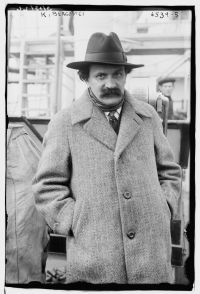
The societal response to the olfactory alarm was complicated by the very nature of the sense of smell. The human nose is not a consistently reliable instrument for detecting danger, as it is highly susceptible to fatigue [26]. As Konrad Bercovici observed, residents of extremely malodorous neighborhoods often lost their sensitivity to the stench, becoming habituated to conditions that outsiders found unbearable [22]. This adaptation, while perhaps a coping mechanism, effectively disabled the biological alarm system in those most at risk. Furthermore, the correlation between smell and harm is imperfect; some deadly gases are odorless, while some offensive ones may not be medically dangerous, making smell an inconsistent guide to actual risk [30]. This variability posed challenges for practices like determining when to replace safety equipment based on odor detection [28].
A persistent tension existed between addressing the root causes of bad smells and simply masking them. The use of deodorizers and perfumes was a common but ultimately superficial solution, criticized by health advocates for creating a false sense of security while leaving the underlying filth untouched [27]. Attempts to engineer solutions, such as trapping gully-holes to block regurgitant sewer gases, could prove counterproductive by causing obstructions or introducing new, artificial nuisances [23]. The most emphatic reformers insisted that no chemical or device could substitute for the fundamental principles of perfect cleanliness, thorough ventilation with fresh air, and the liberal use of soap and water .
Over time, scientific understanding evolved, leading to a re-evaluation of the direct link between odor and disease. By the early 20th century, the miasmatic view that sewer gas itself was a toxic, germ-laden entity began to be challenged within the scientific community [24]. Some argued that emanations from waste, while offensive, were not inherently dangerous in a medical sense, citing mortality statistics that did not correlate with periods of intense public complaints about bad odors . The focus began to shift towards viewing issues like garbage disposal less as a primary vector of deadly disease and more as a matter of preventing a public nuisance and maintaining civic decency, supported by observations that garbage handlers were not exceptionally prone to illness [31]. This change reflected the ascendance of germ theory over older ideas about poisonous vapors.
Ultimately, overcoming public inertia and entrenched interests required both social pressure and catastrophic events. Progress was often hindered by a narrow focus on private cleanliness that ignored large-scale public pollution, as well as by economic actors like landlords who favored the status quo to avoid the costs of sanitary improvements [25, 34]. It often took a major public health crisis, such as the cholera epidemic of 1849, to galvanize the political will necessary for systemic reform . Such reforms, in turn, had a powerful demonstrative effect. By showing the tangible benefits of cleanliness, they fostered what John Simon called a "laudable discontent" with unsanitary conditions, building a strong public consensus that absolute cleanliness—achieved through comprehensive drainage, water supply, and waste management—was the essential foundation for a healthy society [32].
The historical journey from filth to sanitation was propelled in large part by the simple, instinctive aversion to a bad smell. This olfactory alarm, though scientifically imprecise, served as a powerful and persistent catalyst for social and environmental transformation . The foul stenches of 19th-century cities, rising from cesspools, gutters, and decaying refuse, were initially interpreted through the lens of miasma theory as direct causes of disease . As scientific knowledge advanced towards germ theory, the understanding of this threat was refined, yet the fundamental demand for cleanliness remained. The response navigated the limitations of the human senses, the flawed logic of masking odors, and the complex politics of public works, demonstrating how a sensory experience can drive profound societal change .
While the direct equation of malodor with miasmatic poison has been superseded, the underlying principle that our senses warn us of environmental degradation remains relevant. The historical struggle against stench reveals the intricate relationship between biology, scientific understanding, economic interests, and political will in the shaping of modern life. The olfactory alarm, by fostering a collective intolerance for filth, helped establish a new baseline for public health and civic responsibility . This legacy endures in the modern expectation that a healthy environment should not just be free of invisible pathogens but should also appeal to a fundamental human desire for cleanliness and decency, a standard born from the visceral reaction to a world that smelled of decay .