AI-generated from sources
The Unwritten History of Sickness, From the Black Death to Modern Plagues
In Brief
- Pre-scientific societies interpreted epidemics through metaphysical lenses, fostering fatalism and inhibiting effective medical or public health responses.
- The Black Death inflicted a profound psychological shock, dissolving social cohesion and leading to 'Epidemic Delusions' where fear overrode rational public health initiatives.
- The introduction of systematic data collection, like London's Bills of Mortality, marked a critical shift towards empirical understanding of disease, despite its initial limitations to mere mortality counts.
- While modern science offers advanced tools for disease prevention and control, challenges such as underreporting, deliberate concealment of outbreaks, and a failure to measure the full societal costs of sickness persist, hindering a complete historical archive.
Main authors
Major epidemics throughout history have consistently served as profound tests of societal resilience, laying bare the limits of human knowledge and control. The Black Death of the 14th century stands as a paramount example, a cataclysm that inflicted a psychological shock so deep it ruptured the very fabric of social and familial bonds [4]. In the face of such overwhelming devastation, fear and confusion often overshadowed rational inquiry, humbling even the most confident minds [1]. This environment of terror not only shaped the immediate response to the crisis but also fundamentally conditioned how the event was remembered and recorded, leaving subsequent generations to piece together a history from accounts clouded by trauma and incomplete understanding [3].
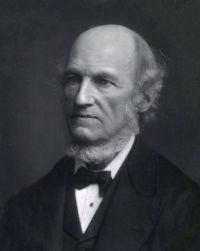
The historical narrative of pestilence has thus been shaped as much by epistemological frameworks as by the pathogens themselves. Before the advent of germ theory, societies frequently interpreted mass disease through metaphysical lenses, viewing outbreaks as divine punishments or the work of malevolent supernatural forces [10]. This perspective, as described by observers like George Vivian Poore, fostered a sense of fatalism and often led to dangerously counterproductive measures rooted in superstition rather than medical observation [2]. Consequently, the historical record became dominated by chronicles of mortality and divine wrath, often overlooking the complex interplay of social, economic, and environmental factors that a modern analysis would consider essential [14]. The story of epidemics is therefore also the story of humanity's evolving capacity to see, measure, and comprehend the nature of its own vulnerability.
An Epistemology of Fear and Faith
In the pre-scientific era, the conceptual framework for understanding epidemics was largely divorced from empirical medicine, rooted instead in superstition and religious doctrine. Outbreaks were commonly perceived not as natural phenomena to be investigated, but as 'visitations' to be endured, a perspective that actively discouraged scientific inquiry . Some theories attributed plagues to astrological events, while others saw them as divine retribution for sin, fostering a climate of helplessness and resignation . This worldview led to the belief that certain diseases, such as the plague, were inherently and inescapably fatal, a 'superstitious torpor' in the words of Benjamin Rush, which stifled any attempt at systematic cure or prevention [11].
The psychological impact of such events was immense, creating what 19th-century physician William Benjamin Carpenter identified as 'Epidemic Delusions'—mass psychological states where dominant ideas, fueled by intense emotion, lead to irrational behaviors [8]. The terror of the Black Death, as described by J. F. C. Hecker, was so profound that it shattered social cohesion, dissolving the trust between individuals and their communities . This fear-driven hysteria resulted in panicked reactions where the mere suspicion of illness could lead to forced isolation and death, turning homes into sealed tombs and transforming neighbors into threats [5]. In this atmosphere, rational public health responses were nearly impossible.
This climate of fear profoundly limited the accumulation of reliable knowledge. While 14th-century physicians applied the best of their contemporary medical art, their efforts were constrained by the era's scientific limitations . Knowledge was often transmitted through the uncritical copying of earlier texts rather than through direct observation, entrenching misinformation and myth . The general ignorance of basic principles of health and sanitation allowed successive waves of epidemics to devastate populations for centuries [9]. John Caius later argued that a true scientific understanding of disease could only emerge from studying multiple epidemics, as each one reveals different aspects of nature's laws—a practice untenable in an age guided by faith over fact [7]. The idea that morbid poisons could one day be measured and understood with the same precision as celestial bodies, as envisioned by John Grove, remained a distant aspiration [6].
The Dawn of Empirical Record Keeping
A significant shift away from purely narrative or superstitious accounts of epidemics began with the advent of systematic data collection, exemplified by London's Bills of Mortality. This marked a nascent effort to apply quantitative methods to public health, collecting statistics on plague victims and their locations in an attempt to discern patterns and causes through correlation [12]. This new approach was greatly influenced by pioneers like John Graunt, whose 1662 work analyzed these vital statistics to draw empirical conclusions about public health, such as identifying seasonal disease patterns and differences in life expectancy between genders .
Despite this innovation, these early archives were inherently limited, primarily functioning as ledgers of death. The Bills of Mortality could track the raw numbers of the deceased, but they offered little insight into the broader societal conditions that fostered disease [15]. For instance, historian Charles Creighton noted the perplexing fact that the eventual cessation of the plague in London had a negligible effect on the city's overall high mortality rate, a detail these records captured but could not explain . This focus on mortality also tended to homogenize distinct pathogenic events. J. F. C. Hecker, for example, made a crucial distinction between the singular catastrophe of 'the Great Mortality' and the subsequent, less virulent plagues that followed, a nuance often lost in chronicles that simply recorded death tolls [13, 17].
This quantitative but narrow focus cemented a historical narrative centered almost exclusively on the lethality of epidemics. Chroniclers and early statisticians were most captivated by the staggering number of victims, making mass death the central feature of the story . The Bills of Mortality captured the demographic outlines of tragedy—noting that while the poor suffered disproportionately, the elite were not spared—but they failed to document the long-term social and economic transformations experienced by the survivors [16, 18]. It wasn't until the 19th-century implementation of comprehensive birth and death registration acts that a more reliable statistical foundation for public health legislation became available, moving beyond the simple, and often inaccurate, mortality lists of the past [19].
Science, Public Health, and the Persistent Archive
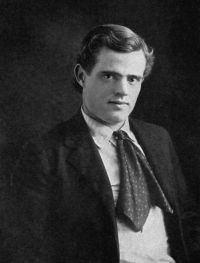
The scientific revolution fundamentally transformed the understanding of epidemics, replacing mystery with microbiology. Modern pathology has identified the causative agent of the Black Death as the same bubonic plague that persists today, providing a concrete scientific explanation for a terror that was once attributed to supernatural forces [20]. This shift from an invisible, divine enemy to a knowable, physical one paved the way for the development of modern public health, with its emphasis on sanitation, prevention, and a systematic study of nature [21, 24]. As Jack London later reflected, the rise of great civilizations and dense urban populations created new opportunities for pathogens to evolve and spread, a process that science, not faith, could explain [27].
This new scientific paradigm spurred the development of organized public health systems designed to prevent, rather than simply endure, epidemics. The modern conviction that outbreaks can be contained or excluded through well-designed regulations is a direct legacy of this shift, fulfilling a potential that earlier writers like Hecker could only speculate upon [22]. The core of this effort lies in the systematic accumulation and analysis of data regarding disease transmission, with the goal of formulating protective strategies against future recurrences [23]. However, the creation of official bodies to oversee this work was a slow and arduous process. In the United States, for example, the push for a National Bureau of Health to centralize and standardize disease statistics was still being debated in the early 20th century, with many communities lacking even basic legal records of causes of death [26, 30].
Even with advanced scientific tools, significant challenges in documenting and interpreting epidemics persist. A key issue, identified by Warren T. Vaughan in his 1921 study of influenza, is that diseases with initially low mortality rates often go unrecorded in their early stages, unlike the immediately alarming plague, allowing them to spread widely before a public health response is mounted [29]. Moreover, a deep-seated tendency to conceal outbreaks for economic or political reasons continues to undermine early containment efforts, a critical failure in national hygiene [28]. Critics like William H. Allen have also pointed to a broader failure within the medical profession to 'socialize' its knowledge by systematically tracking the full societal costs of preventable diseases, from sickness rates to economic impact [31]. This suggests that while science has illuminated the biological nature of plagues, the challenge of creating a truly complete and transparent historical archive—one that accounts for the full spectrum of an epidemic's impact—remains a formidable and ongoing task [25].
The historical journey of understanding mass disease reveals a clear trajectory from supernatural dread to scientific reason. Societies once interpreted epidemics as divine punishments or inexplicable calamities, a mindset that fostered fatalism and hindered effective action . The gradual shift towards empirical observation, marked by early data-gathering efforts like the Bills of Mortality, began to ground the study of disease in the measurable world, even if the primary focus remained narrowly fixed on mortality . This evolution culminated in the modern public health era, where scientific knowledge of pathogens has enabled sophisticated strategies for prevention and control, transforming humanity's relationship with its oldest invisible enemies .
Yet, this narrative of progress is incomplete. While the scientific demystification of disease represents a monumental achievement, the challenge of creating a comprehensive record of an epidemic's true impact endures . Persistent issues of underreporting, the deliberate concealment of outbreaks, and a failure to measure the broader social and economic costs of sickness demonstrate that our modern archives are still far from perfect . The history of recording epidemics is therefore a continuing lesson in the limitations of our own systems of knowledge. The ultimate task is not merely to count the dead but to build a holistic understanding of these events, creating archives that capture the full, complex reality of human society under siege by disease, thereby better preparing us for the plagues of the future .