AI-generated from sources
The Price of Confession, Why States Hide Epidemics and What Has Made Them Speak
In Brief
- For centuries, declaring plague exposed a whole country to trade bans, destroyed cargoes and open-ended quarantine, which made silence the rational choice for ports and governments.
- Medical doubt about contagion was real, but it also served as respectable cover for delay, since a doctrine that denied transmission denied the need for costly measures.
- Notification replaced concealment only when international conventions capped its price, letting ships from infected ports move on under observation instead of being detained.
- The sanitary bargain priced the presence of a disease, not blame for its origin, and it decayed whenever the threat seemed to recede.
Every epidemic begins twice: once in the bodies it strikes, and once in the word that names it. Between those two beginnings lies an interval of hesitation that the chronicles of contagion record with striking regularity, from the Moscow plague of 1771, where the authorities hoped the first cases would remain unknown [1], to the international reporting rules that governments, two centuries later, still routinely ignored [2]. The easy explanation is bad faith—rulers lying to protect themselves. The sources point to something less comfortable: for most of this history, declaring an epidemic set off penalties so heavy and so certain, against benefits so doubtful, that silence was the rational choice [3].
Nor was the hesitation simply a pretext. The physicians who first examined the dead often could not tell whether they faced a general contagion, and no one could reliably distinguish the infected from the healthy [4, 5]. Concealment grew in the space between genuine uncertainty and foreseeable punishment, each lending cover to the other. That is why the long history of sanitary law reads less as a story of truth progressively enforced than as a story of prices: governments began to speak not when they were commanded to, but when the cost of speaking fell—when quarantine was bounded, and when a declared outbreak no longer meant a closed port [6, 7].
Doubt as Shelter, the Uncertain Naming of Disease
Daniel Defoe's A Journal of the Plague Year captures the epistemic condition of every early outbreak. Before inspection, the physicians did not even entertain the possibility of a general contagion; only after examining bodies did they commit to the name, and to its catastrophic implications . Defoe adds a deeper difficulty: the disease offered no reliable sign of who carried it, and the carriers themselves might not know . Diagnosis, under such conditions, is not a fact awaiting disclosure but a judgment that has to be risked. Any authority that waits for certainty waits, by construction, too long.
Charles de Mertens, writing from plague-stricken Moscow, saw the political consequence of this uncertainty. His insistence that magistrates act as soon as competent and honest physicians pronounce the diagnosis, without regard for dissenting practitioners [8], reveals what usually happened instead: the mere existence of a contrary medical opinion was enough to suspend action. His account also concedes that the authorities had hoped to keep the first alarm quiet, and that the precautions taken around the military hospital betrayed the secret and spread fear through the city . Doubt and discretion reinforced each other: the dissenting doctor supplied the respectable reason, the dread of panic supplied the motive.
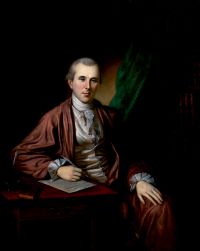
The doctrinal quarrel between contagionists and their adversaries gave this doubt an intellectual armature. Benjamin Rush greeted evidence that plague was not contagious in its native lands as a discovery destined to topple centuries of error [9], and Charles Maclean, in his 1823 attack on the British quarantine laws, accused the contagionists of holding their ground through power rather than proof while leaving their opponents to bear the burden of refutation [10]. Thomas Wilson, more skeptical, judged the anticontagionist claim that plague thrives only where sanitary rules are neglected to be comforting and serviceable rather than true—and noted that it had collapsed when applied to cholera [11]. The remark matters: a theory that denied transmission also denied the need for quarantine, and therefore for any declaration with consequences. Medical doctrine was never neutral with respect to the cost of speaking.
A further strand of thought turned silence into a sanitary virtue. Horace Fletcher held that the talk surrounding a threatened epidemic—in the press, among the public, even among doctors and nurses—itself helps to propagate the disease [12]. Whatever its medical value, the argument hands authorities a respectable reason to speak softly: if publicity spreads the evil, discretion becomes a form of protection. Between diagnostic uncertainty, doctrinal dispute and the fear of fear, early silence rarely needed to present itself as a lie. It could pass, quite sincerely, for prudence.
The Cost of Saying Plague
What made prudence so attractive was the arsenal that a declaration unleashed. Maclean records that the plague of Marseilles in 1720 prompted English legislation empowering the Crown to prohibit all commerce for a year with any infected country [13], and that the powers exercised under the quarantine regime extended to sinking ships and burning goods [14]. The Levant Company's petition, which he reproduces, protested that the law would force every vessel from the Ottoman dominions into quarantine, even from regions untouched by disease, because the whole empire was presumed infected [15]. The sanction attached to the name of a country rather than to a measured risk: a single admitted outbreak exposed an entire territory and its trade.
The design of quarantine itself compounded the problem. In the Venetian system described by an anonymous account, the slightest sign of infection among those confined restarted a stricter quarantine for all the companions of the sick person, and any further case restarted it once more [16]. Medically, the logic is impeccable; socially, it means that every confession lengthens the confinement of everyone who shares the confessor's fate. A crew, a captain or a port authority has every reason to keep the next case quiet. Maclean drew the economic conclusion without euphemism: quarantine weighs certainly on commerce while its protection of the state remains precarious . Certain costs set against uncertain benefits form exactly the calculus that favors silence.
The costs were not only commercial. James Tytler, writing at the close of the 18th century, saw in the outbreak of plague a calamity that dissolves social ties and lets terror override humanity [17]. Rush went further, blaming the quarantine laws themselves—and the belief in contagion they solemnized—for demoralizing citizens and severing the bonds of friendship and family [18]. An American presidential message defending the strict exclusion of cholera at the ports acknowledged the hardship inflicted on passengers while declaring it justified [19]. For a magistrate, declaring an epidemic meant answering for a social dislocation that could seem as threatening as the disease itself.
The veterinarian James Law, writing in 1902 about animal disease, formulated the principle that binds these observations together [20]. His point, made about livestock owners, transposes without effort to ports and governments: when a rule punishes compliance and rewards evasion, concealment is not a moral failure but the predictable output of the rule. Law adds a fiscal edge—such regulations prolong the very expenditure on surveillance they are meant to reduce—which turns the defense of transparency into a question of design rather than of virtue .
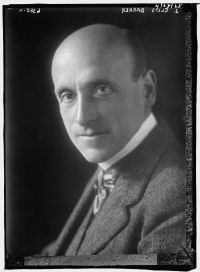
The same reflex operated below the level of the state. J. Ellis Barker, writing from an openly hostile colonial standpoint, reported that plague cases in India were hidden from the authorities so that no medical man would cross the threshold of the home, and he used the claim to rebut socialists who called plague the disease of poverty [21]. His testimony says more about the administrator's gaze than about Indian households, yet it exposes a structure identical to that of governments: where declaration means intrusion, the household hides, just as the state hides where declaration means embargo. Concealment is not the vice of particular regimes; it appears wherever reporting opens the door to coercion.
Trading Truth for Open Ports
The way out began with proportion. Maclean cites Muratori, himself a declared contagionist, who found no solid reason for 40 days of quarantine and judged far shorter periods sufficient for persons and goods [22]. The significance lies less in the figures than in the principle: once the length of detention is tied to what is known about the disease rather than to a ritual number, the penalty attached to a declaration becomes bounded and calculable. A cost that can be foreseen can also be negotiated.
By 1881, an American review could report that England and Denmark no longer relied on quarantine, having replaced it with medical inspection and a sanitary administration able to deal with infection in every district, while keeping up its outward forms solely to spare their shipping the penalties other governments would otherwise impose [23]. The detail is revealing. Quarantine had become a matter of reciprocity between states, a set of mutual sanctions on each other's vessels; abandoning it alone was costly not for health but for trade. Reform therefore could not be national: it required an agreement in which every party lowered its barriers at once.
The Encyclopædia Britannica of 1911 describes the outcome in the case of cholera: the old quarantine and still more drastic interference with traffic gave way to a procedure resting on sanitary services, notification and the prompt segregation of the sick . An international sanitary convention later collected in the United States Treaty Series shows the bargain in its most concrete form, allowing uninfected vessels from plague or cholera ports to transit the Suez Canal under quarantine and continue their route under a five-day observation . Here lies the decisive shift. A port that declared an outbreak no longer condemned every ship leaving it to detention; traffic went on under surveillance. Notification became affordable because treaty had capped its price.
Medicine supplied its own reasons to accept the exchange. Patrick Manson, writing in 1919, held that ordinary quarantine could not stop healthy carriers of cholera and might even raise the risk of an epidemic by breeding a false sense of security that led to the neglect of cleanliness and pure water [24]. Knowledge of carriers undermined the efficacy of the old penalty just as diplomacy was dismantling it. A generation later, testimony before a postwar military tribunal could present typhus as a disease under international control and speak of a moral obligation felt by every state to prevent its outbreak [25]; the setting, a war crimes trial, forbids taking the statement as a description of practice, but its vocabulary shows how readily the language of shared duty had become available once reporting no longer meant ruin.
When the Bargain Wears Thin
The bargain proved neither permanent nor self-sustaining. Archon Fung, analyzing the politics of transparency, describes the World Health Organization's surveillance system of the 1970s as moribund: only three diseases fell under international reporting rules, member states routinely breached even these, and concern for national reputation and economic stability outweighed the incentive to cooperate . He adds that vaccines and antibiotics had relieved the political pressure for effective surveillance in the United States and Europe . The exchange held only as long as both sides feared the disease enough to value it; when the threat seemed to recede, the older calculus of reputation returned.
Fiction grasped the dynamics of delay. In J. D. Beresford's novel Goslings, news of an imagined plague arrives in stages: a first announcement, a lull, then a flood of reports once Russian censorship gives way and thousands of cases surface at once [26]. The novelist sees what the chroniclers of quarantine also observed: concealment does not abolish information, it stores it, and its eventual release multiplies the shock. Silence buys time for the authority that keeps it, at the price of a later collapse of credibility.
The coronavirus pandemic of 2020 reproduced the structure of the old disputes with remarkable fidelity. A British parliamentary committee reported allegations that the Chinese authorities had held back for up to six days information on human-to-human transmission [27], and that Beijing later spread disinformation sowing doubt about the origins of the virus [28]. The Chinese foreign ministry answered that establishing person-to-person transmission requires a rigorous scientific process, and set out a calendar of announcements to argue that its warnings had been timely [29]. Neither account can be taken as settled; what matters is the form of the exchange. Accusation of concealment on one side, appeal to genuine medical uncertainty on the other: across two and a half centuries, these are the positions already visible in Moscow, where honest doubt and the wish for discretion could not be told apart .
What changed was the object of the demand. A group of governments called for rapid, independent and unimpeded access to all human, animal and environmental data from the early stages of the outbreak [30]. Such a demand bears not merely on the presence of a disease but on the attribution of its origin, and attribution carries a cost—reputational, diplomatic—that no sanitary convention had ever priced. The historical record suggests the consequence: where the truth exposes a state to blame without offering anything in return, the incentive to hide reappears, and the call for transparency, however legitimate, meets the kind of resistance that merchants once opposed to the quarantine acts .
Across these sources, from 18th-century Moscow to the international quarrels of the 21st century, concealment appears less as a flaw of particular rulers than as the product of a structure: a diagnosis uncertain in its first days, a declaration that triggers certain and disproportionate penalties, and a medical doctrine available to rationalize delay . Commands to tell the truth changed little on their own. What changed behavior was the reduction of the price of confession—bounded quarantine, notification in place of embargo, ships passing under observation rather than held in port .
This history also marks the limits of the bargain. It priced the presence of a disease, not responsibility for it, and it depended on a shared fear strong enough to keep states at the table . James Law's diagnosis of rules that reward evasion offers the most demanding test of any health regime . The open question is whether an exchange can be designed in which a state that reveals not only an outbreak but its own share in it finds more to gain than to lose—or whether, on that ground, sanitary law runs into the same limit as every law that asks the accused to testify against himself.