AI-generated from sources
The Duty to Stay, and What the Public Owes the Healers of Plague
In Brief
- The duty to remain with the contagious was written as a soldier’s duty that fell on those who had chosen medicine or nursing; servants shared it only in part, and their masters were expected to spare them.
- Risk was openly treated as something that must be paid for: Benjamin Rush, in his Medical Inquiries and Observations, told physicians to charge more for visiting a patient in a contagious fever than for curing a pleurisy, while others answered that money is not what keeps a doctor from fleeing.
- The most dangerous work of epidemics, from burying the dead to watching infected houses, fell to people with no other work, and a single practitioner, aided by a relative, could attend nearly all of a parish’s sick poor for close to six weeks before help was legally authorized.
- When public health measures look like punishment, the sick hide from those sent to help them, and rules that confine attendants make helping irrational: coercion breaks the bargain as surely as neglect.
Main authors

When plague settles on a city, it begins by sorting the population. A historian of advertising, reading the notices of a plague year, found a city emptied of everyone able to leave, where only quacks and pamphleteers prospered [1]. Those who remained, he observes, were the people “detained by duty, sickness, poverty” or by the lack of a clean bill of health [1]. The list is blunt. It places the physician who stays out of conscience beside the laborer who stays because he cannot go, and it raises, without meaning to, the question of what each of them was promised.
The laborer’s answer survives in Daniel Defoe’s account of the plague year. Men without work pushed into the most dangerous trades, and when warned they replied that they had “as good have the plague as perish for want” [2]. Between these two figures—the doctor bound by honor and the hired poor bound by hunger—runs a long argument about flight. Much of it rests on one premise: the duty to stay among the contagious is one side of an exchange. Those who stay are owed pay, recognition, legal backing and protection. Whenever the public defaults on that debt—leaving its humblest helpers unpaid and unnamed, or turning its fear against them—the old question of whether the healer may flee returns.
Soldiers of the sickroom, from Marseilles to the Crimea
Those who set down the duty borrowed the language of war. Paul Janet, in his Elements of Morals, wrote that every year a certain number of young hospital physicians die “like soldiers on the field of honor” [3]. Worthington Hooker, writing in 1849, set the same demand beside the physician’s ordinary duties to the public. In ordinary times the physician owes the public his guidance on quarantine, drainage, ventilation and the diet of hospitals and prisons; when pestilence prevails, he must face the danger and continue his labors at the jeopardy of his own life [4]. The wartime duty stands beside the peacetime one. The man the town consults in calm is the man it may hold in crisis.
Yet the duty was never laid on everyone equally, and its gradations reveal its logic. Janet extends it to all who have chosen the profession—sisters of charity, nurses, attendants in infirmaries—and, within the family, to parents [3]. Servants share it only in a certain measure, and their masters, he adds, ought to spare them as much as possible [3]. A Brooklyn medical journal of 1888 states the principle from the nurse’s side. Do not assume the charge of a sickroom unless you are ready to set everything else aside; once you have taken it, negligence can destroy what no human power restores [5]. The obligation attaches to a status freely entered. Those who serve without having chosen are owed protection by those they serve.
The price of that status was paid in bodies, and the bodies became evidence. A treatise of practical medicine by American authors, rejecting the claim that cholera does not pass from the sick to the well, cites Constantinople, where 27 physicians and medical assistants were attacked and died while attending cholera patients [6]. A story for young people about Florence Nightingale counts the dead of the Crimean barrack hospital: eight doctors struck down by typhus, seven of them dead, a single medical attendant left fit for 24 wards, then three nurses taken [7]. Such tallies did two jobs at once. They honored the fallen, and they weighed in a medical dispute that William Fergusson called the question on which all sanitary regulations must hinge—whether cholera was contagious at all [8]. The healers’ deaths were the experiment that answered it.
Marseilles during the plague of 1720 shows the duty climbing from the physician to the magistrate. A chronicler of the epidemic recalls that earlier rules for stricken towns had governors and consuls shut themselves up in the town hall, on the reasoning that those who govern must guard their lives more carefully than anyone else [9]. The Marquess de Pilles and the sheriffs did the opposite. They stood night and day in the open street, wherever danger deterred others [9]. The old rule was not cowardice but doctrine: authority must outlive the epidemic it manages. The chronicle celebrates its breach, and in doing so makes presence, rather than prudence, the measure of public office.
Rush’s fee and Shaw’s half-crown, the price of risk
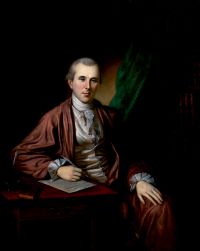
The most candid statement of the bargain came from a physician who simply put it on the bill. Benjamin Rush advised his colleagues not to charge by scruples, drachms and ounces, but by the number of visits, the nature of the disease and the rank of the patient [10]. It was just, he argued, to demand more for risking one’s life with a patient in a contagious fever than for curing a pleurisy. Addressing the reader directly, he went further still: there is also “a right to be paid for your anxiety” [10]. Rush turns fear into a line of account. The duty to stay is not denied; it is priced, and pricing it admits that something is being given.
The objection was that money explains nothing about why doctors stay. Albert Shaw, writing on the public relations of the business career, insists that the overworked doctor who risks his health on night calls is not thinking of his fee [11]. Nor is it the thought of lost earnings, he adds, that keeps him from taking his family to Europe when an epidemic breaks out in his neighborhood [11]. The two positions are less opposed than they seem. Rush describes what the patient owes; Shaw describes what moves the physician. Payment can be a debt without being a motive, and a public that confuses the two may believe it has bought a devotion it has merely rewarded.
How the public pays matters as much as whether it pays. Bernard Shaw, in his preface on doctors, recalls a London epidemic in which a fee of half-a-crown per re-vaccination led to raids on houses while parents were away, and to the forcible seizure of children left to answer the door [12]. His remedy was to pay for immunity from disease rather than for what he called ceremonies of witchcraft, through an officer on a fixed salary who saves himself trouble by interfering as little as possible with the private citizen [12]. The piece rate turned the healer into a hunter. A badly drawn bargain does not merely underpay; it corrupts the conduct it was meant to reward.
The bargain bound the profession too, and reformers accused it of reading the terms selectively. William H. Allen noted that physicians had bitterly fought compulsory vaccination, the medical inspection of schools and the compulsory notification of communicable diseases whenever their prerogatives seemed in danger—though he declined to put this down to selfishness [13]. An essay preserved in the Harvard Classics went further. A “private pestilence” within the practice of a single physician should be looked upon not as a misfortune but as a crime, and his duties to his profession must give way to his paramount obligations to society [14]. The honor granted to the healer was never unconditional. It was the public’s half of the exchange, and it lapsed when the healer himself became the danger.
Defoe’s buriers and Coppard’s lone doctor, the humblest hands
The heaviest work of an epidemic rarely fell to those who had chosen it in Janet’s sense. In Defoe’s plague year, the jobs most liable to infection—burying the dead, attending the sick, watching infected houses—went to men who had no other work [2]. Their reasoning was fatalist and economic at once. They would trust to God, and if the disease took them, at least their want would be over; the alternative was to starve or to beg [2]. Here the bargain shrinks to its barest form. The public offers a wage barely distinguishable from survival, and the hazard is accepted because hunger is no kinder a death.
Even trained practitioners, once the epidemic reached the poor, were left with little support. William Isaac Coppard, describing cholera in his parish, records that the local Board of Health had no legal authority to order assistance until 22 August, nearly six weeks after the disease appeared [15]. In the meantime a single medical man, aided by a relative, attended almost all the poor who fell ill, on top of his private patients [15]. Nathaniel Parker Willis saw the same strain in a city struck by cholera, where physicians were worn out by private practice and “a regular physician is hardly to be had at all” [16]. He adds a telling detail: only the poor and destitute taken to hospitals appeared in the official figures [16]. The poor were counted when they reached public care, and served by whoever was left.
The work of the humblest helpers also spread beyond anything their charge had named. Richard C. Cabot observed that visiting nurses, employed to care for contagious disease in the home and for the sick poor, were forced to take account of their patients’ economic, mental and moral difficulties, until their work came close to social work [17]. Fiction gave this exposure a heroic face. In Evelyn Everett-Green’s tale of old London, a plague nurse waves away the rule against passing from infected houses into clean ones: plague nurses and doctors, she says, are under no rules and must go wherever they are called [18]. The character presents it as freedom.
The distance between honor and the honored can be read in two texts from 2020. Nurses writing from Wuhan during the COVID-19 epidemic reported that even experienced colleagues sometimes cried, possibly because they did not know how long they would have to stay, as the group most exposed to infection [19]. They counted 1,716 Chinese medical staff infected and nine dead, and 14,000 nurses who had come voluntarily from across the country [19]. The official Chinese account of the same struggle praised medical workers who risked their lives and “built a Great Wall against the virus” [20]. The state offered an epic. The nurses, in a letter requesting international medical assistance, spoke of anxiety, tears and an uncertain term.
Mead’s shut houses and the stone in the public’s hand
The bargain also breaks from the public’s side when fear turns against the people sent to face the disease. A writer in McClure’s Magazine in 1908 described a public that neglects sanitation and then, when the epidemic comes, “wakes up with a stone in its hand to throw at the health officer” [21]. The country, the same writer concluded, received better public health service than it deserved and worse than it could afford [21]. The Pittsburgh Survey shows the neglect behind that anger. The city’s health officer could not condemn a dangerous building, revoke a milk license or abate a nuisance without going to court, and old laws had been revived to keep his powers from impinging on individual privilege [22]. Denied power, then blamed for its absence: here the default appears in its purest form.
Coercion produces the reverse of flight, as the sick flee the healer. Richard Mead, in his discourse on the plague, called the practice of shutting every infected family in its house the severest treatment imaginable, since it exposed the whole household to the disease [23]. He saw a deeper damage in the signal it sent. The public’s methods had always borne the appearance of a “severe Discipline, and even Punishment, rather than of a Compassionate Care,” which naturally led the infected to conceal their illness as long as possible [24]. A cholera epidemic described in Lippincott’s Magazine shows the mechanism at work. Physicians blamed what they called the ignorance and obstinacy of the lower classes, yet families avoided calling for medical aid for fear that their furniture would be disinfected and their bedding burned [25].
The same fear reached the helper, treating attendance itself as exposure. Regulations reported in a history of the epidemics of the Middle Ages ordered plague patients carried out into the fields, there to die or recover, and required those who had attended them to keep apart for ten days before they again associated with anyone [26]. The priests charged with examining the sick and naming the infected did so under threat of confiscation and of being burned alive [26]. In G. A. Henty’s novel of Restoration London, a character complains that the law hinders those who would help: whoever enters a house marked with the red cross may not leave until carried out to the dead-cart, or until the plague has gone and a month has passed [27]. A rule that imprisons the volunteer makes volunteering irrational.
Fear dissolved, finally, the ordinary offices of charity that no profession was paid to perform. The Cholera Gazette of 1832 condemned as cold-hearted and inhuman the conduct of people who abandoned cholera victims to their fate, their friends included [28]. Its reassurance—that the risk of catching the disease from the sick was little or nothing, and that foul air was the real danger—rested on a doctrine other medical writers rejected, pointing to the physicians and nurses who sickened at the bedside [28, 6]. Alexander William Kinglake, travelling under the yellow flag of quarantine, describes where that dread ends: a court shouting its sentence from 50 yards away, and a priest offering the hopes of religion at duelling distance [29].
From plague-stricken cities to cholera wards and the epidemic hospitals of the 20th century, the duty to remain among the contagious appears as one term of an exchange. Physicians and nurses were told to stay like soldiers, at the risk of their lives, because they had chosen their calling; servants were to share it only in part, and the hired poor stayed because they had little choice at all. In return the public owed them pay, and pay designed so as not to corrupt; the legal powers to act; recognition that went beyond official praise; and freedom from rules that treated them as carriers. Devotion was real, but it was never a gift the public could take for granted.
Where the exchange failed, it failed in recognizable ways. Health officers were refused power and then blamed for epidemics. A fee per vaccination turned vaccinators into raiders. Families hid their sick from authorities whose care resembled punishment, and a lone parish doctor, aided by a relative, attended nearly all the sick poor for close to six weeks before the Board of Health had legal authority to order assistance. Each failure revived the question of flight. The duty to stay has always been the healer’s to keep, but the reasons to stay have always had to come from the city.