AI-generated from sources
The Economy of Mortality, From Actuarial Science to the Funeral Industry
In Brief
- Actuarial science, emerging in the 17th century, transformed human life into a quantifiable asset, foundational for insurance and public health policy.
- The funeral industry thrives on social pressures and emotional vulnerability, often driving families—especially the poor—into debt for elaborate rituals.
- Mortality paradoxically serves an economic function by fostering circulation and opportunity, vacating jobs, releasing inheritances, and facilitating social mobility.
- Economic pressures significantly impact the experience of grief, particularly for those in poverty, where the immediate material demands of death can overshadow the process of mourning.
Main authors

Death, the ultimate biological certainty, has long been framed as an existential or spiritual passage. Yet, societies have systematically constructed elaborate economic systems around mortality, transforming this universal human experience into a quantifiable and often commercialized event. This process moves beyond the private financial burdens of bereavement, creating a broad economic framework that measures, manages, and profits from life's end. From the cold calculus of insurance tables to the emotionally charged transactions of the funeral parlor, the final chapter of life has been integrated into the machinery of commerce and public policy, assigning a monetary dimension to what was once considered immeasurable.
The economic footprint of death is vast and varied. It begins with the very valuation of human life, a concept that emerged from a new political science and now underpins public health initiatives and the entire insurance industry. It extends to a dedicated market of goods and services designed to manage the dead and their remembrance, where social expectations and emotional vulnerability can drive significant expenditure. Furthermore, mortality rates are not isolated statistics; they are deeply enmeshed with broader economic forces, influencing labor markets, creating social opportunities, and shaping the very experience of grief under financial pressure. This pervasive monetization raises profound ethical questions about the relationship between economic value and the irreducible human experience of loss.
The Calculus of Life and Death
The quantification of mortality began in earnest during the 17th century with what William Black would later call a “new science in politicks, philosophy, and medicine” [4]. Thinkers such as Graunt and Petty pioneered methods to calculate the probabilities of life and death, treating human existence as a variable that could be measured and predicted, much like the odds in a game of chance . This conceptual shift laid the groundwork for transforming individual lives into statistical assets, whose value could be assessed and managed on a collective scale. These early efforts to chart birth and death rates established the foundational principles of actuarial science and modern demography .
This new science found its most direct application in the burgeoning field of insurance. Standard mortuary tables became essential tools for assessing risk and awarding damages in cases of wrongful death, effectively assigning a monetary value to a person based on their life expectancy [2]. A person with a longer expected lifespan was considered a more valuable and reliable asset to society . This logic underpins the modern life insurance industry, which, as Guy Debord critiqued in the 20th century, can frame the act of dying without financial provision as an economic failing [1]. However, these statistical models were not always perfect. The 18th-century scholar Richard Price observed that tables based on the general population were often poor guides for specific transactions like life annuities, as the individuals who bought them were typically healthier and lived longer than the average, demonstrating a gap between statistical abstraction and reality [6].
The economic rationale for preserving life became a powerful argument for public health reform. In the 19th and early 20th centuries, figures like John Simon and William H. Allen advocated for improved sanitation and disease prevention by highlighting the immense financial costs of inaction [5, 3]. They calculated the lost wages, medical bills, and burial costs associated with what they termed “preventable” diseases, arguing that community neglect was economically disastrous . Simon noted that while many of these deaths were of children with no immediate “market value,” they still represented a significant societal cost . This mode of thinking culminated in macroeconomic assessments, such as Mary Huston Gregory's early 20th-century calculation that the collective earning power of the American population represented a national asset worth hundreds of billions of dollars, more than double all other forms of wealth combined [7].
The Commerce of Ritual and Remembrance
Mortality has long sustained a unique ecosystem of professions that thrive on its occurrence. An 18th-century caricature, described by Joseph Grego, vividly depicted Death in cheerful company with the doctor, parson, lawyer, and sexton—all of whom prospered from its work [8]. This dynamic becomes particularly visible during times of crisis. As chronicled by Charles Creighton, epidemics that brought most commerce to a standstill created booming business for coffin-makers, apothecaries, and others who lived by sickness and death [15]. Even ordinary market forces are influenced; Adam Smith noted that a period of public mourning could abruptly increase the demand and price for black cloth, enriching merchants who held a ready supply [17].
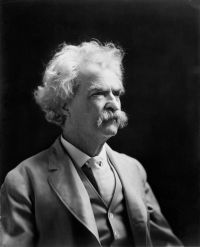
The social pressures surrounding bereavement have fueled a significant industry centered on funerals and memorials. Observers across different eras, from Isabella M. Holmes to Lillian Eichler, have documented how families, especially the poor, often go into debt to pay for elaborate coffins, mourning attire, and tombstones [10, 12]. This impulse to give the deceased a “handsome” funeral is often driven by a desire to maintain appearances, even if it means sacrificing the necessities of life for the surviving family members . J. E. Panton lamented that such expenditures ultimately benefit only the undertaker and the florist, arguing the money could be put to far better use [9]. Mark Twain quantified this phenomenon with startling figures, stating that the amount spent on funerals in the United States in 1880 alone could have paid off all commercial debts of that year and provided each bankrupt with substantial capital to start anew [16].
This commercialization extends beyond the funeral itself to religious and cultural rituals. In some traditions, masses for the dead can become a major expense for families and a steady source of income for religious institutions, driven by a mixture of genuine affection and social competition [13]. The practice of providing for the dead is ancient, evolving from simple offerings of food into complex and costly sacrifices of animals, property, and even human lives in some cultures [14]. These elaborate rituals are rooted in a deep-seated human desire to honor the deceased and care for their journey in the afterlife . For the poorest members of society, however, even the most basic rites are a struggle. John Miller's depiction of a working-class burial highlights an “economical” system of cheap coffins and reused graves, revealing how class disparities persist starkly even in death [11].
Mortalitys Ripple Effect on Society and Economy
Mortality rates are inextricably linked to socioeconomic conditions, revealing deep inequalities within a population. Historically, the lower classes, wage earners, and urban residents have faced higher death rates than their wealthier, rural counterparts [18]. Immigrant communities, in particular, often suffer from elevated mortality due to the economic stress and dangerous working conditions they encounter in their new countries [21]. While public health interventions and civilizing advancements have generally lowered death rates over time, they have also been met with cynical economic considerations. One 19th-century writer, for instance, humorously noted that a potential drawback of healthier burial practices was that they might diminish mortality and, consequently, the undertaking trade [22].
Paradoxically, death can serve a functional role within the economy by fostering circulation and opportunity [20]. The passing of an individual can vacate a job, release an inheritance, or remove a financial burden from a family, thereby creating space for a new household to form or for younger generations to marry and advance . In this view, mortality is not simply a net loss but also a catalyst for social and economic regeneration, ensuring a continual turnover that facilitates natality and mobility.
The economy also generates profit by externalizing the risk of death onto its workforce. As Gustavus Myers observed in his critique of American fortunes, industries like coal mining produced immense wealth for their owners while miners faced daily threats of fatal accidents and chronic disease [24]. This system raises a fundamental question of social justice, articulated by J. N. Larned: should the cost of workplace accidents and deaths be borne by the individual victims, or should it be covered by the industries and consumers who benefit from their hazardous labor [23]? Periods of high mortality, such as epidemics, have also created opportunities for exploitation, as charlatans and purveyors of dubious remedies have historically profited from public fear and desperation [19].
Beyond these structural dynamics, economic pressures can profoundly alter the personal experience of grief. For those facing poverty, the immediate and “brutal obligation to meet the material demands of death” can crowd out the space needed for mourning, as described in the work of Ellen Anderson Gholson Glasgow [25]. The practical urgencies of arranging and paying for a funeral can eclipse the emotional and psychological process of coming to terms with loss, turning a period of sorrow into one of acute financial stress .
Critiques of Monetization and the Unquantifiable Costs
The extravagant monetization of death has long been a target of moral and ethical criticism. Ancient religious thinkers, cited by Philip Schaff, condemned the vanity of individuals who, on their deathbeds, would commission lavish monuments that consumed their entire fortune, all while having ignored the needs of the living poor [26]. This critique casts excessive funeral spending not merely as a financial choice but as a profound moral failing—a “disease” of extravagance that prioritizes posthumous displays over present-day charity .
This tension between expenditure and meaning is not a uniquely modern phenomenon. Anthropological scholars like James George Frazer and William George Aston have analyzed the deep historical roots of funeral economics. Frazer argued that the belief in immortality has always been an “expensive luxury,” leading societies throughout history to engage in a “wasteful destruction of property as well as of life” through sacrifices to the dead [29]. Aston similarly suggested that modern spending on statues and elaborate funeral pageantry is the financial equivalent of ancient human sacrifices, differing not in motive but in the perceived value of a human life [28]. Both analyses frame offerings to the dead—whether a simple flower or a grand monument—as a symbolic language meant to communicate with the deceased and solicit sympathy from the living .
The economic realities of a society also shape the very process of grieving. An essay in The Atlantic Monthly from 1865 posited that poverty could act as a stern “physician” for the bereaved, as the “hard necessities of life” and the demands of labor can prevent a person from succumbing to paralyzing grief [27]. In contrast, the wealthy sufferer, insulated from such pressures, might languish in sorrow to the detriment of their own health . At the other end of the social spectrum, the fear of indignity in death can be a powerful motivator. As Robert Southey observed, many of the English poor would deny themselves basic comforts in life just to save enough money for a decent burial, desperate to avoid the shame of a pauper's funeral provided by the parish [30]. This reveals a society where immense national wealth coexists with a poverty so profound that it forces individuals to prioritize the cost of their death over the quality of their life .
Across centuries, societies have consistently sought to impose an economic order on the finality of death. This impulse has manifested in diverse ways, from the development of actuarial science designed to assign a calculable value to human life to the rise of a robust funeral industry that converts grief into commerce . This economic logic permeates public policy, where health interventions are justified by cost-benefit analyses , and underlies labor systems that weigh human lives against industrial profit . The result is a comprehensive framework in which mortality is not merely a private tragedy or a biological event but a structured, monetized, and public phenomenon that reflects a society's values and inequalities.
Despite this extensive economic scaffolding, the core human costs of death—sorrow, social disruption, and the search for meaning—remain stubbornly resistant to quantification. The tension between the calculated price of a life and the immeasurable experience of its loss is a persistent paradox at the heart of these systems . The commercialization of memorial rituals often serves less as a balm for grief and more as a reflection of anxieties about social status and the fear of being forgotten . Ultimately, while economic frameworks have proven remarkably adept at managing and profiting from the logistics of mortality, they have offered far fewer solutions for helping individuals and communities navigate its profound existential weight .