Summary

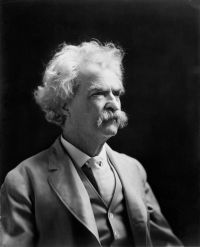
Portrait of Mark Twain Mark Twain Life on the Mississippi, Part 9

I think that much the most enjoyable of all races is a steamboat race; but, next to that, I prefer the gay and joyous mule-rush. Two red-hot steamboats raging along, neck-and-neck, straining every nerve—that is to say, every rivet in the boilers—quaking and shaking and groaning from stem to stern, spouting white steam from the pipes, pouring black smoke from the chimneys, raining down sparks, parting the river into long breaks of hissing foam—this is sport that makes a body's very liver curl with enjoyment. A horse-race is pretty tame and colorless in comparison.
Source: Gutenberg

Portrait of Mark Twain Mark Twain Life on the Mississippi, Part 9

The city is well outfitted with progressive men—thinking, sagacious, long-headed men. The contrast between the spirit of the city and the city's architecture is like the contrast between waking and sleep. Apparently there is a 'boom' in everything but that one dead feature. The water in the gutters used to be stagnant and slimy, and a potent disease-breeder; but the gutters are flushed now, two or three times a day, by powerful machinery; in many of the gutters the water never stands still, but has a steady current.
Source: Gutenberg

Portrait of Mark Twain Mark Twain Life on the Mississippi, Part 9

I have been speaking of public architecture only. The domestic article in New Orleans is reproachless, notwithstanding it remains as it always was. All the dwellings are of wood—in the American part of the town, I mean—and all have a comfortable look. Those in the wealthy quarter are spacious; painted snow-white usually, and generally have wide verandas, or double-verandas, supported by ornamental columns. These mansions stand in the center of large grounds, and rise, garlanded with roses, out of the midst of swelling masses of shining green foliage and many-colored blossoms.
Source: Gutenberg

Get perspective with Kwize: daily news enlightened by great literature