Chloroform

Definition and stakes

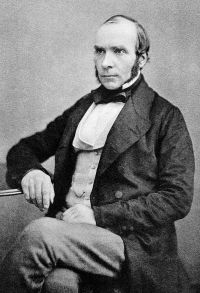
Portrait of John Snow John Snow,  On chloroform and other anæsthetics… (1858)

“ As the solubility of this and similar medicines in watery fluids has a very important connexion with their physiological action, I took great pains to ascertain the solubility of chloroform correctly. By admitting small quantities of water into graduated jars containing chloroform vapour, I was able to ascertain that chloroform is soluble in about 288 times its volume of water. Chloroform is itself an active solvent of many bodies; dissolving camphor, caoutchouc, gutta percha, wax, resin, iodine, and some other substances very readily. ”
Source: Gutenberg

Portrait of John Snow John Snow,  On chloroform and other anæsthetics… (1858)

“ In five minutes, the mouse was able to walk.
The third, fourth, and fifth of the above experiments show that one grain of chloroform to each hundred cubic inches of air suffices to induce the second degree of narcotism, or that state in which consciousness and voluntary motion are disturbed, but not entirely abolished. Now one grain of chloroform produces 0·767 of a cubic inch of vapour at 60°, when its specific gravity is 4·2; and, when the vapour is inhaled, it expands somewhat, as it is warmed to the temperature of the lungs
”
Source: Gutenberg

Portrait of John Snow John Snow,  On chloroform and other anæsthetics… (1858)

“ The truth is, however, that if there be too much vapour of chloroform in the air the patient breathes, it may cause sudden death, even without previous insensibility, and whilst the blood in the lungs is of a florid colour. Chloroform may indeed be inhaled freely from a handkerchief without danger, when it is diluted with one or two parts by measure of spirits of wine, but the chloroform evaporates in largest quantity at first, and less afterwards, until a portion of the spirit is left behind by itself. ”
Source: Gutenberg

Get perspective with Kwize: daily news enlightened by great literature