Summary

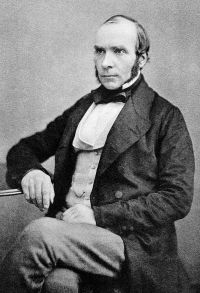
Portrait of John Snow John Snow On chloroform and other anæsthetics… (1858)

When he had obtained any substance which would produce insensibility favourably on animals, he pushed it, in one or two experiments, to its extreme in animals of different kinds; and having produced death by the inhalation, both by giving rapidly a large dose, and by giving a small dose for a long period, he observed the mode of death, whether it occurred by cessation of the heart, or by cessation of the respiration primarily. If the agent seemed to promise favourably from these inquiries, he commenced to try it on man; and the first man was invariably his own self.
Source: Gutenberg

Portrait of John Snow John Snow On chloroform and other anæsthetics… (1858)

I have reason to conclude that the increased secretion of saliva is caused, not so much by the action of the chloroform on the mucous membrane of the mouth, and the extremities of the gland ducts, as by its action on the capillary circulation of the glands themselves; for on inhaling the vapour carefully by the nostrils, so that none enters the mouth, I still find that there is an increased secretion of saliva.
Source: Gutenberg

Portrait of John Snow John Snow On chloroform and other anæsthetics… (1858)

But, in the face of all the struggles incidental to the existence, so to have managed as to have stolen out of time hours which other men knew not in their calendar—so to have defied the inexorable taskmaster as to perform more than is included in his demands; so to have willed and acted as to live on when death has done his worst; to assist all coming wayfarers in their conflict wherever they may meet it; to prove that there is something more in life than labour lost, and nothing more in death than an idea—Hoc opus hic labor est—in this there is achieved the grand attainment
Source: Gutenberg

Get perspective with Kwize: daily news enlightened by great literature