AI-generated from sources
The global logic of deluges and deserts: How the trade winds power the earth's climate extremes
In Brief
- Global atmospheric circulation is driven by intense solar heating at the equator, which creates the Hadley Cells and powers the persistent surface currents known as the trade winds.
- Trade winds function as an aerial conveyor belt, transporting vast quantities of moisture to the equatorial calm belt (doldrums), resulting in the planet's most torrential rainfall.
- The same circulatory system creates the world’s major subtropical deserts (horse latitudes) where dry, moisture-depleted upper air descends and actively prevents precipitation.
- Monsoons are powerful seasonal reversals of prevailing wind direction, caused by the drastic differential heating and cooling rates of continents versus oceans, temporarily overwhelming the standard trade wind flow.
Main authors


The distribution of climate across Earth's surface is governed by a vast and intricate atmospheric engine, powered primarily by solar radiation [1, 2]. This global machinery of winds and rains, while complex, is driven by fundamental physical principles that dictate the movement of air and moisture around the planet [3]. At the heart of this system are the trade winds, a remarkably persistent set of currents that were once the highways of maritime commerce but are, more fundamentally, the planet's primary mechanism for redistributing heat and water [4, 5]. Their operation creates a profound climatic paradox: the same global circulatory system is responsible for both the planet's most verdant, rain-soaked regions and its most barren, arid deserts [6].
Understanding this paradox requires tracing the full journey of an air particle caught in this conveyor. The process begins with the intense heating of the equatorial belt, which evaporates enormous quantities of water from the ocean [7]. This moisture is then transported by the winds, condensed into clouds, and released as precipitation, creating zones of extreme rainfall [8, 9]. Yet, this very process of moisture delivery in one region necessitates its removal from another. As the atmospheric currents complete their circuit, they descend back to the surface as dry, moisture-depleted air, creating the conditions for profound and lasting aridity [10, 11].
This global system is not static; it is a dynamic process, subject to powerful seasonal variations and geographic interruptions. The most dramatic of these are the monsoons, which represent a large-scale seasonal reversal of wind patterns driven by the differential heating of continents and oceans [12]. These phenomena demonstrate that the seemingly steady trade winds are part of a sensitive and interconnected system where landmasses, ocean currents, and solar cycles interact to create the dramatic climatic extremes that define life on Earth [13, 14]. Examining this atmospheric machinery reveals how a unified global process can produce diametrically opposed outcomes, shaping the planet into a mosaic of deluges and deserts.
The Engine of Circulation: Equatorial Heating and Global Air Currents
The entire system of global winds is initiated by the sun's concentrated energy at the equator, which heats the surface air, causing it to expand and rise [15]. This upward movement creates a persistent low-pressure zone that encircles the globe, a region often referred to as the equatorial calms or the doldrums [16, 17]. This belt acts like a planetary trough, continuously drawing in cooler, denser air from the north and south to replace the ascending column [18]. This constant surface inflow forms the trade winds, which blow with remarkable uniformity and are among the most permanent features of the Earth's climate [19].
Were the Earth stationary, these winds would blow directly north and south. However, the planet's west-to-east rotation deflects their path [20]. Air moving from the northern hemisphere towards the equator is turned to the right, creating the northeast trade winds, while air from the southern hemisphere is deflected left, forming the southeast trades . This Coriolis effect is fundamental to the winds' characteristic easterly component [21]. The convergence of these two great air streams at the equator completes the lower half of a massive circulatory loop, known as a Hadley Cell.
The air that rises at the equator does not vanish; it flows poleward in the upper atmosphere, creating counter-currents to the surface trades [22]. As this upper-level air travels towards the temperate latitudes, it cools and becomes denser, eventually descending back to the surface around 30 degrees north and south . This descending air then flows back towards the equator, completing the circuit and feeding the trade winds once more [23, 24]. A central and still-debated question within this model is the precise mechanism that allows the northern and southern air currents to cross over each other in the upper atmosphere at the equator, rather than simply mixing and turning back, suggesting a complex and powerfully guided interaction [25, 26].
The Conveyor of Moisture and the Equatorial Rain Belt
The trade winds function as immense "evaporating winds," their primary role in the global water cycle being to absorb moisture from the vast tropical oceans . As these currents sweep across the sea surface, they become laden with water vapor, transporting it toward the equatorial convergence zone . The equatorial calm belt, therefore, acts as a massive atmospheric receiver for this ceaseless delivery of warm, humid air from both hemispheres [27]. The sheer volume of moisture gathered and transported by this system is staggering, forming the reservoir for the planet's most intense rainfall.
As the converging trade winds force this moisture-saturated air to rise, it enters the cooler upper atmosphere, causing the water vapor to condense into a vast, continuous ring of clouds that surrounds the Earth . This condensation releases torrential, near-daily downpours, making the doldrums a region infamous not only for its calms but also for its squalls and inundating rains [28]. The process is a self-sustaining feedback loop: the condensation of water vapor releases latent heat, which further warms the air, enhancing its buoyancy and driving the upward convection that fuels the entire system [29].
This entire climatic apparatus—comprising the trade winds, the equatorial calms, and the associated cloud ring—is not geographically fixed. It migrates north and south throughout the year, following the sun's seasonal declination [30, 31]. This annual migration shifts the zones of heavy rainfall, regulating the distinct wet and dry seasons experienced by tropical regions. A location that is under the influence of the dry trade winds for part of the year may find itself within the drenching equatorial rain belt months later, demonstrating the system's profound impact on seasonal weather patterns .
The Creation of Deserts: The Dry Side of the Conveyor
The same atmospheric circulation that delivers torrential rain to the equator is directly responsible for creating the world's great deserts [32]. After the upper-air currents shed their vast load of moisture in the equatorial rain belt, they flow poleward as exceptionally dry air . This air, having cooled and become denser, descends back toward the Earth's surface in the subtropical latitudes, creating belts of high atmospheric pressure known as the horse latitudes . This descending air warms as it compresses, further reducing its relative humidity and actively inhibiting the formation of clouds and precipitation.
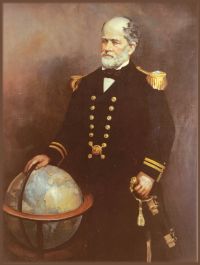
This mechanism explains why the planet's major arid regions are not randomly distributed but are concentrated in specific bands, typically between 20 and 30 degrees latitude in both hemispheres [33]. Meteorologist Matthew Fontaine Maury noted that the great deserts of the Northern Hemisphere, such as those across North Africa and Asia, are situated precisely where these dried-out upper-air currents, originating from the southeast trade winds, return to the surface [34]. The Northern Hemisphere's larger landmasses and extensive sandy plains amplify this effect, absorbing solar heat that can further disrupt and retard the moisture-carrying capacity of any incoming winds [35].
This atmospheric tendency toward aridity is often intensified by local geographic features. Coastal deserts, such as those on the western edges of South America and Africa, are prime examples . Here, the effect of the dry, descending air is compounded by cold ocean currents flowing parallel to the coast. These currents cool the surface air, creating stable atmospheric conditions where moisture remains trapped as fog or low cloud but is prevented from rising to form rain [36]. Thus, the global conveyor of the trade winds, in conjunction with oceanic circulation, creates and sustains the planet's most extensive zones of aridity.
Monsoons: The System's Great Seasonal Reversal
While the trade wind system establishes the general pattern of deserts and tropical rains, it is subject to powerful seasonal modifications, the most significant of which are the monsoons . A monsoon is not simply a rainy season but a fundamental reversal of the prevailing wind direction, driven by the starkly different rates at which land and sea heat and cool over the year [37]. This phenomenon creates dramatic exceptions to the rule of dry subtropics and wet tropics, bringing intense deluges to regions that would otherwise be influenced by drier winds .
The classic example is found in Southern Asia. During the summer, the vast Asian landmass heats up much more intensely than the surrounding Indian Ocean, creating a massive zone of low pressure [38, 39]. This continental low becomes so powerful that it overwhelms the normal atmospheric pattern, drawing the moisture-laden southeast trade winds from the southern hemisphere across the equator [40]. As these winds cross into the northern hemisphere, their direction is deflected, transforming them into a powerful southwest monsoon that unleashes catastrophic rainfall upon India and surrounding regions .
This seasonal reversal is a global phenomenon, though it manifests with varying intensity. Similar, if weaker, monsoon systems are observed in Australia, parts of Africa, and even North America, where continental heating in summer draws in moist air from the ocean [41]. These systems demonstrate the critical role that the distribution of land and water plays in modulating the global atmospheric circulation . Monsoons are not separate from the trade wind system but are an integral part of it—a periodic and powerful interruption that temporarily reroutes the aerial conveyor of moisture in response to seasonal imperatives.
The Earth's climate is a tale of two extremes, written by the wind. The global circulatory system, with the trade winds at its core, acts as a grand, planetary-scale conveyor belt for heat and moisture . This system, driven by solar power, operates on a principle of balance: the delivery of immense quantities of water to the equatorial regions is intrinsically linked to the creation of profound aridity in the subtropics. The same process that fuels the torrential downpours of the equatorial calm belt also generates the dry, descending air that forms the world's most formidable deserts . The deluges and the deserts are not opposite phenomena, but two necessary outcomes of a single, unified mechanism.
Furthermore, this atmospheric engine is highly sensitive to the planet's geography. The seasonal reversal of winds known as the monsoon demonstrates how the differential heating of continents can temporarily overpower and redirect the system's prevailing currents, unleashing seasonal floods in otherwise stable climatic zones . Ultimately, the seemingly steady and predictable trade winds are part of a deeply complex and dynamic interplay between ocean, atmosphere, and land. Tracing their path reveals the elegant, if unforgiving, logic that governs the global distribution of rainfall, carving the face of our world into its contrasting landscapes of life-giving rain and stark desolation .