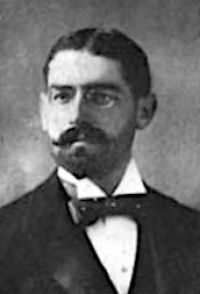
Robert DeCourcy Ward

Robert DeCourcy Ward

Summary

Portrait of Robert DeCourcy Ward Robert DeCourcy Ward 1911 Encyclopædia Britannica, Volume 6… (1911)

Is the change from a once cultivated area to a barren expanse the result of decreasing rainfall, or of the emigration of the former inhabitants to other lands? The difference between a country formerly well irrigated and fertile, and a present-day sandy, inhospitable waste may be the result of a former compulsion of the people, by a strong governing power, to till the soil and to irrigate, while now, without that compulsion, no attempt is made to keep up the work.
Source: Wikisource

Portrait of Robert DeCourcy Ward Robert DeCourcy Ward 1911 Encyclopædia Britannica, Volume 6… (1911)

Solar Climate.—Climate, in so far as it is controlled solely by the amount of solar radiation which any place receives by reason of its latitude, is called solar climate. Solar climate alone would prevail if the earth had a homogeneous land surface, and if there were no atmosphere. For under these conditions, without air or ocean currents, the distribution of temperature at any place would depend solely on the amount of energy received from the sun and upon the loss of heat by radiation.
Source: Wikisource

Portrait of Robert DeCourcy Ward Robert DeCourcy Ward 1911 Encyclopædia Britannica, Volume 6… (1911)

Life is a constant struggle for existence. Man seeks his food by the chase on land, but chiefly in the sea. He lives along, or near, the sea-coast. The interior lands, away from the sea, are deserted. Gales and snow and cold cause many deaths on land, and, especially during fishing expeditions, at sea. Under such hard conditions of securing food, famine is a likely occurrence.
In the arctic climate vegetation must make rapid growth in the short, cool summer. In the highest latitudes the summer temperatures are not high enough to melt snow on a level.
Source: Wikisource

Get perspective with Kwize: daily news enlightened by great literature