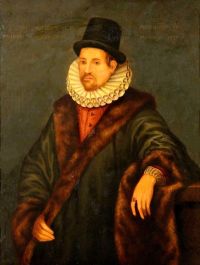
Latitude, a geographic coordinate indicating a point's north-south position on Earth, ranges from −90° at the South Pole to 90° at the North Pole, with 0° at the Equator. It is crucial for defining locations in conjunction with longitude, forming a grid system vital to navigation and cartography. Authors such as William Gilbert examined its role in celestial navigation, emphasizing its accuracy compared to longitude, while James Cook depended on latitude to map unexplored regions during his voyages.
Arthur James Weise connected latitude to mapmaking, pointing out its impact on depicting Earth’s curvature. Meanwhile, literary references, such as George A. Smith’s account of elevation and latitude in relation to agriculture, illustrate its cross-disciplinary significance. These diverse perspectives highlight latitude’s dual role as both a scientific measurement and a narrative device, grounding human comprehension of space and exploration.