“ His devastating legions went.The Spring’s bright banners came: there woke Millions of little growing folk Who thrilled to know the winter done, Gave thanks, and strove towards the sun.Not so the elect; reserved, and slow To trust a stranger-sun and grow, They hesitated, cowered and hid, Waiting to see what others did.Yet even they, a little, grew, Put out prim leaves to day and dew, And lifted level formal heads In their appointed garden beds. ”
Westerlies
Definition and stakes
The westerlies are prevailing winds that flow from west to east in the middle latitudes, influencing weather patterns and ocean currents. Authors such as E. Nesbit and Jessie L. Weston examined seasonal transitions and nature's renewal, while Joseph Conrad and H. G. Wells conveyed the tension between stability and change through atmospheric imagery.
Sinclair Lewis and Edward Dowden connected winter's severity to human resilience, and Mary Wollstonecraft Shelley contrasted celestial motion with existential despair. These diverse perspectives highlight the westerlies not only as a meteorological phenomenon but also as a metaphor for transformation, linking natural cycles with human stories.
Quotes about “westerlies”
Jessie L. Weston, From Ritual to Romance
“ Modern scholars have unanimously recognized in Mamurius Veturius and Anna Perenna the representatives of the Old Year, the Vegetation Spirit, and his female counterpart, who, grown old, must yield place to the young god and his correspondingly youthful bride. Reference to Chapter 5, where the medieval and modern forms of this Nature ritual are discussed, and instances of the carrying out of Winter, and ceremonial bringing in of Spring, are given, will suffice to show how vital and enduring an element in Folk-lore is this idea of driving out the Old Year, while celebrating the birth of the New. ”
Sinclair Lewis, Arrowsmith (1925)
“ Gentlemen, the trouble with too many doctors, even those splendid old pioneer war-horses who through mud and storm, through winter's chill blast and August's untempered heat, go bringing cheer and surcease from pain to the world's humblest, yet even these old Nestors not so infrequently settle down in a rut and never shake themselves loose. ”
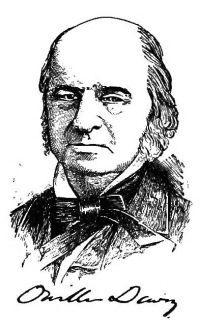 Orville Dewey,
Autobiography and Letters of Orville Dewey…
Orville Dewey,
Autobiography and Letters of Orville Dewey…
“ Last week I wrote the most considerable lucubration of the winter, on the darkest problem in the philosophy of life and history, "the ministry of error and evil in the world," to wit, Polytheism, Despotism, War, and Slavery. . . . Always my poor mind and heart are struggling with one subject, and that is the great world-question.You speak of my opportunities here. Perhaps I have not improved them very well. I am not very enterprising in the social relations, and half of the winter I have not cared for Washington, nor anything else but what was passing in my own mind. ”
 H. G. Wells,
Amazing Stories
(1926)
H. G. Wells,
Amazing Stories
(1926)
“ And that night, too, the weather changed, and the frost that had gripped all Central Europe and France and England softened towards a thaw. But you must not imagine because I have spoken of people praying through the night and people going aboard ships and people fleeing towards mountainous country that the whole world was already in a terror because of the star. As a matter of fact, use and wont still ruled the world, and save for the talk of idle moments and the splendor of the night, nine human beings out of ten were still busy at their common occupations. ”
 Mary Angela Dickens,
A Valiant Ignorance; vol. 2 of 3
Mary Angela Dickens,
A Valiant Ignorance; vol. 2 of 3
“ But it is nevertheless a fact that on this particular day in May very many of the impulses stirring in nature had their strangely distorted counterparts in the impulses of society. Society, like nature, had discarded its winter garments, its winter habits; society, like nature, was restless with fresh beginnings, fresh hopes, fresh tendencies. ”
 Joseph Conrad,
The Mirror of the Sea
Joseph Conrad,
The Mirror of the Sea
“ In the atmosphere of the Easterly weather, as pellucid as a piece of crystal and refracting like a prism, we could see the appalling numbers of our helpless company, even to those who in more normal conditions would have remained invisible, sails down under the horizon. It is the malicious pleasure of the East Wind to augment the power of your eyesight, in order, perhaps, that you should see better the perfect humiliation, the hopeless character of your captivity. ”

“ Held not a cloud from marge to marge; and now Westward the sun was treading, calm and free. I lay upon the grass, and how an hour Went past I know not. When again time was, The sun had fallen, and congregated clouds, A vision of great glories, held the West, And through them, and beyond, the hyaline Led the charm’d spirit through infinite spaces on. I think of all the men upon this earth The sight was mine alone; it for my soul, My soul for it, until all seeing died. Where did I live transfigured? through what times Of heaven’s great year? ”
Mary Wollstonecraft Shelley, The Last Man
“ When noontide has passed, and the weary day has driven her team to their western stalls, the fires of heaven rise from the East, moving in their accustomed path, they ascend and descend the skiey hill. When their course is fulfilled, the dial begins to cast westward an uncertain shadow; the eye-lids of day are opened, and birds and flowers, the startled vegetation, and fresh breeze awaken; the sun at length appears, and in majestic procession climbs the capitol of heaven. All proceeds, changes and dies, except the sense of misery in my bursting heart. ”
 Timothy East,
The Sheepfold and the Common; Or…
Timothy East,
The Sheepfold and the Common; Or…
“ As I stood viewing the change which the winter season had made in the appearance of nature, my mind reverted to the changes which as suddenly take place in the dispensations of Providence; and I recalled to my remembrance many who, during my short pilgrimage, [561] had sunk from the heights of prosperity to the depths of adversity, and whose opening spring of plenty and of hope had been succeeded by the sterile and stormy winter—closing up the visions of their anticipated bliss in the gloom of disappointment and of woe. ”
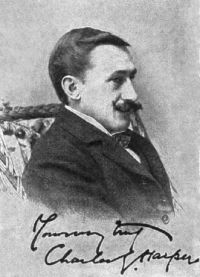 Charles G. Harper,
Stage-coach and Mail in Days of Yore…
Charles G. Harper,
Stage-coach and Mail in Days of Yore…
“ Mankind had travelled far from those prehistoric times of annual terror, when the ignorant savage saw the sun’s light going out with the coming of winter, and so, with abject fear, passed the darkling months until the vernal solstice brought him hope again. ”
 D. H. Lawrence,
Fantasia of the Unconscious
D. H. Lawrence,
Fantasia of the Unconscious
“ But this time, it seems to me, we have consciously and responsibly to carry ourselves through the winter-period, the period of death and denudation: that is, some of us have, some nation even must. For there are not now, as in the Roman times, any great reservoirs of energetic barbaric life. ”
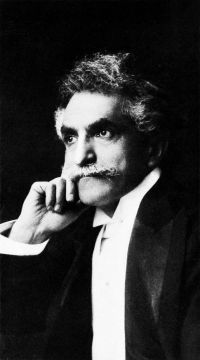 M. M. Mangasarian,
The Truth about Jesus : Is He a Myth…
M. M. Mangasarian,
The Truth about Jesus : Is He a Myth…
“ When the shortest day of the year was passed, when the sun began his march northward, the primitive man rejoiced in the thought of the coming seedtime and summer, and he made feasts and revelry the mode of expressing the gladness of his heart. Among the sun worshipers of Persia, among the Druids of the far north, among the Phoenicians, among the Romans, and among the ancient Goths and Saxons the winter solstice was the occasion of festivities. ”
Joseph Conrad,
The Mirror of the Sea
(1924 (first published in 1906))
“ The Westerly Wind asserting his sway from the south-west quarter is often like a monarch gone mad, driving forth with wild imprecations the most faithful of his courtiers to shipwreck, disaster, and death. ”
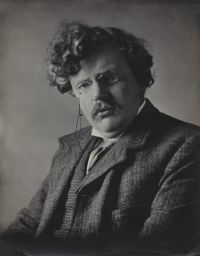 Gilbert Keith Chesterton,
A Miscellany of Men
(1912)
Gilbert Keith Chesterton,
A Miscellany of Men
(1912)
“ But it is a troubled brightness which has a breath not only of novelty but of revolution, There are two great armies of the human intellect who will fight till the end on this vital point, whether Easter is to be congratulated on fitting in with the Spring-- or the Spring on fitting in with Easter. ”
H. G. Wells,
The Country of the Blind, and Other Stories
“ And everywhere the world was awake that night, and throughout Christendom a sombre murmur hung in the keen air over the country-side like the belling of bees in the heather, and this murmurous tumult grew to a clangour in the cities. It was the tolling of the bells in a million belfry towers and steeples, summoning the people to sleep no more, to sin no more, but to gather in their churches and pray. And overhead, growing larger and brighter, as the earth rolled on its way and the night passed, rose the dazzling star. ”
 William Sharp,
Where the forest murmurs
(1906)
William Sharp,
Where the forest murmurs
(1906)
“ But if we had not ourselves been asleep we should not have waited thus long for the exquisite surprise. We should have known the divine conspiracy by which the North and South are lovers, and the West comrade to the East. ”
William Sharp,
Where the forest murmurs
(1906)
“ The conspiracy of the eternal passion by which power desires power, and dominion lusteth after dominion: so that all the effort of the North is to touch the lips of the South, all the dream of the East is to reach the sunset-gardens of the West. We should have known, when out of December frost or January snow the redbreast thrilled a canticle of joy, or the russet moth sought his wingless love in windless flame-set twilights, that the Grey Lover already felt the breath from those ardent lips. ”
 Felicia Hemans,
Poems in The London Literary Gazette 1822
(1822)
Felicia Hemans,
Poems in The London Literary Gazette 1822
(1822)
“ With fearful power the noon-day reigns, And the palm-trees yield no shade: But let the angry sun From Heaven look fiercely red, Unfelt by those whose fight is done!— There slumber England's Dead. ”
“ Some absurd and dangerous persons have represented, on the other hand, that though our Vestry may be able to 'beat the bounds' of its own parish, it may not be able to beat the bounds of its own diseases ”
 Daniel Webster,
Daniel Webster for Young Americans
Daniel Webster,
Daniel Webster for Young Americans
“ But at the rising of the sun, and at the setting of the sun; in the blaze of noonday, and beneath the milder effulgence of lunar light; it looks, it speaks, it acts, to the full comprehension of every American mind, and the awakening of glowing enthusiasm in every American heart. Its silent, but awful utterance; its deep pathos, as it brings to our contemplation the 17th of June, 1775, and the consequences which have resulted to us, to our country, and to the world, from the events of that day, and which we know must continue to rain influence on the destinies of mankind to the end of time ”
Robert William Cole, The Struggle for Empire (1900)
“ The 10th of June in the year 2236 was a day that will long be remembered in the annals of the Anglo-Saxon race, for on that day began a series of disasters that brought the proud inhabitants of the earth to the brink of ruin. Far off in the abysses of space the offspring of the two great races of humanity met, and flung defiance in one another's faces. ”
 B. M. Bower,
The Ranch at the Wolverine
B. M. Bower,
The Ranch at the Wolverine
“ You pronounce the West wild, and you never think of the long winters that bred in silence and brooding solitude those storm-periods which seem so primitively savage; of the days wherein each nature is thrown upon its own resources, with nothing to feed upon but itself and its own personal interests. ”
 A. Hyatt Verrill,
In the wake of the buccaneers
A. Hyatt Verrill,
In the wake of the buccaneers
“ No doubt the country people who came to town for a holiday or to do their marketing, stared with bulging eyes at the rotting corpses swaying in the wind and pointed them out to their young hopefuls as awful examples of the end they would come to if they ran away to become sea-rovers, just as to-day our country cousins stare and gape at the sights of the metropolis. ”
 Joseph Alexander Altsheler,
The Guns of Bull Run — Chapter III. The Heart of Rebellion
(1914)
Joseph Alexander Altsheler,
The Guns of Bull Run — Chapter III. The Heart of Rebellion
(1914)
“ Once more the easy wind brought him that odor of the far south, whether reality or fancy he could not say. But he turned to another window and looked toward the north. Away from the others and away from a subtle persuasiveness that had been in the air, some of his doubts returned. It would not all be so easy. ”
 John Wesley,
The works of the Rev. John Wesley…
(1771)
John Wesley,
The works of the Rev. John Wesley…
(1771)
“ And may all the words he delivered be watered with the dew of thy heavenly grace! Tuesday 16. Glory be to God, he has kept me in the hour of strong temptation. The enemy bears me a tyrannous hatred, and stirs up my bosom friends against me. Lord, thou knowest they lay to my charge things I know not. But thou art to me a place of broad rivers. And these light afflictions will work out for me an eternal weight of glory. Wednesday, October 1. Blessed be God, he keeps me in trials from those who are nearest and dearest to me. What a powerful energy has love? ”
 Charles Kingsley,
Sanitary and Social Lectures and Essays
Charles Kingsley,
Sanitary and Social Lectures and Essays
“ But as they fly southwards, warm life thrills them, and they drop their loads of sleet and snow; and meet their young live sisters from the south, and greet them with flash and thunder-peal. And, please God, before many weeks are over, as we run Westward-Ho, we shall overtake the ghosts of these air-mothers, hurrying back toward their father, the great sun. ”
 Isaac Newton,
Observations upon the Prophecies of Daniel…
Isaac Newton,
Observations upon the Prophecies of Daniel…
“ The plague of the southern wind at the sounding of the third trumpet, was to cause a great star, burning as it were a lamp, to fall from heaven upon the rivers and fountains of waters, the Western Empire now divided into many kingdoms, and to turn them to wormwood and blood, and make them bitter. ”
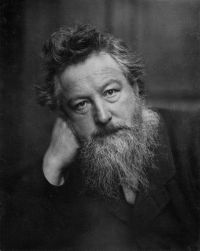 William Morris,
The Sundering Flood
William Morris,
The Sundering Flood
“ And one or another of them plucked him by the sleeve and bade him come home with them, since the day was done, and the battle would not quicken again, and the Westdalers had overmuch on their hands to bear them any tidings till the morrow was a new day. ”

“ I wonder whether the thought in this little verse does not interpret something of that summer melancholy which comes to us out of nature's solitudes with the plaint of insect-voices. Unconsciously those millions of millions of tiny beings are preaching the ancient wisdom of the East,—the perpetual Sûtra of Impermanency. ”
 William Hope Hodgson,
The House on the Borderland — Chapter XV: The Noise In The Night
(1908)
William Hope Hodgson,
The House on the Borderland — Chapter XV: The Noise In The Night
(1908)
“ The dawn and the sun seemed to come together, so greatly had the speed of the world-revolution increased. The sun drove up, in one long, steady curve; passed its highest point, and swept down into the Western sky, and disappeared. I was scarcely conscious of evening, so brief was it. Then I was watching the flying constellations, and the Westward hastening moon. ”
Gilbert Keith Chesterton,
The New Jerusalem — Chapter VI: The Groups of the City
(1920)
“ We of the West, if we wish to understand it, must imagine ourselves as left with all our local loves and family memories unchanged, but the places affected by them intermingled and tumbled about by some almost inconceivable convulsion. We must imagine cities and landscapes to have turned on some unseen pivots, or been shifted about by some unseen machinery, so that our nearest was furthest and our remotest enemy our neighbour. ”
 Stewart Edward White,
The silent places
Stewart Edward White,
The silent places
“ During all the winter these men had lived under the frown of the North, conducting their affairs confidently yet with caution, sure of themselves, yet never sure of the great power in whose tolerance they existed, in spite of whom they accomplished. ”
Joseph Conrad,
Youth, a Narrative
“ I have seen the mysterious shores, the still water, the lands of brown nations, where a stealthy Nemesis lies in wait, pursues, overtakes so many of the conquering race, who are proud of their wisdom, of their knowledge, of their strength. But for me all the East is contained in that vision of my youth. ”
 Mercy Otis Warren,
History of the Rise, Progress, and Termination of the American Revolution
(1805)
Mercy Otis Warren,
History of the Rise, Progress, and Termination of the American Revolution
(1805)
“ The approach of spring lowered the fate of empire, the birth of nations, and the painful convulsions experienced by every state, struggling to retrieve and permanently secure the rights of nature, seized or curtailed by the strong hand of power. ”
Joseph Conrad,
The Mirror of the Sea
(1924 (first published in 1906))
“ The caprice of the winds, like the wilfulness of men, is fraught with the disastrous consequences of self-indulgence. Long anger, the sense of his uncontrolled power, spoils the frank and generous nature of the West Wind. ”
 James George Frazer,
The Golden Bough: A Study in Magic and Religion…
James George Frazer,
The Golden Bough: A Study in Magic and Religion…
“ The change from summer to winter names takes place from the moment when the spirits are supposed to be present, and it involves a complete transformation of the social system; for whereas during summer the people are grouped in clans, in winter they are grouped in societies, each society consisting of all persons who have been initiated by the same spirit and have received from him the same magical powers. ”
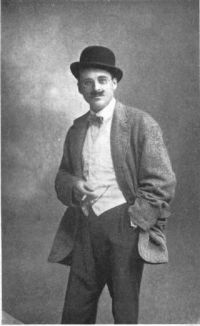 Francis Yeats-Brown,
Caught by the Turks
Francis Yeats-Brown,
Caught by the Turks
“ In June, when they were white with blossom, and the farmers' wives came out to drain the precious fluid from the buds, I used to gaze and gaze at the beauty of the world, and long for freedom. To be cooped up in a little room when the world was green and white, and the sky a flawless blue, and summer rode across the open lands, was miserable. ”
 Juliana Horatia Ewing,
Last Words: A Final Collection of Stories
Juliana Horatia Ewing,
Last Words: A Final Collection of Stories
“ Convolvulus major—the Morning Glory, as our American cousins so prettily call it—flourishes on a smutty wall as generously as the Virginian creeper.North borders are safest in winter. They are free from the dangerous alternation of sunshine and frost. ”
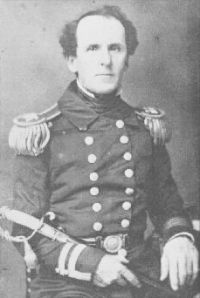 William Francis Lynch,
Narrative Of The United States Expedition To The River Jordan And The Dead Sea…
(1849)
William Francis Lynch,
Narrative Of The United States Expedition To The River Jordan And The Dead Sea…
(1849)
“ From amid this sound, frightful, yet stirring to the human heart, and appalling to every other creature, came other sounds, yet more harrowing — the shout of defiance, the shriek of agony and the yell of despair, — and fish, and bird, and every other living thing fled precipitately from the scene, leaving man, the monarch of creation, to slay his fellow man, the image of his august Creator! ”
