Summary

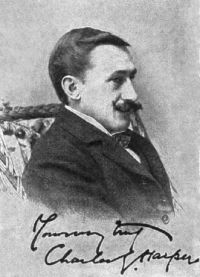
Portrait of Charles G. Harper Charles G. Harper Stage-coach and Mail in Days of Yore…

A great sheep- or cattle-fair is a beautiful sight; but in a stage-coach you see more of what man is capable of performing. The vehicle itself; the harness, all so complete and so neatly arranged, so strong, and clean, and good; the beautiful horses, impatient to be off; the inside full, and the outside covered, in every part, with men, women, and children, boxes, bags, bundles; the coachman, taking his reins in one hand and his whip in the other, gives a signal with his foot, and away they go, at the rate of seven miles an hour—the population and the property of a hamlet.
Source: Gutenberg

Portrait of Charles G. Harper Charles G. Harper Stage-coach and Mail in Days of Yore…

THE OLD ENGLAND OF COACHING DAYS This is the time, now that we have passed the threshold of a new era, when old landmarks are disappearing everywhere around us as we gaze, and the Old England that we have known is being dispossessed and disestablished by a new and strange, an inhospitable and alien England of foreign plutocrats—this is the psychological moment for a brief review of what this England of ours was like in the old days of stage-coach and mail.
Source: Gutenberg

Portrait of Charles G. Harper Charles G. Harper Stage-coach and Mail in Days of Yore…

The moon now rides in unsullied glory through the azure sky. We top Alconbury Hill at a few minutes to twelve, and come to the junction of the Old North and the Great North Roads. Everything stands out as clearly as if it were daylight, but with a certain ghost-like and uncanny effect. “The obelisk,” as the coachmen have learned to call the great milestone at the junction of the roads (it is really a square pedestal) looks particularly spectral, but is not the airy nothing it seems—as the coachman on the Edinburgh Mail discovered, a little while ago. The guard tells us all about it.
Source: Gutenberg

Get perspective with Kwize: daily news enlightened by great literature