Summary

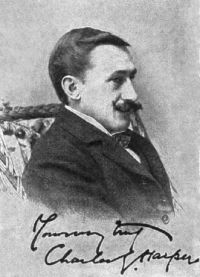
Portrait of Charles G. Harper Charles G. Harper The Great North Road, the Old Mail Road to Scotland…

A red rash of recent brick cottages has broken out at the foot of the rise, but Tuxford itself, on the crest of the hill, seems unchanged since coaching days, except that the traffic which then enlivened it has gone. It is a gaunt, lifeless place, in spite of its three railway stations, and stands where the roads cross on the height, and the church, the “Newcastle Arms,” another inn which arrogates the title of “The Hotel,” and the private houses and shops of the decayed town face a wide open street, and all shiver in company. But Tuxford has seen gorgeous sights in its time.
Source: Gutenberg

Portrait of Charles G. Harper Charles G. Harper The Great North Road, the Old Mail Road to Scotland…

A wide street, the terminus of a tramway, a mile-long row of cottages, a would-be Gothic church; here you have it. Before you, by degrees, York unfolds itself, past the military barracks and nondescript, but always disappointing, streets, until, emerging from Fishergate, the ancient city, free from suburban excrescences, opens out, with the grim castle in front, and the Ouse and Skeldergate Bridge to the left. The so-called “London Road” lies away beyond the Ouse, its name referring to the Doncaster, Ferrybridge, Sherburn, and Tadcaster route taken by some of the old-time coaches.
Source: Gutenberg

Portrait of Charles G. Harper Charles G. Harper The Great North Road, the Old Mail Road to Scotland…

The great glory of Newark is its beautiful church, with that soaring spire which is visible for miles away, before the town itself is glimpsed. Not so tall as Grantham spire, it is as beautiful in its simpler style, and the church is better placed in the town than that of Grantham. Especially striking is the view across the great market-place, the grey Early English and Decorated spire, with its numerous belfry-lights, and the fine windows and bold arcading of the tower forming a splendidly effective contrast with the seventeenth and eighteenth century red-brick houses facing the square.
Source: Gutenberg

Get perspective with Kwize: daily news enlightened by great literature