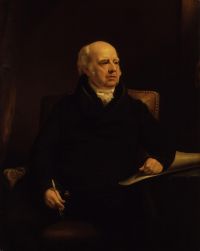
William Sharp

William Sharp

Summary

Portrait of William Sharp William Sharp Where the forest murmurs (1906)

Kalevala, or of that not less mysterious ancient Teutonic nature-god Wunsch, or of our Gaelic Angus Og, son of heaven and earth; each of whom has the wild-dove for his own, his symbol and his mortal image. Each wove grass and plants and greenness of trees out of the earth and the rain, out of the sunshine and the wind; each spun flowers out of dew and moonlight and the rose and saffron of dawns and sunsets. Each, too, created strength in the hearts of men and power in their bodies, and wove beauty on the faces of women and children. Each became, thus, the god of happiness, of youth, of joy.
Source: Gutenberg

Portrait of William Sharp William Sharp Where the forest murmurs (1906)

As for many of us, surely they are birds of our love. The cry of the curlew on the hill, the wail of the lapwing in waste places, have not these something of the same enthralling spell, the same entrancing call—the summons to the wilderness, whether that be only to solitude, or to wild loneliness, or to the lonelier solitudes, the dim limitless wilderness of the imagination—that the wind has, at night, coming with rain through woods, or that the sea has, heard in inland hollows, or when athwart a long shore or among fallen rocks the tide rises on the breast-swell of coming storm?
Source: Gutenberg

Portrait of William Sharp William Sharp Where the forest murmurs (1906)

There is nothing in the world more beautiful than the forest clothed to its very hollows in snow. That is a loveliness to which surely none can be insensitive. It is the still ecstasy of Nature, wherein every spray, every blade of grass, every spire of reed, every intricacy of twig, is clad with radiance, and myriad form is renewed in continual change as [Pg 12] though in the passionate delight of the white Artificer. It is beauty so great and complex that the imagination is stilled into an aching hush. There is the same trouble in the soul as before the starry hosts of a winter night.
Source: Gutenberg

Get perspective with Kwize: daily news enlightened by great literature