Pathology

Definition and stakes

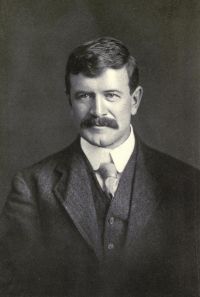
Various,  Popular Science Monthly (1914)

“ If Pathology be to disease what Physiology is to health, it appears reasonable to conclude, that in any given structure or organ, the laws of the former will be as fixed and significant as those of the latter; and that the peculiar characters of any structure or organ may be as certainly recognized in the phenomena of disease as in the phenomena of health. ”
Source: Wikisource

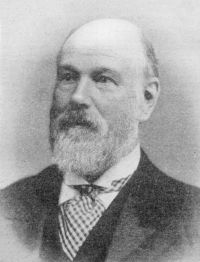
Portrait of Thomas Henry Huxley Thomas Henry Huxley,  Popular Science Monthly (1881)

“ No sharp line of demarkation can be drawn between the two classes of phenomena. No one can say where anatomical variations end and tumors begin, nor where modification of function, which may at first promote health, passes into disease. All that can be said is, that whatever change of structure or function is hurtful belongs to pathology. Hence it is obvious that pathology is a branch of biology; it is the morphology, the physiology, the distribution, the etiology of abnormal life. ”
Source: Wikisource

1911 Encyclopædia Britannica, Volume 20… (1911)

“ The practical bearings of a science, it will be granted, are simply, as it were, the summation of its facts, with the legitimate conclusions from them, the natural application of the data ascertained, and have not necessarily any direct relationship to its pursuit. It is when studied on these hues that pathology finds its proper place as a department of biology. Disease as an entity—as something to which all living matter is subject—is what the pathologist has to recognize and to investigate, and the practical application of the knowledge thus acquired follows as a natural consequence. ”
Source: Wikisource

Get perspective with Kwize: daily news enlightened by great literature