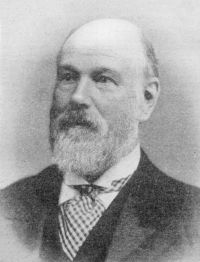
Philip Henry Pye-Smith

Philip Henry Pye-Smith

Summary

Portrait of Philip Henry Pye-Smith Philip Henry Pye-Smith The Harveian Oration 1893 (1893)

If the difficulties of physiology, whether normal or morbid, seem so intricate and insuperable that we are tempted to doubt whether the riddle after all has an answer, we must again and again fall back on the faith of Harvey and of Newton, of Boyle and of Linnaeus. The great doctrine of natural selection has thrown wonderful light upon the methods by which the results that we see have been reached, but has not impaired the excellence of those results nor their evidence of beneficent design.
Source: Wikisource

Portrait of Philip Henry Pye-Smith Philip Henry Pye-Smith The Harveian Oration 1893 (1893)

Anyone conversant with a single branch of Natural Science is aware that experiment, as well as observation, is necessary. Who would expect discoveries in physics, or in chemistry, without laboratories and experiments? Do not botanists investigate the functions of plants by dissection, by microscopic and chemical investigation, and by experiment?
Source: Wikisource

Portrait of Philip Henry Pye-Smith Philip Henry Pye-Smith The Harveian Oration 1893 (1893)

If the liver, for example, were the possible seat of every tumour described in our college nomenclature of disease, it would be hopeless to attempt the diagnosis of an hepatic growth; if the small intestine were subject to every morbid change which can affect a mucous membrane, we should be lost amid such a crowd of possibilities. But Morbid Anatomy teaches us that each organ has its peculiar liabilities to disease, so that when we have determined the seat of a malady we have gone far towards establishing its nature.
Source: Wikisource

Get perspective with Kwize: daily news enlightened by great literature