Summary

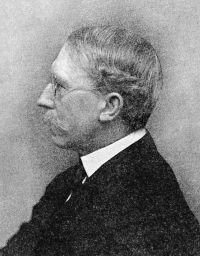
Portrait of Francis Gotch Francis Gotch Dictionary of National Biography… (1912)

Burdon-Sanderson took part in the great modern advance in pathology. In physiology he was an acknowledged master in his own somewhat recondite branch of experimental research; he founded an English school of exact experimental work, and initiated new methods of teaching. Always interested in the work of others, he was a venerated leader to the younger generation of physiologists and pathologists. The University of Oxford owes him a special debt of gratitude, as the virtual founder of her medical school.
Source: Wikisource

Portrait of Francis Gotch Francis Gotch Dictionary of National Biography… (1912)

He remained Waynflete professor until 1895, when he was appointed regius professor of medicine in the university. He was elected at the same time an honorary fellow of Magdalen College, Oxford. At Oxford he steadily pursued his researches in physiology and pathology, until his resignation of the regius professorship at the close of 1903. In pathology he powerfully enforced the truth that experimental investigations are essential for the elucidation of pathological problems, and that sound pathology must rest upon an accurate physiological basis.
Source: Wikisource

Portrait of Francis Gotch Francis Gotch Dictionary of National Biography… (1912)

As a boy Burdon-Sanderson was educated at home and was intended by his father for the law, in which two great-uncles had won distinction. But the youth's strong interest in natural science pointed to medicine as a more appropriate profession, and entering the university of Edinburgh in 1847 he graduated M.D. in 1851, with the gold medal for his thesis on the meta-morphosis of the coloured blood corpuscles. Proceeding to Paris, he first studied chemistry under Gerhardt and Wurtz, and later devoted himself to physiology under the celebrated Claude Bernard and to hospital work.
Source: Wikisource

Get perspective with Kwize: daily news enlightened by great literature