Morphology

Definition and stakes

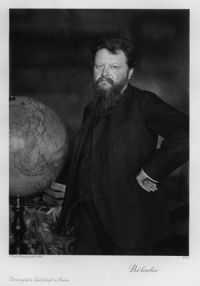
Portrait of Wilhelm Bölsche Wilhelm Bölsche,  Haeckel (1906)

“ This is the first scheme of a real “natural classification” of living things. From this we pass to special morphology. But this fearless sketch of the specialised genealogical tree, according to the new ideas, puts general morphology in its true light. We are made to feel that it is not all mere theory. To-morrow—nay, to-day—the whole practice of zoology and botany will have to be remodelled on the new principles. ”
Source: Gutenberg

E. S. Russell,  Form and Function: A Contribution to the History of Animal Morphology

“ The close analogy between evolutionary and transcendental morphology has already been remarked upon and illustrated in the last three chapters. We have seen that the coming of evolution made comparatively little difference to pure morphology, that no new criteria of homology were introduced, and that so far as pure morphology was concerned, evolution might still have been conceived as an ideal process precisely as it was by the transcendentalists. The principle of connections still remained the guiding thread of morphological work ”
Source: Gutenberg

Portrait of Maria Montessori Maria Montessori,  Pedagogical Anthropology

“ Importance of the Study of Morphology.—The study of morphology is of high importance in biology, and even more so in anthropology. And since the organism is a harmonic whole, in which the parts and their functions are closely interrelated, any external anomaly leads us to assume that there are corresponding anomalies of the internal organs, and hence, functional anomalies; hence also, in man, psychic anomalies. ”
Source: Gutenberg

Get perspective with Kwize: daily news enlightened by great literature