Aristotle

Definition and stakes

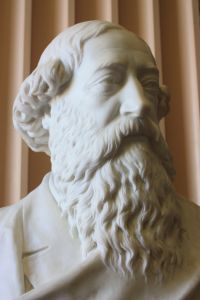
Portrait of Alexander Grant Alexander Grant,  Aristotle (1898)

“ So far from chance having been the chief force in producing the framework of the Universe, Aristotle considers chance to be a mere exception, a mere irregularity, thwarting the reason and the wisdom which guides, and has ever guided, the operations of nature. ”
Source: Wikisource

James J. Walsh,  Old-Time Makers of Medicine

“ It used to be the fashion to make little of the medieval scholars for the high estimation in which they held Aristotle. Occasionally even yet one hears narrowly educated men, I am sorry to say much more frequently scientific specialists than others, talk deprecatingly of this ardent devotion to Aristotle. No one who knows anything about Aristotle ever indulges in such an exhibition of ignorance of the realities of the history of philosophy and science. To know Aristotle well is to think of him as probably possessed of the greatest human mind that ever existed. ”
Source: Gutenberg

Portrait of Aristotle Aristotle,  On the Vital Principle (1855)

“ The object of Aristotle, then, in this treatise, was to learn the nature of that essence or principle which, under whatever denomination, is the innate source of motion, and, consequently, of vital actions in all bodies capable of being animated; for although, in the more complicated forms of being, it is involved in the manifestation of perceptions and passions, its great office still is to originate, to maintain, and to perpetuate life, through all its gradations. ”
Source: Wikisource

Get perspective with Kwize: daily news enlightened by great literature