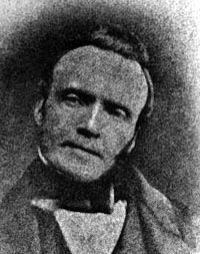
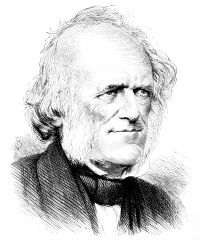
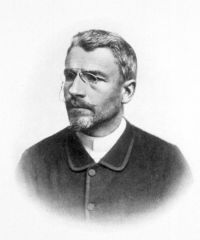
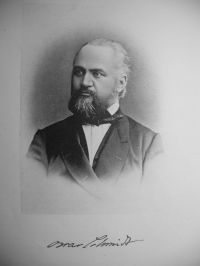
Jean-Baptiste Lamarck, a pioneering French naturalist, is renowned for his early theories on evolution, particularly his hypothesis of inherited acquired characteristics. His work, though contentious, laid foundational ideas for understanding biological change. Authors such as A. S. Packard emphasized Lamarck’s breadth of contributions, while Samuel Butler noted his late shift from belief in species immutability to evolutionary thought.
The Encyclopædia Britannica highlighted his "laws" of organ development through use and disuse, clarifying misconceptions about his direct influence of desire on physiology. Despite critiques, Lamarck’s emphasis on environmental adaptation and descent with modification prefigured later evolutionary theories, establishing him as a pivotal, if controversial, figure in the history of biology.