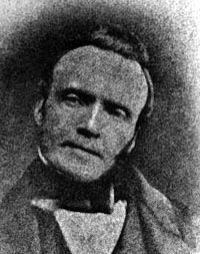
James Duncan

James Duncan

Summary

Portrait of James Duncan James Duncan Foreign Butterflies

With opinions having such a decided tendency to materialism, it is not surprising that Lamarck seldom makes allusion to a Deity, and when he does so, he nearly confines himself to the bare acknowledgment of his existence. In his earlier works, there is no mention made of a Supreme Being whatever; and even when his existence is admitted, He is divested of the attributes which belong to him. The glory of forming the works of creation, in which His beneficence and power are so signally manifested, is ascribed to nature, or a certain order of things.
Source: Gutenberg

Portrait of James Duncan James Duncan Foreign Butterflies

When we perceive the admirable manner in which he discerned and characterized natural groups, his skill in seizing on the most distinctive marks of species, the indefatigable industry with which he investigated their history and synonymy, together with the excellence of his system of arrangement,—we are led to regret that he was so late in entering upon this field of labour, as to be obliged to confine his attention to one division of the animal kingdom, and that he so frequently deviated even from that, in order to indulge his favourite practice of theorizing.
Source: Gutenberg

Portrait of James Duncan James Duncan Foreign Butterflies

When occupied with the productions of a single country, the classification is much more easy; the greater number of species associate pretty well with each other, and, if we except a few of the most anomalous, a series is obtained free from much irregularity. In this way, the European species form a pretty homogeneous assemblage, and the same thing holds with regard to those of South America, New Holland, or any other country taken by itself; but when we attempt to classify those of the whole globe, we frequently meet with intermediate genera which interrupt this harmony.
Source: Gutenberg

Get perspective with Kwize: daily news enlightened by great literature