Inflorescence

Definition and stakes

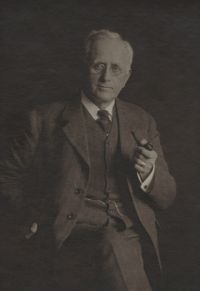
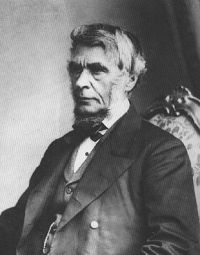
Portrait of Maxwell T. Masters Maxwell T. Masters,  Vegetable Teratology

“ In both forms the adventitious growth is much more frequently a flower-bud or an inflorescence than a leaf-bud or a branch. This may be due to the position of the flowers on a portion of the stem of the plant especially devoted to the formation of flower-buds, to the more or less complete exclusion of leaf-buds, i.e. on the inflorescence. This conjecture is borne out by the comparative rarity with which prolification has been observed in flowers that are solitary in the axils of the [Pg 102] ordinary leaves of the plant. ”
Source: Gutenberg

Portrait of Eugenius Warming Eugenius Warming,  A handbook of systematic botany (1895)

“ This inflorescence is made up as follows:—The most external floral-leaves are situated in pairs, and are the persistent stipules of a leaf, the blade of which has become suppressed, or in any case is rudimentary. Such a pair of stipules supports 4 (2–6) flowers in a double uniparous cyme, whose central axis does not develope into a flower. The bracts of these flowers (bracteoles of the partial inflorescence) become, at maturity, very large, spathe-like, and, together with the stipules, produce a cone-like appearance. ”
Source: Gutenberg

Get perspective with Kwize: daily news enlightened by great literature