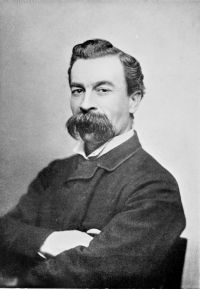
Harry Marshall Ward

Harry Marshall Ward

The Oak (1892)

Summary

Portrait of Harry Marshall Ward Harry Marshall Ward,  The Oak (1892)

“ The attraction is no doubt complex, taking its origin in the value of its acorns and timber to our early forefathers, not unaffected by the artistic beauty of the foliage and habit of the tree, and the forest life of our ancestors, to say nothing of the more modern sentiment aroused when ships of war were built almost entirely of heart of oak; for the Aryan race seems to have used and valued both the fruit and the wood from very early times, and both Celt and Saxon preserved the traditional regard for them. ”
Source: Wikisource

Portrait of Harry Marshall Ward Harry Marshall Ward,  The Oak (1892)

“ If we reflect that the little embryo in the acorn starts its life with only a minute store of starch and proteids in its cotyledon, and that all the tons of organic material (chiefly wood) found in an old oak-tree have been super-added to this by the action of the leaves—the small proportion of salts taken up by the roots being quite inconsiderable in comparison—we obtain some idea of the enormous gain of matter and energy from the outside universe which goes on each summer. ”
Source: Wikisource

Portrait of Harry Marshall Ward Harry Marshall Ward,  The Oak (1892)

“ It is not to these latter alone that our few existing ancient oaks are so attractive, however, and a slight acquaintance with the oaken roofs and carvings of some of our historical edifices affords ample proof that the indefinable charm exercised on us by what has proved so lasting, is a real one and deep-seated in the Saxon nature. In fact, everything about the oak is suggestive of durability and sturdy hardiness, and, like so many objects of human worship in the earlier days of man's emergence from a savage state, the oak instinctively attracts us. ”
Source: Wikisource

Get perspective with Kwize: daily news enlightened by great literature