Mesophyll

Definition and stakes

The Journal of Indian Botany (1919)

“ The mesophyll is composed of palisade tissue on the adaxial side and of arm-palisade tissue on the abaxial side. In the mesophyll there are numerous cells with tanniniferous contents. Secretory cells with tanniniferous contents are abundantly found in all tissues of the axis, Tanniniferous contents are found in cortical parenchyma, in cells separating the groups of stone-cells of the pericycle, in numerous cells in the soft bast and in the medullary ray cells which are opposed to the glandular cells between the pericyclic stone-cell groups. ”
Source: Wikisource

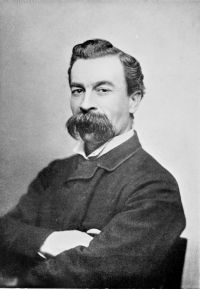
Portrait of Harry Marshall Ward Harry Marshall Ward,  The Oak (1892)

“ In order that they may perform their functions properly, however, it is essential that they be exposed to light; this is effected by their being in cells which are disposed in thin layers, such as we have seen the mesophyll of the leaf to be. In fact, the flat, thin, expanded form of the leaf is a direct adaptation to the end that these chlorophyll corpuscles shall be properly illuminated by the sunlight ”
Source: Wikisource

Various,  Encyclopaedia Britannica, 11th Edition…

“ The mesophyll of Pinus and Cedrus is characterized by its homogeneous character and by the presence of infoldings of the cell-walls. In many leaves, e.g. Abies, Tsuga, Larix, &c., the mesophyll is heterogeneous, consisting of palisade and spongy parenchyma. In the leaves of Araucaria imbricata, in which palisade-tissue occurs in both the upper and lower part of the mesophyll, the resin-canals are placed between the veins; in some species of Podocarpus (sect. Nageia) a canal occurs below each vein; in Tsuga, Torreya, Cephalotaxus, Sequoia, &c., a single canal occurs below the midrib ”
Source: Gutenberg

Get perspective with Kwize: daily news enlightened by great literature